Pricing Your First Microblading Appointments
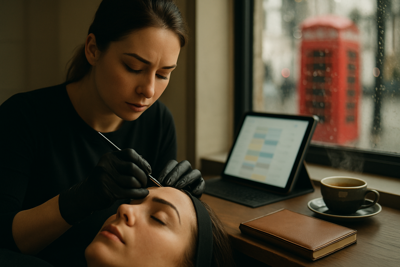
Pricing Your First Microblading Appointments is one of the most important steps in launching a successful microblading service in the United Kingdom. As a new technician you need pricing that attracts initial clients, reflects your training and safety standards, and sets a foundation for long-term profitability. This guide walks you through practical, UK-focused pricing strategies so you can book confident, well-paid appointments from day one.
Learning to price your work properly is both an art and a science. In this post we’ll cover how to evaluate your costs, research local demand, choose introductory offers, and protect your business with clear terms and deposit policies. Whether you’ve just completed a Skinart Microblading course or are preparing to take your first client, these steps will help you set sensible prices that reflect professional standards.
Written by Gary Erskine, lead tutor at Skinart United Kingdom — 25+ years in the industry and thousands of students trained worldwide — this resource is shaped by real classroom experience and the practical realities students face when starting out in the UK market.
Table of Contents
Jump to the sections that matter most — these anchor links help you navigate the article and can surface “Jump to” links in Google search results.
- Why pricing matters for new microblading technicians
- Pricing models & how to choose one
- Costs you must cover in every appointment
- Introductory offers: pros, cons and best practice
- Setting your first prices — step-by-step
- Common pricing mistakes new artists make
- Terms, deposits and cancellation policy
- Marketing and communicating price to clients
- Frequently asked questions
- Final thoughts & next steps
Why pricing matters for new microblading technicians
Pricing Your First Microblading Appointments shapes how potential clients perceive your skill, professionalism and safety standards. Price too low and you risk being viewed as amateur, or worse, undercutting local market rates. Price too high and you may struggle to book enough clients to build experience. In the UK market — where clients often value both safety and quality — the right introductory pricing balances accessibility with professional positioning.
As a newly qualified microblading technician in the United Kingdom, your first paid appointments are not only about income — they’re about building a portfolio, collecting before-and-after photos, and generating testimonials. Your pricing must reflect that blended objective: fair compensation for your time plus incentives that encourage early bookings.
Beyond first impressions, early pricing decisions create price anchors for future services. Clients who pay your introductory price will form expectations; raising prices without justification can create friction. That’s why a deliberate, documented pricing strategy from day one helps you scale sustainably.
Pricing models & how to choose one
There are several practical pricing models you can adopt when Pricing Your First Microblading Appointments: flat-rate, tiered, hourly-based, and package pricing. Each has benefits depending on your goals (rapid client acquisition, higher average value, or simplified administration).
Pros and cons of each model are easy to weigh in practice; choose the approach that matches your time availability, desired client type, and local market conditions.
- Flat-rate per full set — Simple, easy to advertise.
- Tiered pricing — Varies by complexity (e.g., natural brow, sparse brow, scar camouflage).
- Hourly pricing — Useful if you expect unpredictable session lengths, but harder for clients to budget.
- Package pricing — Combine initial session + first touch-up at a single price, often perceived as better value.
For many new technicians in the UK, a flat-rate introductory price with an optional upgrade to a package for the touch-up is the simplest and most effective approach. It gives clients a clear expectation and helps you manage your diary without constant recalculation.
Remember: whatever model you select, document it in your booking system and on client-facing materials so that expectations are clear and disputes are minimised.
Costs you must cover in every appointment
When Pricing Your First Microblading Appointments, it helps to list fixed and variable costs so you’re not operating at a loss. Many new technicians forget to factor in consumables, disinfectant, PPE, disposal, time spent on consultations, and business overheads like insurance and marketing.
Below are the items to calculate per-appointment. Think in weekly or monthly terms for fixed costs, then allocate a per-appointment share based on your expected booking volume.
The following checklist is structured for the United Kingdom market — include UK VAT considerations and local insurance premiums when you calculate final figures.
- Consumables: microblading blades, pigments, single-use needles (where applicable), cotton pads
- PPE: gloves, aprons, masks
- Disinfectants and surface cleaning agents
- Sharps disposal and clinical waste disposal fees
- Insurance prorated per appointment (public and professional indemnity)
- Clinic rent or room hire per session (if you hire a salon or treatment room)
- Time for pre-appointment consultation and aftercare explanations
- Marketing & booking fees (online booking platforms, payment processing fees)
- Depreciation of equipment (if purchased) allocated per appointment
- Training amortisation — the cost of your course divided across the first X appointments
Introductory offers: pros, cons and best practice
Many new microblading artists use introductory offers to attract their first clients. A well-structured intro offer can fill your diary, generate social proof, and create referral momentum — but poorly managed discounts can damage your perceived value. Here’s a concise analysis.
- Pros: faster client acquisition, more before-and-after photos, greater chance for reviews and referrals.
- Cons: lower revenue per appointment, risk of attracting price-focused clients who may not value aftercare or refer others.
- Best practice: limit the number of introductory slots, tie offers to conditions (e.g., client must allow photography and leave a review), and always require a deposit.
A recommended approach for the UK is to offer a time-limited introductory rate for the first 10-20 clients, with the condition that clients agree to a touch-up (if needed) and allow photos. This secures quality portfolio material and encourages clients to commit to the process.
Always be honest about the offer — clearly show both the introductory price and the standard price on your booking page so returning clients and new clients understand the value proposition. Transparency builds trust in a market where safety and results matter to UK clients.
Setting your first prices — step-by-step
Follow this five-step method when Pricing Your First Microblading Appointments in the UK. It’s practical and tailored to technicians starting in private treatment rooms, rented salon space, or home-based clinics that meet local regulations.
Step 1 — Calculate your true per-appointment cost using the checklist in “Costs you must cover”. Add a safety margin for unexpected expenses and slower months.
Step 2 — Research local competitors in your town or city. Look at prices in comparable clinics in Manchester, Birmingham and London for a UK-wide perspective; consider adjusting for suburban vs city-centre demand.
- Step 3 — Decide on an introductory discount level (typically 15–35% off) and limit the number of discounted appointments.
- Step 4 — Set a deposit level to secure bookings (we recommend £25–£50 depending on your price point) and document refund/cancellation terms.
- Step 5 — Publish your price list clearly on your website and booking platforms; list inclusions (initial session, optional touch-up, aftercare guidance).
- Step 6 — Track real appointment duration and client time spent; if you consistently run longer you must adjust pricing.
- Step 7 — Plan a price review at 3 and 6 months based on bookings, client feedback and expenses.
- Step 8 — Keep a list of one-off add-ons (e.g., scar camouflage, extra pigment) and set discrete prices for transparency.
Using this method you’ll end up with an evidence-based price that reflects costs, market position and your growth targets. It also gives you defensible reasons to raise prices later — more experience, better results, and a stronger portfolio.
Common pricing mistakes new artists make
- Failing to include overheads (e.g., room hire, waste disposal)
- Discounting too deeply for too long
- Not requiring a deposit, leading to high no-show rates
- Failing to document what’s included in the price (touch-ups, aftercare)
- Not tracking actual appointment duration and undercharging for longer sessions
- Setting prices based on emotion rather than cost and market data
- Ignoring VAT thresholds and small business tax rules in the UK
- Underestimating the value of professional positioning — pricing that’s too low can harm booking quality
Each of these mistakes can be costly. For example, not charging a deposit multiplies your administrative time chasing clients and can result in lost income if clients cancel last-minute. In the UK, where waiting lists and high demand exist in major centres, clear cancellation terms protect your diary and your income.
Correcting these errors early will save you time and money. If you’re unsure, review your pricing monthly in the early stages and seek feedback from mentors or peers. Graduates of Skinart’s Microblading course often consult tutors on pricing before launching publicly — a practice we strongly recommend.
Terms, deposits and cancellation policy
Protect your income and show professionalism by requiring a deposit for each appointment. A deposit reduces no-shows and gives you cover for last-minute cancellations. For Pricing Your First Microblading Appointments in the UK, a deposit of £25–£50 is standard depending on your full price.
- Require deposits at booking via secure payment processors (Stripe, PayPal) and state whether they are refundable.
- Set clear cancellation notice periods (e.g., full refund if cancelled 48+ hours before; partial refund if 24–48 hours).
- Define a no-show policy (for example: loss of deposit and rebooking fee).
- Include a clause about touch-ups: whether first touch-up is included and within what timeframe (commonly 6–12 weeks).
- Explain what constitutes changes that may affect price (significant scar work, eyebrow reconstruction).
- Keep written consent and aftercare information as part of the appointment record.
Well-written terms protect both you and your clients. They also convey that your service is professional, regulated and taken seriously — an important message for UK clients who prioritise safety and qualifications. If you need standard templates, Skinart provides examples for our students to adapt to local requirements.
Marketing and communicating price to clients
How you present price in your marketing affects client perception. Pricing Your First Microblading Appointments isn’t just about numbers — it’s about language. Use clear, confident wording that highlights value: “Includes initial consultation, pigment selection and aftercare” is better than “cheap microblading”.
Use real UK examples in your marketing. For instance, if you trained at Skinart and completed supervised practice in Manchester, mention that in your bio. Local credibility encourages bookings — many UK clients prefer technicians who understand regional styles and aftercare norms.
- Display both introductory and standard prices with the date the price applies from.
- Show what’s included (touch-up policy, aftercare advice, photos).
- Use testimonials and before/after galleries (with client consent) to justify price.
- Offer limited-time booking slots to create urgency for your intro rate.
- Use Instagram Stories and Reels for quick demonstrations and to show process — transparency builds trust.
- Partner with local salons for cross-promotion (clear commission and pricing terms).
Accurate communication reduces disputes and improves satisfaction. When clients understand the value, they’re more likely to respect your aftercare instructions and book follow-ups.
UK examples and success stories
Real UK examples help illustrate how Pricing Your First Microblading Appointments works in practice. A former Skinart student in Bristol launched with a limited introductory rate of £120 (standard price £180). Within two months they had 25 paid clients, 20 public testimonials and consistent rebookings at the standard rate once introductory slots closed.
Another student in Glasgow focused on targeted Facebook advertising and partnerships with local beauty salons. They started with a package: initial session plus touch-up for £200 and included detailed aftercare instructions. The perceived value of the package meant clients were willing to pay a premium after seeing professional before/after images.
These stories share common threads: clear terms, well-documented results, and disciplined booking procedures. Importantly, none relied on undercutting long-term value — they offered temporary incentives to build a strong client base.
- Example — Bristol: Intro rate to collect testimonials; raised to full price after 60 days.
- Example — Glasgow: Package pricing with salon partnership increased perceived value.
- Example — Leeds: Focused on niche brow correction and charged a higher tier for scar work.
- Local tip: Use local community groups and university networks to reach first-time clients.
Equipment and supplies — what to expect
Important policy note for United Kingdom students and new technicians: Skinart United Kingdom does not supply microblading equipment or consumables as part of the online course. When Pricing Your First Microblading Appointments, you must budget for your own supplies and factor those costs into your per-appointment price.
Equipment choices affect perceived value. Using high-quality pigments and sterile disposables is essential for safety and results — both key selling points when communicating price to UK clients. Do not compromise on clinical waste disposal or PPE; these are non-negotiable expenses.
- Budget for initial pigment kits, blades and disposables
- Include PPE and surface disinfectants
- Account for safe sharps and clinical waste disposal
- Factor in branding and photography costs for your portfolio
Keep receipts and track supply usage; accurate bookkeeping ensures your prices reflect real costs and helps at tax time in the UK.
What industry experts say
We asked industry contacts for their perspective on pricing early appointments. Here are two quotes that resonate with new technicians.
“Transparent pricing that communicates safety and value wins in the long run. Intro offers are useful, but only when they’re part of a clear growth plan.” — CPTP representative (clinical training advisory)
“In the UK, clients choose technicians they trust. A clear cancellation policy and a small deposit reduce losses while improving client commitment.” — Local council public health officer, on clinical bookings and clinic protocols.
These perspectives support the advice in this article: structure introductory rates, protect your diary with deposits, and present prices clearly so clients recognise the professional standards behind them.
Frequently asked questions
Below are common questions we hear from students and new technicians about Pricing Your First Microblading Appointments in the United Kingdom.
What should I charge as a newly qualified microblading technician in the UK?
Start by calculating your per-appointment costs, then add a margin that reflects your target positioning — many starters choose an introductory range that is 15–35% below standard local prices while ensuring costs are covered and a deposit is taken.
Should I include the touch-up in the initial price?
Including the first touch-up in a package can improve perceived value and client retention; alternatively, offer a lower introductory price for the initial session and an optional paid touch-up to keep cash flow early on.
Do I need to charge VAT on microblading services in the UK?
VAT rules vary based on turnover and how your business is structured — check HMRC guidance or consult an accountant. When Pricing Your First Microblading Appointments, account for VAT only if you are VAT-registered; otherwise reflect your gross prices accordingly.
Is it okay to run heavy discounts to build a portfolio?
Short-term discounts can be effective if they’re limited in number and tied to conditions (e.g., client consent for photos and a review). Avoid indefinite discounts that make it difficult to transition to standard prices later.
How much should I ask for a deposit?
A deposit of £25–£50 is common depending on your full price; set an amount that deters no-shows but doesn’t put off clients. Make your cancellation and refund policy clear at booking.
Final thoughts & next steps
Pricing Your First Microblading Appointments is a strategic activity that combines cost accounting, local market awareness and careful marketing. As you gain experience, your rates will evolve — the most important thing is to start with a clear, defensible approach that covers costs and communicates professional standards to UK clients.
If you’re preparing to take your first bookings, review this guide with your cost calculations and create a simple one-page pricing policy to share on booking platforms and social media. Consistency and clarity will protect your diary and help you build a sustainable business.
Ready for practical, accredited training that covers both technique and business essentials? Skinart United Kingdom’s online Microblading course provides CPD and BAQA-accredited training designed for career-ready outcomes. Note: we do not offer in-person microblading training in the United Kingdom and we do not supply microblading equipment in the UK — the course focuses on technique, safety and business knowledge to get you started professionally.
Get started with accredited microblading training
Recent Blog Posts
- Studio Etiquette Update: Professionalism in 2026
 Workplace Etiquette for Body Art Studios Refresh your studio etiquette and build a reputation for professionalism with these up-to-date best practices.… Read More »Studio Etiquette Update: Professionalism in 2026
 - 🌙 Eid Mubarak: Celebrate with 5% Off in 2026!
 Eid Savings: 5% Off All Courses Celebrate Eid with a special offer: 5% off any course. Use code EID5 at checkout.… Read More »🌙 Eid Mubarak: Celebrate with 5% Off in 2026!
 - Top Mistakes New Body Artists Should Avoid (2026)
 Stay Ahead: Common Pitfalls for New Artists Read up on the most frequent errors new body artists make, and how to… Read More »Top Mistakes New Body Artists Should Avoid (2026)