Top Mistakes New Microblading Artists Make
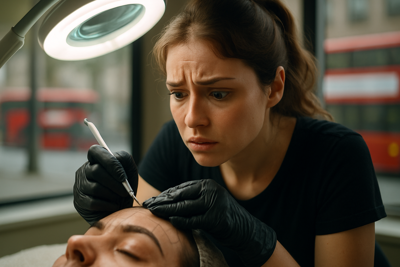
Top Mistakes New Microblading Artists Make is a frequent search for trainees who want to avoid early pitfalls and build a thriving, safe practice in the United Kingdom. Whether you’re just finishing your first course or preparing to take booking requests, understanding common errors will save you time, money and client trust. This guide highlights the practical mistakes new microblading artists make and gives clear, actionable advice so you can start your career with confidence.
Written by Gary Erskine, Lead Tutor at Skinart United Kingdom, with over 25 years of experience training body artists worldwide. Gary has guided thousands of students through accredited programmes with CPD Standards Office and the Body Art Qualification Association (BAQA). His insights here are drawn from classroom experience, clinic supervision and real-world corrections observed in UK salons and studios.
Table of Contents
Use these links to jump to the section you need. Adding anchor-linked headings helps Google surface “Jump to” links for users searching for Top Mistakes New Microblading Artists Make.
- Introduction: Why these mistakes matter
- Consent, consultation and expectation-setting
- Tools, supplies and the ‘right’ kit
- The top mistakes new microblading artists make
- Colour theory, pigment selection and fading
- Safety, infection control and local regulations
- Practice, portfolios and real-client experience
- Frequently asked questions
- Final thoughts & next steps
Introduction: Why understanding beginner errors matters
When starting out, many artists focus on tools and marketing but underestimate the foundational skills that keep clients safe and satisfied. The phrase Top Mistakes New Microblading Artists Make is searchable for a reason: early errors can damage reputations quickly. In the UK market — where clients expect both craft and compliance — being able to avoid those mistakes sets you apart.
Microblading is both an artistic and clinical procedure. A successful outcome depends on accurate mapping, pigment knowledge, and excellent aftercare communication. This section explains the core concept: microblading is not just about drawing hair-like strokes; it’s about predictable, safe results your client will love weeks and months after you finish.
Across this article we’ll cover consultation mistakes, kit misunderstandings, pigment selection, infection control, portfolio development and business practices. Read on to learn how to spot these issues early and build a reliable microblading practice in the United Kingdom.
Consent, consultation and expectation-setting
Many of the Top Mistakes New Microblading Artists Make happen before the first stroke: poor consultation leaves clients unclear about outcomes and unrealistic about healing.
- Pros: Detailed consultation builds trust and reduces complaints.
- Cons: Skipping paperwork or glossing over risks increases liability.
Run a structured consultation checklist: skin history, medical contraindications (for example, isotretinoin usage or recent Botox), medication review, and previous eyebrow work. Always record these details for each client — good notes protect you and help with future touch-ups.
Be honest about expectations. Use before-and-after images from your practice (or practice skin) and explain the full healing timeline. Setting realistic expectations reduces the number of clients who believe the initial result is the final result, which is a common concern in the UK.
Tools, supplies and the ‘right’ kit
New artists frequently ask what kit to buy first. While tempting to invest in the “latest” pen, the real priority is learning technique — not owning every tool. In the United Kingdom, microblading is regulated through local authority rules and client safety is paramount; invest in high-quality disposables and a clear infection-control setup.
Remember: Skinart United Kingdom does not supply microblading equipment in the UK. Your course will teach you what to look for and how to assess suppliers so you can buy appropriate tools locally.
As a rule, beginners should purchase stable, reputable single-use supplies and avoid mixing cheap consumables with premium blades — inconsistency in equipment can produce unpredictable stroke quality and client dissatisfaction.
- Disposable microblades (single use, sealed packaging)
- High-quality pigment vials from reputable brands
- Pre-cut tip micro-pigment holders (sterile)
- Non-latex gloves in multiple sizes
- Alcohol wipes, sterile saline and skin prep solutions
- Measuring tools and eyebrow mapping string/ruler
- Disposable aprons, head caps and bench covers
- Sharps disposal approved for clinical waste in the UK
- Client aftercare leaflets printed and laminated
The top mistakes new microblading artists make
- Inadequate consultation — not documenting medical history or client expectations
- Poor mapping and asymmetrical pre-draws that ignore facial anatomy
- Choosing pigments without understanding skin undertones and Fitzpatrick types
- Using inconsistent needles/blades — swapping types mid-session
- Rushing the procedure — attempting too many clients too soon
- Weak aftercare guidance — clients receive vague or missing instructions
- Failing to maintain proper infection‑control protocols and waste handling
- Overpromising permanence — not explaining fading and touch-up requirements
- Poor photographic records — no standard lighting or angles for portfolio images
Each of these mistakes is fixable with routine and discipline. For instance, a simple consultation form that covers medications, skin conditions and prior aesthetic work will prevent many problems before they start.
Another frequent error is assuming a “popular” pigment will suit everyone. Colour interaction with a client’s skin is complex — practise colour-matching on practice skin or mannequins, and study fading behaviour for different pigments across skin types.
Colour theory, pigment selection and fading
Misunderstanding pigment behaviour is one of the Top Mistakes New Microblading Artists Make. Pigments fade differently depending on formulation and a client’s skin chemistry. Warm pigments can oxidise and go red or orange over time if selected incorrectly for the client’s undertone.
Always patch test when you’re uncertain and keep detailed notes of pigment brand, batch and dilution. Many UK insurers require documentation of products used for liability purposes — accurate record-keeping protects both you and your client.
When learning, practise blending and neutralising by using small, controlled strokes. Know which neutralisers to use if a pigment shows unwanted undertones during healing; learning corrective techniques will save clients from unnecessary retouches.
- Understand skin undertones (warm, cool, neutral) and match pigments accordingly
- Prefer reputable pigment manufacturers with UK distribution
- Dilution: learn safe mixing ratios and document them
- Keep a log of pigment batches and expiry dates
- Patch testing for sensitivity on first-time clients
- Learn standard corrective pathways for common undertone shifts
- Offer honest guidance about fading timelines and touch-up intervals
- Keep swatch cards and photos of healed results for reference
Safety, infection control and local regulations
In the UK, infection control is non-negotiable. One of the Top Mistakes New Microblading Artists Make is treating hygiene as secondary to aesthetics. Proper disposal of sharps and clinical waste, single-use blades, and correct glove technique are essential for safe practice.
“I always tell trainees: technique without strict hygiene is a risk you cannot afford. Clients remember safe, well-run clinics — and industry regulators check records.” — Gary Erskine, Lead Tutor, Skinart United Kingdom
- Single-use blades and disposables — never re-use
- Clinical waste and sharps containers compliant with local authority requirements
- Pre- and post-procedure hand hygiene and surface cleaning
- Maintain accurate treatment logs and sterilisation records where applicable
- Know local environmental health requirements — contact your council if unsure
- Take appropriate first-aid and blood-borne pathogen precautions
- Use client consent forms and give written aftercare advice
- Attend regular CPD sessions on infection control — accredited training is recommended
For detailed UK guidance on wound care and infection control, refer to the NHS wound care pages and the Health and Safety Executive (HSE) for general workplace safety guidance. These pages are useful references for building your safety protocols.
Contact your local council’s environmental health department if you are unsure about waste disposal rules — they will provide the precise requirements for your area. Taking this step early helps prevent enforcement actions and shows professionalism to your clients.
Practice, portfolio development and working with clients
Practice is the only way to translate training into consistently good results. Many trainees make the mistake of thinking certification alone guarantees clinical readiness. In reality, you need to practice mapping, strokes and colour knowledge until the results are repeatable.
Create a portfolio standard: consistent lighting, neutral background and before/after angles that match. UK clients and insurers will expect clear records.
Because Skinart United Kingdom offers accredited online microblading training in the UK, our course emphasises practical templates and structured practice plans you can follow at home. Note: we do not offer in-person training in the United Kingdom; the online course is tailored to meet UK regulations and best practice.
- Build a practice schedule with clear goals for each session
- Collect healed photos at 6–8 weeks to document true results
- Seek supervised feedback from experienced tutors or peers
- Use client testimonials ethically and with written permission
- Keep before-and-after images alongside consent records
Business, pricing and client communication
Setting realistic pricing and clear policies is another area where new artists stumble. Pricing too low can create unrealistic expectations, while opaque policies on touch-ups and cancellations harm client relations. Clear terms and written aftercare minimise disputes.
Include a simple cancellation policy, a clear touch-up window (commonly 4–8 weeks) and a fee structure for additional work. This transparency reduces friction and increases client confidence in your practice.
- Publish clear pricing and a touch-up policy on your booking page
- Ask for a deposit to discourage no-shows
- Provide written aftercare and follow-up reminders by email or SMS
- Keep insurance and CPD certifications visible (CPD Standards Office accreditation helps)
Frequently asked questions
Below are common searches and quick answers related to Top Mistakes New Microblading Artists Make.
What are the most common mistakes new microblading artists make?
Common mistakes include inadequate consultations, poor mapping, incorrect pigment choice, weak aftercare instructions and lax infection control — all of which are covered in this article.
How can I avoid mismatched pigment results?
Study undertones, do patch tests when necessary, document pigments and keep healed photos to learn how brands behave on different skin types.
Do I need to follow UK-specific rules for clinical waste?
Yes — contact your local environmental health office for exact requirements. Proper sharps disposal and waste handling are essential to compliance.
Will an online course teach everything I need to know?
Accredited online training can provide the theory, mapping templates and guided practice plans you need. At Skinart United Kingdom our online microblading course focuses on safe, repeatable technique designed for the UK market.
These short answers are designed to point you toward solutions — for detailed tutorials and practice plans, consider our accredited online microblading course tailored to the UK.
Final thoughts: learning from the Top Mistakes New Microblading Artists Make
Becoming a confident microblading artist in the United Kingdom is a journey. The Top Mistakes New Microblading Artists Make are mostly procedural and organisational — and most are straightforward to correct with a structured approach to training and practice. Establish clear consultation habits, commit to infection‑control standards, document everything and work on consistent photo documentation.
At Skinart United Kingdom we focus on accredited, practical online training that highlights both technique and clinic-ready workflows. If you’re serious about building a safe, reputable practice, investing time in structured learning and disciplined practice will return dividends in client trust and glowing testimonials.
Ready to reduce mistakes and accelerate your progress? Our online microblading course covers mapping, pigment theory, client communication and clinic-ready checklists tailored to the UK market. Click below to get started.
Ready to avoid the most common mistakes?
Join our accredited online microblading course designed for the United Kingdom. Learn correct technique, mapping, pigment selection and client handling — everything you need to reduce the Top Mistakes New Microblading Artists Make.
Recent Blog Posts
- Studio Etiquette Update: Professionalism in 2026
 Workplace Etiquette for Body Art Studios Refresh your studio etiquette and build a reputation for professionalism with these up-to-date best practices.… Read More »Studio Etiquette Update: Professionalism in 2026
 - 🌙 Eid Mubarak: Celebrate with 5% Off in 2026!
 Eid Savings: 5% Off All Courses Celebrate Eid with a special offer: 5% off any course. Use code EID5 at checkout.… Read More »🌙 Eid Mubarak: Celebrate with 5% Off in 2026!
 - Top Mistakes New Body Artists Should Avoid (2026)
 Stay Ahead: Common Pitfalls for New Artists Read up on the most frequent errors new body artists make, and how to… Read More »Top Mistakes New Body Artists Should Avoid (2026)