What Can Go Wrong with Microblading & How to Fix It
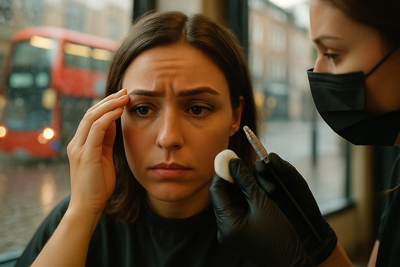
Microblading is a powerful cosmetic procedure that can transform brows, but like any skin intervention, things can go wrong if corners are cut or if aftercare is poor. In this guide tailored for the United Kingdom, we explain common complications, how to fix them, and — critically — how to prevent them through best practice and accredited training.
Whether you’re a client researching safety or a new technician learning the trade, understanding “What Can Go Wrong with Microblading” is essential. This article is written by Gary Erskine, lead tutor at Skinart United Kingdom with over 25 years’ industry experience, and it draws on real UK examples and accredited standards so you can recognise problems early and respond professionally.
Table of Contents
Use the links below to jump to the section that most helps you or your clients. Adding anchor-linked headings helps Google generate “Jump to” SERP links for readers.
- Overview — Why Microblading Complications Happen
- Pros & Cons: Risk vs Reward
- Common Problems and Immediate Fixes
- Top Technician Mistakes (and how to avoid them)
- Remediation: Corrective Treatments and When to Refer
- Aftercare, Healing, and Client Communication
- UK Standards, Accreditation & Safety
- Training, Skills & How Skinart Can Help
- FAQs — What Can Go Wrong with Microblading?
- Final Thoughts
Overview — Why Microblading Complications Happen
Microblading is a semi-permanent cosmetic procedure where pigment is manually deposited in the superficial dermis. Even when performed by experienced technicians, complications can arise because the procedure sits at the intersection of artistry and medical hygiene.
Understanding what can go wrong with microblading requires attention to three areas: the client’s skin and health, the technician’s technique and judgment, and the clinic’s infection control and aftercare procedures. Failure in any of these areas can create visible or medical problems.
In the UK, we operate under strict local regulations and recognised best practice. Accredited training (such as courses accredited by the CPD Standards Office and BAQA) reduces risk by teaching both technique and safety standards — this article highlights those practical safety steps and shows how to fix common issues when they occur.
Pros & Cons: Risk vs Reward
Microblading gives natural-looking results when done well — fuller brows, time-saved daily routines, and high client satisfaction rates. However, clients and technicians should weigh these benefits against potential risks.
- Pros: Natural shading, long-lasting shape correction, minimal downtime.
- Cons: Infection risk, pigment migration or colour change, scarring if performed incorrectly.
Pros become durable benefits when technicians use correct assessment protocols and aftercare. The cons are preventable with accredited training and strict infection control in line with UK guidance.
At Skinart United Kingdom we emphasise risk mitigation — from client screening to technique drills — so that the “cons” are rare and reversible. If a problem does occur, fast recognition and a clear remediation pathway are essential.
Common Problems and Immediate Fixes
Below are common issues technicians and clients encounter, followed by immediate actions and longer-term solutions. Early detection is key: most issues are milder if caught during the initial healing process (first 2 weeks).
We start with the most frequent visual complaints, then move to medical concerns such as infection or allergic reaction. For each, follow a simple triage: assess, stabilise, document, and refer if necessary.
Remember: if you suspect systemic infection, or the client feels unwell, advise urgent medical review and contact the client’s GP or urgent care services. The NHS guidance on wound infections is a good public reference for when escalation is required.
- Faded or uneven strokes after healing — often due to excessive scabbing or incorrect depth during the procedure. Fix: gentle touch-up at 6–8 weeks; revise technique and adjust pigment choice.
- Too dark immediately after treatment — normal (pigment oxidises and softens). Fix: reassure client, show simulated healed result, avoid early removal attempts.
- Blown-out strokes (feathering) — caused by going too deep into the dermis. Fix: do not add more pigment; consider colour-correction courses and possibly salining or lightening later.
- Colour change (red/purple tones) — sometimes pigment formulation or skin chemistry causes this. Fix: corrective neutralising pigments and corrective sessions performed by experienced technicians.
- Scarring or keloid formation — rare, more common in predisposed clients or overly aggressive technique. Fix: early referral to a dermatologist; avoid further microblading on scar tissue.
- Allergic reaction — swelling, prolonged redness, severe itch. Fix: stop topical aftercare products, advise antihistamine if appropriate, and refer to GP if persistent.
- Infection — increasing pain, pus, spreading redness, fever. Fix: urgent medical referral; document and report; antibiotics may be required.
- Uneven eyebrow placement or poor mapping — usually a planning error. Fix: corrective shading or hairstrokes after healing and retraining on mapping techniques.
- Pigment migration into surrounding skin — caused by overtreatment or repeated passes. Fix: allow healing, then consider colour correction or removal by specialist laser or saline techniques.
- Client dissatisfaction with shape — subjective; fix involves clear communication, conservative corrections, and in some cases removal options.
Top Technician Mistakes (and How to Avoid Them)
- Inadequate consultation or medical history taking — always screen for blood-thinners, autoimmune conditions, pregnancy, or recent facial treatments.
- Poor mapping and asymmetry — measure, use stencils and multiple checks before starting pigmentation.
- Incorrect needle depth — too deep causes blowouts and scarring; too shallow yields poor retention.
- Overworking the skin — repeated passes cause trauma and excessive scabbing.
- Insufficient hygiene and cross-contamination controls — single-use disposables and sterilisation protocols are vital.
- Using the wrong pigment for skin tone — select pigments designed for the client’s undertone and Fitzpatrick skin type.
- Skipping patch tests for clients with sensitive histories — for high-risk clients, perform a patch test and document consent.
- Rushing aftercare instructions — provide clear written aftercare and verbal guidance; document that the client received and understood it.
Each of these mistakes can be learned from and corrected. Competent technicians keep logbooks, photography, and client records so trends are visible and improvements measurable.
Skinart United Kingdom teaches avoidance strategies for every error listed above; our courses include live demos, practical mapping modules, and infection control training accredited by CPD and BAQA.
Remediation: Corrective Treatments and When to Refer
Fixing microblading problems depends on the issue. Some cosmetic problems are correctable by trained technicians; others require medical or specialist referral (dermatologist or cosmetic laser clinic).
Examples of corrective options include saline tattoo removal, laser removal, colour correction using neutralising pigments, and minor scar management. Timing matters: interventions too early can make things worse, while waiting too long can allow issues to set in.
- Uneven pigment: plan a conservative touch-up at 6–8 weeks once skin has completed initial healing.
- Colour cast: use colour theory techniques for neutralising (require advanced training).
- Blow-outs: avoid reworking the area; stabilise and aim corrective work later with shading rather than repeated strokes.
- Minor infection: refer to GP; document treatment and avoid further invasive procedures until cleared.
- Severe allergic reaction: immediate medical referral; record batch numbers and products used.
- Scarring: refer to dermatology; consider topical treatments or medical procedures rather than further microblading.
- Poor shape: employ corrective sessions combined with counselling; use shading/softening rather than heavy-handed overwrite.
When in doubt, refer — it protects the client and the technician. Keep clear documentation of treatment, aftercare given, and any escalation steps; these records are vital in the UK if a regulatory or clinical review is required.
Aftercare, Healing, and Client Communication
Aftercare is one of the most important determinants of a successful result. Poor aftercare — such as picking scabs, swimming, or exposing the treated area to sun — causes pigment loss and complications. Educate clients thoroughly and supply a clear aftercare sheet.
Key aftercare points to emphasise to clients:
- Keep the area dry for the first 24–48 hours and avoid heavy sweating for 7–10 days.
- Do not pick scabs — allow them to slough naturally.
- Avoid facial treatments, lasers, chemical peels, and direct sun exposure until fully healed.
- Use only the products you recommended; avoid introducing new creams or oils that may provoke reaction.
- Book the follow-up/touch-up appointment at 6–8 weeks; healing varies between clients and skin types.
- Provide emergency contact guidance for signs of infection or severe reaction.
Clear communication reduces misunderstandings. Document that aftercare was delivered and understood, and encourage clients to send healing photos if anything appears unusual during the first two weeks.
UK Standards, Accreditation & Safety
In the United Kingdom, microblading practitioners are expected to work within local authority guidelines and reputable accreditation frameworks. Skinart courses are accredited by the CPD Standards Office and the Body Art Qualification Association (BAQA), which emphasise both practical competence and safety protocols.
Official guidance and recommendations help inform clinical judgment — for example, if an infection is suspected, follow local public health and NHS advice. For general wound infection information you can refer to the NHS guidance on wound infection.
We also recommend practitioners develop a relationship with a local GP practice or dermatology clinic for referrals when medical issues arise. Accreditation demonstrates to clients that you take safety seriously and have undergone formal assessment.
Training, Skills & How Skinart Can Help
One of the most reliable ways to reduce “What Can Go Wrong with Microblading” is to invest in accredited training. Skinart United Kingdom offers an Online Microblading Course designed by Gary Erskine with practical modules on mapping, depth control, client assessment, and infection control.
Our training focuses on evidence-based techniques, real-case problem solving, and the standards required by CPD and BAQA. Graduates leave able to manage routine cases and identify situations where referral or specialist help is necessary.
Note: In the United Kingdom we do not provide physical microblading equipment; students are trained on correct technique and product selection but must source supplies locally to comply with import and local safety regulations.
FAQs — What Can Go Wrong with Microblading?
Below are frequently asked questions phrased as clients and technicians commonly search.
Will microblading cause an infection?
An infection is possible if hygiene protocols aren’t followed, but it is preventable with single-use tools, strict sterilisation routines, and correct aftercare; if you suspect infection, advise medical review promptly.
Why do my microbladed brows look patchy after healing?
Patchiness commonly results from scabbing or inconsistent depth during the procedure. A conservative touch-up at 6–8 weeks usually evens out colour and strokes.
Can microblading cause scarring?
Scarring is uncommon when performed by trained technicians who control depth and pressure; clients with a history of keloid scarring should be screened and, if necessary, advised against the procedure.
How do you fix blown-out hair strokes?
Blow-outs result from working too deep. Immediate correction is limited — often the best approach is to wait, avoid further trauma, and plan corrective shading or removal with a specialist technician later.
Is colour correction safe and effective?
Colour correction can be effective but requires knowledge of pigment chemistry and skin undertones. It is a specialist skill and should only be performed by experienced, accredited practitioners.
What should I do if a client is unhappy with the shape?
Stay calm, document the concern, provide realistic expectations, and offer a plan for conservative correction or referral rather than immediate aggressive rework.
How long between treatments if something goes wrong?
Typically you should wait until skin is fully healed (often 6–12 weeks) before attempting corrective procedures; medical issues such as infection or allergic reaction may require longer and medical clearance.
Final Thoughts — Empowered, Safe Practice
Microblading can and does go wrong from time to time — but most problems are preventable, and many are fixable when addressed promptly and professionally. The two pillars of good outcomes are competent training and clear client communication.
At Skinart United Kingdom we focus on giving technicians the practical skills they need to avoid common pitfalls and the judgement to know when to refer. If you want to learn how to deliver consistent, safe microblading results with confidence, our online microblading course is designed for you.
Written by Gary Erskine, lead tutor with 25+ years’ experience in microblading education. Skinart courses are fully accredited by the CPD Standards Office and BAQA to give you recognised, market-ready skills.
Ready to reduce risk and build your skills?
Recent Blog Posts
- Studio Etiquette Update: Professionalism in 2026
 Workplace Etiquette for Body Art Studios Refresh your studio etiquette and build a reputation for professionalism with these up-to-date best practices.… Read More »Studio Etiquette Update: Professionalism in 2026
 - 🌙 Eid Mubarak: Celebrate with 5% Off in 2026!
 Eid Savings: 5% Off All Courses Celebrate Eid with a special offer: 5% off any course. Use code EID5 at checkout.… Read More »🌙 Eid Mubarak: Celebrate with 5% Off in 2026!
 - Top Mistakes New Body Artists Should Avoid (2026)
 Stay Ahead: Common Pitfalls for New Artists Read up on the most frequent errors new body artists make, and how to… Read More »Top Mistakes New Body Artists Should Avoid (2026)