Online Permanent Makeup Course: What You’ll Learn

Whether you’re already working in beauty or starting fresh, this Online Permanent Makeup Course gives you a structured, accredited route into cosmetic tattooing. In the United Kingdom there’s a growing, professional demand for skilled permanent makeup artists — and our course is designed to teach you the theory, safety, and practical techniques that clients expect.
On this page we’ll walk through exactly what you’ll learn, how the course is assessed, common pitfalls to avoid, and the kinds of real-world outcomes our students achieve in the UK. If you’re researching “Online Permanent Makeup Course” options, this guide will help you decide whether this distance-learning route suits your goals.
Written by Gary Erskine, 25 years in permanent makeup education — lead tutor at Skinart United Kingdom. Gary has trained thousands of students worldwide and contributed to industry best practice. Read on for a detailed look at the modules, learning outcomes and how this course prepares you for a professional career in the UK.
Table of Contents
Use the links below to jump to any section — this helps you navigate the page quickly and allows Google to show “Jump to” links in search results.
- Introduction to the Online Permanent Makeup Course
- Benefits and Limitations of Online Learning
- What You’ll Learn: Modules & Outcomes
- Common Mistakes New PMU Artists Make
- Assessment, Certification & Accreditation
- Equipment, Supplies and What We Provide
- Career Paths After the Course
- Frequently Asked Questions
- Final Thoughts & Next Steps
Introduction to the Online Permanent Makeup Course
The Online Permanent Makeup Course from Skinart United Kingdom is a CPD Standards Office and BAQA accredited distance-learning programme designed for aspiring and practising cosmetic technicians. This is a comprehensive introduction to permanent makeup (PMU) that balances foundational theory with practical demonstrations, step-by-step video modules, and professional hygiene requirements tailored for the UK market.
Our curriculum places client safety, colour theory and correct technique at the core. You’ll learn how to assess skin types common in a UK client base, how to structure informed consent, and how to safely perform procedures such as microblading-style hairstroke brows, powder brows, lip tinting and soft eyeliner approaches.
Because this is an Online Permanent Makeup Course, we focus heavily on visual learning — detailed annotated videos, downloadable templates, before-and-after case studies, and clear assessment criteria so you can practise with confidence. The course is ideal if you need flexible study around work or family commitments while preparing for a professional career in beauty and aesthetics.
Benefits and Limitations of Online Learning
Online training gives you access to expert tuition without the need to travel — an important advantage for many UK learners. Our Online Permanent Makeup Course delivers high-resolution demonstrations, downloadable checklists, and tutor feedback loops that mirror in-studio supervision where possible.
- Pros: Flexible study schedule, detailed video breakdowns, accredited theory modules and a cost-effective route to credentials.
- Cons: Practical hands-on experience must be organised locally by the student; we do not provide in-person practical sessions within the United Kingdom.
We design the online modules so you can practice alongside the materials at your own pace. Many UK students pair the course with practice on synthetic skins and supervised practice days organised locally through professional peers or studios. Skinart tutors provide clear marking criteria and video feedback to help you reach professional standards.
It’s important to be realistic: the online route develops knowledge, assessment skills and documented evidence of competence, but practical proficiency grows with repetition and mentorship. For that reason, the course includes detailed practical checklists and case study reviews so you can demonstrate progression to prospective employers or clients in the UK.
What You’ll Learn: Modules & Outcomes
The Online Permanent Makeup Course covers the full scope of theory and practical planning you need to begin offering PMU services. Modules include skin anatomy, contraindications, pigment science and colour theory, sanitation & cross-infection control, client consultation and consent, eyebrow techniques, lip procedures, eyeliner, aftercare and complication management.
Each module contains video demonstrations, downloadable templates, assessment tasks and reflective logs. You’ll be asked to submit case studies, photos and knowledge assessments so tutors can verify your understanding. The course emphasises UK regulatory expectations and safe practice, ensuring what you learn is relevant to local clients and workplaces.
Most students completing the course will be able to:
- Understand skin layers, healing phases and how they affect pigment retention and technique.
- Apply colour theory to neutralise undertones and select appropriate pigments for common UK skin shades.
- Perform safe client consultations and record informed consent in line with best practice.
- Demonstrate correct hygiene, cross-infection control and sharps disposal procedures.
- Plan, map and execute hairstroke and soft-shade eyebrow techniques with documented case evidence.
- Deliver subtle lip enhancement and natural-looking lip tints with correct colour selection and needle technique.
- Offer soft eyeliner and lash enhancement while minimising client discomfort and risk.
- Identify, manage and refer complications such as allergic reaction, infection or unsatisfactory pigment outcomes.
- Understand aftercare protocols and client communication to improve healing and retention.
- Compile a professional portfolio and prepare for assessments and accreditation with BAQA and CPD-aligned standards.
Common Mistakes New PMU Artists Make
- Rushing mapping and symmetry checks before finalising a design.
- Failing to perform a thorough consultation and missing contraindications.
- Choosing the wrong pigment tone for a client’s natural undertone.
- Overworking the skin (causing scabbing, excessive trauma and pigment blowout).
- Poor documentation of consent and aftercare instructions.
- Inadequate infection control or improper disposal of sharps.
- Not allowing sufficient time for healing and early review.
- Using overly aggressive techniques on thin or mature skin without adaptation.
- Not building a progressive learning portfolio with clear evidence of improvement.
- Underestimating the importance of aftercare communication, leading to poor client satisfaction.
Our course highlights each of these pitfalls with practical examples and corrective techniques. For instance, we provide mapping templates, video slow-motion reviews of needle angle and depth, and real case studies so you can see how small adjustments change the healed result.
Learning to avoid these mistakes is one of the fastest ways to accelerate your practice. The online format lets you replay technique sequences and review tutor feedback until you’re confident with each step — an advantage that many students find transforms their skills quickly.
Assessment, Certification & Accreditation
Assessment is multi-modal: knowledge quizzes, written assignments, portfolio submissions and video evidence of practical work. Our tutors evaluate case studies against a checklist that mirrors industry standards from the Body Art Qualification Association (BAQA) and CPD-aligned learning outcomes.
- Complete online theory modules and pass knowledge assessments.
- Submit a portfolio with annotated photos and reflective statements on your practical cases.
- Provide video demonstrations or staged practice pieces for tutor review.
- Receive feedback and required resubmissions where standards aren’t met.
- On successful completion receive an accredited certificate recognised by the CPD Standards Office and acknowledged by BAQA.
- Guidance on local registration, insurance and professional membership in the UK to help you start practising.
Our certificates are issued after verification of both theory and practical competence. While the course prepares you for safe, professional practice, you should check local council rules for studio registration and cosmetics legislation in your area — local authority requirements can differ across UK councils.
We include a short module on professional practice in the UK covering insurance needs, advertising standards and how to document client records for regulatory or insurance purposes.
Equipment, Supplies and What We Provide
Because the course is delivered online in the United Kingdom, Skinart does not supply permanent makeup equipment. We provide detailed equipment lists, specification guides and supplier recommendations so you can purchase safe, compliant tools locally or through trusted UK suppliers.
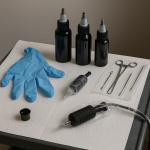
Students should expect to source the following general categories of items before practical sessions (local practice or supervised sessions): cartridges/needles suitable for PMU, disposable tips, pigments matched to skin tones, machine or manual tools as specified by the technique, gloves, barrier film and sharps containers. Exact product suggestions are included in the course handbook.
- Disposable needles/cartridges (single-use)
- Medical-grade pigments from reputable manufacturers
- Practice skins for initial technique drills
- Personal protective equipment (PPE) — gloves, masks and aprons
- Sharps container compliant with UK waste regulations
- Aftercare dressings and written aftercare templates
- High-quality lighting and magnification for precision work
- Camera or smartphone for clear portfolio photos
We guide you through how to choose equipment that matches your technique and budget, and how to check product safety declarations — including CE marking and MSDS where applicable. Students are encouraged to source equipment from reputable UK distributors and to prioritise disposable, single-use products for infection control.
Career Paths After the Course
Graduates of the Online Permanent Makeup Course typically pursue a variety of paths: starting a freelance PMU business, joining an established salon or clinic, specialising in corrective or restorative pigmentation, or adding PMU to an existing beauty services list. The versatility of PMU skills means many of our students create hybrid careers combining brows, lips and light enhancement services.
In the UK market, clear documentation, portfolio quality and client aftercare reputation are often more important than location. Some students choose to work mobile or book private studio days while they grow a client base. Our modules include marketing and client retention advice customised for UK practitioners.
Here are some common career steps students take after certification:
- Start with entry-level brows (hairstrokes or powder brows) and build to more advanced lip and eyeliner services.
- Work alongside an experienced practitioner for live client mentoring.
- Create a targeted social media portfolio that documents healing stages and client testimonials.
- Offer ‘top-up’ or ‘touch-up’ appointments with a clear pricing and aftercare policy.
- Upskill with advanced colour correction or camouflage training once confident with fundamentals.
- Apply for professional membership with recognised UK associations to strengthen credibility.
- Consider adding allied services such as brow lamination or microblading complementaries (where permitted by local regulations).
- Develop relationships with local suppliers and clinics for referrals and controlled practice opportunities.
Frequently Asked Questions
The FAQs below are phrased as questions students commonly search for when considering an Online Permanent Makeup Course. Each answer is concise and practical.
What will I learn?
What will you learn is captured in our module list earlier on this page: safety, technique, client care and business foundations. Each FAQ answer maps back to course modules so you can see where topics are covered.
Is the qualification recognised?
Yes, the curriculum aligns with CPD Standards Office principles and BAQA-referenced practices. That alignment helps when presenting your credential to insurers or employers in the UK.
How long does it take to complete?
The online modules are flexible — completion times vary by student. Typical completion ranges are a few weeks for experienced technicians building a portfolio, to several months for beginners balancing other commitments.
Final Thoughts & Next Steps
Choosing to study an Online Permanent Makeup Course is a practical, flexible pathway into a rewarding industry. For many students in the UK, online study combined with local supervised practice offers the fastest route to competence and confidence. Our course supports you with clear learning milestones and accredited assessment so you can show evidence of professional standards.
If you’re serious about beginning a career in PMU, the next step is simple: enrol, review the module overview, and start with the foundational units on skin, safety and colour. As you progress, compile your portfolio and seek supervised practice opportunities to hone your skills on live clients under appropriate local oversight.
We believe strong, ethical practice and excellent aftercare are the foundations of a long-term PMU career. If you’re ready to invest in your development, Skinart United Kingdom is here to guide you through every step of the learning process.
Ready to start your PMU journey?
Join hundreds of UK students who have taken their first step into permanent makeup with Skinart. Our accredited online course gives clear, practical tools you can apply as you build towards a professional practice.
Recent Blog Posts
- Studio Etiquette Update: Professionalism in 2026
 Workplace Etiquette for Body Art Studios Refresh your studio etiquette and build a reputation for professionalism with these up-to-date best practices.… Read More »Studio Etiquette Update: Professionalism in 2026
 - 🌙 Eid Mubarak: Celebrate with 5% Off in 2026!
 Eid Savings: 5% Off All Courses Celebrate Eid with a special offer: 5% off any course. Use code EID5 at checkout.… Read More »🌙 Eid Mubarak: Celebrate with 5% Off in 2026!
 - Top Mistakes New Body Artists Should Avoid (2026)
 Stay Ahead: Common Pitfalls for New Artists Read up on the most frequent errors new body artists make, and how to… Read More »Top Mistakes New Body Artists Should Avoid (2026)