Common Piercing Mistakes and How to Avoid Them
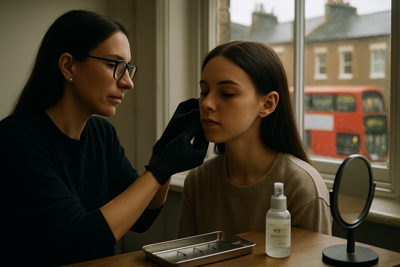
Whether you’re a budding piercer or a client planning your next piece of body art, understanding Common Piercing Mistakes is essential. Piercing is both a craft and a responsibility — mistakes harm clients, damage reputations, and slow healing. This guide will walk you, step-by-step, through the errors we see most often in the United Kingdom and how to avoid them.
At Skinart United Kingdom we’ve trained thousands of students and reviewed countless aftercare cases. In this article you’ll find practical, evidence-based advice, local examples from the UK scene, and clear tips you can apply immediately — whether you are self-studying or preparing for professional CPD-accredited work.
Table of Contents
- Introduction: Why Common Piercing Mistakes Matter
- Choosing the Right Studio and Practitioner
- Technique, Tools and Sterility
- Aftercare Errors That Delay Healing
- Jewellery Selection Mistakes
- Consent, Communication and Medical Screening
- Procedural Mistakes to Watch For
- Quick Preventive Checklist
- Frequently Asked Questions
- Final Thoughts & Next Steps
Introduction: Why Common Piercing Mistakes Matter
Piercing is more than aesthetic — it interacts with human tissue, microbiology, and lifestyle. Avoiding Common Piercing Mistakes reduces infection, migration, scarring and client dissatisfaction. For practitioners in the United Kingdom, adherence to guidance from local public health authorities and industry bodies isn’t optional — it’s what protects clients and your license to operate.
In this section we’ll define the biggest categories of mistakes: poor studio choice and hygiene, inadequate technique, wrong jewellery choice, and weak aftercare instructions. Each causes predictable complications, and most are preventable with methodical training and checklists — which is exactly what our CPD-accredited online Piercing course emphasises.
We’ll also share practical UK-specific examples and quotes from industry voices to help you see how these lessons play out in real life. Whether you’re a trainee piercer, a shop owner, or a client considering a new piercing, learning these pitfalls will save pain and preserve outcomes.
Choosing the Right Studio and Practitioner
Picking the right place for a piercing is the first defence against Common Piercing Mistakes. A reputable studio demonstrates clear infection control procedures, visible licensing, and trained staff who can explain risks. In the UK, regulation varies by local authorities, so due diligence is essential.
Pros and cons of booking by recommendation vs. walk-in:
- Pros — Recommendations from friends and trusted practitioners generally point to safer studios with documented hygiene and good aftercare practices.
- Cons — Popular shops can be busy; rushed appointments increase mistakes such as wrong placement or skipped consent checks.
- Pros — Booking ahead allows time for pre-screening questions and a calm, controlled procedure.
- Cons — Online reviews sometimes highlight aesthetic satisfaction but miss clinical details; ask targeted questions about sterilisation.
When you visit, look for single-use sterile packaging, autoclave records, visible training certificates, and clear aftercare instructions. If a studio or piercer refuses to answer basic questions about sterilisation processes or cuts corners during consultation, that’s a red flag.
At Skinart United Kingdom we emphasise the consultation as a technical step: mapping anatomy, explaining jewellery choices, and documenting informed consent. Our online Piercing course trains students to make this conversation calm, medical, and client-centred — preventing many of the Common Piercing Mistakes that stem from rushed or casual consultations.
Technique, Tools and Sterility — Core Concepts
Technical mistakes are among the most damaging Common Piercing Mistakes. These include poor angle, incorrect depth, using inappropriate clamps or needles, and gaps in sterile technique. Each can cause migration, rejection, or long-term scarring.
Key technical principles every practitioner should follow:
- Use single-use, sterile needles sized appropriately for the tissue and jewellery selected.
- Never use piercing guns on cartilage — they blunt tissue, increase trauma, and increase infection risk.
- Mark and double-check placement with consultation notes and client confirmation before piercing.
- Maintain a sterile field; plan instrument layout and glove changes to avoid cross-contamination.
- Use anatomically appropriate clamps and techniques (e.g., good support for lobes, care with tight tissue types).
- Document autoclave cycles and batch numbers for jewellery and needles when possible.
- Practice consistent hand hygiene and surface disinfection between clients.
In the UK, local environmental health teams inspect and advise on sterilisation protocols. A municipality spokesman in Manchester testified in 2022 that “consistent autoclave validation and staff training are the greatest predictors of safe services.” That underlines why proper technical systems beat improvisation every time.
Our online Piercing course reproduces these standard operating procedures and includes step-by-step demonstrations of correct needle handling, placement marking, and setup — which directly reduces Common Piercing Mistakes for trainees.
Aftercare Errors That Delay Healing
Aftercare is where many Common Piercing Mistakes manifest: inadequate cleaning, premature jewellery swapping, swimming in high-risk waters, and poor communication about signs of infection. A clear, practical aftercare routine reduces complications and rebook rates.
- Failing to explain what normal healing looks like vs. infection signs
- Advising non-validated cleaning products or home remedies (e.g., alcohol, hydrogen peroxide) that hinder healing
- Not warning clients about risks from swimming pools, hot tubs, or sea water during early healing
- Permitting early jewellery changes before tissue has matured
- Failing to supply written aftercare instructions and emergency contact information
- Not documenting allergies or contraindications that affect topical aftercare
- Overcomplicating aftercare (clients ignore lengthy protocols)
- Undervaluing follow-up checks (two-way communication prevents escalation)
Good aftercare advice is short, specific and pragmatic. For example: saline soak twice daily, avoid touching with unwashed hands, avoid swimming for X weeks depending on location, and check for increasing redness, discharge, or systemic signs like fever. In the UK, NHS guidance around wound infection is relevant and useful to reference when discussing symptoms that require medical attention.
When our students complete Skinart’s Piercing course they’re tested on creating clear, client-friendly aftercare sheets and role-playing follow-up calls. That training dramatically reduces the number of common post-piercing complications we see in the wild.
Jewellery Selection Mistakes
Incorrect jewellery is a surprisingly common cause of complications. Jewellery that’s too narrow, non-biocompatible, heavy, or shaped poorly for the anatomy will provoke migration, embedment, or allergic responses. Selecting the right initial jewellery is a clinical decision, not a fashion statement.
Common pitfalls include choosing cheap base metals, wrong gauge sizes, and poor closures. For example, captive bead rings in tight tissue often cause pressure necrosis if used as initial jewellery where a straight bar would have been better.
- Using plated or low-grade metals on fresh piercings
- Incorrect gauge relative to tissue thickness (too thin = migration)
- Overly heavy jewellery in cartilage areas
- Complex shapes (dangling ends) that catch and cause trauma
- Non-threaded jewellery that complicates cleaning and closure
- Starting with custom or decorative pieces before tissue stability
- Failing to size for initial swelling, then swapping too early
- Not checking for nickel sensitivity or known metal allergies
Best practice is documented in training: start with non-reactive implant-grade metals (e.g., implant grade titanium or niobium) and size the jewellery to allow for initial swelling. Encourage clients to delay decorative changes until the tissue has fully matured — an important talking point during consent.
Note: Skinart United Kingdom does not supply piercing equipment. Our training focuses on correct selection and clinical reasoning so graduates can source appropriate jewellery through reputable UK suppliers.
Consent, Communication and Medical Screening
Poor consent and health screening lead to preventable complications. Asking about medical conditions, medications (e.g., blood thinners), pregnancy, and allergies is mandatory. Missing these details is one of the most frequent Common Piercing Mistakes we audit.
- Failing to record anticoagulant or steroid use
- Not asking about diabetes or immune-compromising conditions
- Missing pregnancy screening — pregnancy changes healing and risk assessment
- Not checking for age and capacity (UK age restrictions vary by piercing type)
- Not documenting informed consent and client questions
Good documentation protects both client and practitioner. Our course teaches standardised intake forms and scripts so trainees never forget critical screening questions. In the UK, follow your local authority’s guidelines on age restrictions and parental consent where applicable.
Clear communication also manages expectations: explain healing timeframes, scar possibilities and realistic outcomes. Clients who understand the process are less likely to rebook for corrective procedures later.
Procedural Mistakes to Watch For
Below is a comprehensive list of procedural mistakes we repeatedly encounter in audits and case reviews. These are practical errors made during the appointment and are often remediable with training and checklists.
- Using a piercing gun on cartilage or delicate structures
- Poor placement marking; failing to double-check orientation
- Insufficient tissue support during needle insertion
- Re-using clamps or tools without proper sterilisation
- Failing to change gloves after handling non-sterile surfaces
- Bad technique that crushes tissue instead of cleanly separating it
- Improper jewellery closure leading to migration or loss
- Skipping an immediate post-piercing check (bleeding, jewellery fit)
- Not managing client anxiety; sudden movement during procedure
- Poor waste disposal of sharps and contaminated materials
Each of these mistakes increases risk. For example, using a piercing gun on cartilage doesn’t just cause mechanical trauma — it forces blunt force into delicate tissue and dramatically raises the chance of scarring and infection. The UK’s professional community strongly discourages guns beyond soft lobe piercings for this reason.
Practical mitigation includes checklists, timeouts (confirming client, site and jewellery), and a culture of safety where staff are encouraged to pause or reschedule if conditions aren’t optimal. These are core competencies taught in Skinart’s accredited programme.
Quick Preventive Checklist
The checklist below is a practical tool to avoid the most common problems. Use it as a pre-procedure and post-procedure guide:
- Confirm client identity, age, and capacity; check and record medical history
- Discuss and mark placement; get client verbal confirmation and photograph if agreed
- Prepare a sterile field: sealed, single-use needles; sterile jewellery; sterile gloves
- Run through a timeout: client, site, jewellery, pain management strategy
- Ensure instrument sterilisation records are accessible and current
- Complete the procedure with minimal tissue trauma and check for correct jewellery alignment
- Provide short written aftercare and set a follow-up communication window
- Document the appointment thoroughly and advise on signs that require medical attention
Using this kind of structured approach reduces human error. Our online course includes downloadable checklists and templates used by professional studios across the UK. These resources make it easier to implement good practice immediately.
Remember: processes protect reputations. A small amount of planning and documentation avoids costly corrective work later on.
Top 12 Common Piercing Mistakes
- Using non-sterile or improperly validated autoclave cycles
- Relying on piercing guns for anything beyond soft lobes
- Inadequate screening for medical conditions and medications
- Poor placement marking that ignores anatomy and movement
- Choosing the wrong initial jewellery (material, gauge, weight)
- Giving inconsistent or confusing aftercare advice
- Failing to document the appointment details comprehensively
- Not managing client movement or anxiety during the procedure
- Skipping postoperative checks and follow-up communications
- Improper disposal of sharps and contaminated waste
- Using inappropriate or low-grade jewellery on fresh piercings
- Assuming cosmetic outcome over clinical safety — prioritising looks instead of tissue health
These mistakes represent a mixture of technical, communicative and administrative failures. Reducing them requires training, checklists, and a culture where staff are empowered to pause and correct risky behaviours.
In our experience training UK-based practitioners, the majority of complications we see are traceable to two root causes: inadequate training on technique, and poor client-staff communication. Fix those two and you remove a large proportion of the common problems.
UK Examples, Quotes and Learning Points
Across towns from Bristol to Edinburgh, we’ve reviewed real case studies that illustrate Common Piercing Mistakes. One notable example involved a cartilage piercing in a small studio where a captive bead ring was used as initial jewellery; within weeks the client experienced migration and required removal. The corrective work was far costlier than the modest extra expense of starting with a straight bar made from implant-grade titanium.
Here’s a quote from a UK environmental health advisor who audits studios: “Training and documentation are what we look for: signed consent, traceable sterilisation records and clear aftercare. These are simple markers of a safe practice.” That aligns with the CPD and BAQA standards we teach.
Another success story: a recent Skinart graduate in Leeds implemented our intake checklist and saw a measurable drop in follow-up complaints. The owner reported fewer corrective appointments, better client retention, and stronger online reviews — demonstrating that good clinical practice improves the business case as well.
How Training Prevents Common Piercing Mistakes
Structured training turns tacit knowledge into repeatable practice. Common Piercing Mistakes are often habits learned informally; formal education replaces habit with evidence-based technique and standard operating procedures. Our CPD-accredited online Piercing course focuses on the exact competencies that reduce complication rates.
Key training outcomes include improved placement accuracy, better jewellery selection, clearer aftercare instructions, and confidence when screening for medical contraindications. Graduates report feeling more professional and better prepared to join regulated studios across the United Kingdom.
Written by Gary Erskine, lead tutor with over 25 years in the industry, the course draws on thousands of case studies and UK-specific regulatory contexts so you can apply training immediately in local practice.
Frequently Asked Questions
Q: What are the most common piercing mistakes clients make?
Clients commonly touch fresh piercings with unclean hands, sleep on them, or expose them to unclean water. These behaviours are frequent contributors to delayed healing and infection.
Q: How do I know if a piercer is following safe sterilisation?
Ask to see validation records, autoclave logs, and single-use packaging. A safe studio will explain their protocols without hesitation and provide clear aftercare instructions.
Q: When should I seek medical attention after a piercing?
If you experience severe pain, persistent swelling, yellow or green discharge, fever or red streaks spreading from the site, seek medical attention promptly; these may be signs of systemic infection requiring professional care.
Final Thoughts: Take Action, Improve Outcomes
Common Piercing Mistakes are avoidable with awareness, training and simple systems. Whether you’re a client choosing a studio or a piercer refining your practice, small changes—checklists, better jewellery choices, clear aftercare, and stronger screening—produce better healing, fewer complaints and a more professional reputation.
At Skinart United Kingdom we specialise in turning practical knowledge into reliable routine. Our CPD-accredited online Piercing course equips you with the technical skills and documentation templates used by licensed studios across the UK. Written and taught by Gary Erskine, with over 25 years of industry experience, the course is designed to reduce mistakes before they happen.
Ready to Reduce Mistakes and Improve Outcomes?
Recent Blog Posts
- Studio Etiquette Update: Professionalism in 2026
 Workplace Etiquette for Body Art Studios Refresh your studio etiquette and build a reputation for professionalism with these up-to-date best practices.… Read More »Studio Etiquette Update: Professionalism in 2026
 - 🌙 Eid Mubarak: Celebrate with 5% Off in 2026!
 Eid Savings: 5% Off All Courses Celebrate Eid with a special offer: 5% off any course. Use code EID5 at checkout.… Read More »🌙 Eid Mubarak: Celebrate with 5% Off in 2026!
 - Top Mistakes New Body Artists Should Avoid (2026)
 Stay Ahead: Common Pitfalls for New Artists Read up on the most frequent errors new body artists make, and how to… Read More »Top Mistakes New Body Artists Should Avoid (2026)
Written by Gary Erskine, lead tutor at Skinart United Kingdom — 25+ years’ industry experience. Gary has trained thousands of piercers worldwide and contributes to BAQA and CPD curriculum development in the UK.