Learn Scalp Micropigmentation from Home: Beginner’s Guide
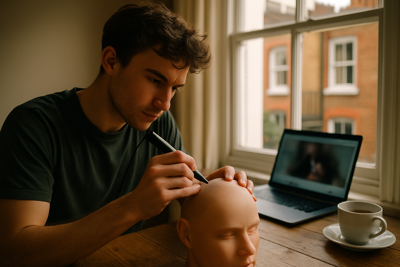
Learn Scalp Micropigmentation from Home with a structured, accredited pathway tailored for beginners in the United Kingdom. This guide walks you through the fundamentals — from what SMP is to the practical skills you can learn remotely — so you can make an informed decision about training and your next steps. Whether you are exploring a career change or expanding your aesthetic services, the ability to learn scalp micropigmentation from home offers flexibility without compromising the core principles of safety, colour theory and client care.
Written by Gary Erskine, 25 years in Scalp Micropigmentation education and lead tutor at Skinart United Kingdom. Over two decades in the industry has taught me how to translate hands-on skills into clear, effective online learning modules — the same standards that underpin our accredited online Scalp Micropigmentation course.
Table of Contents
Use the links below to jump to sections. Adding semantic anchors improves accessibility and can create helpful “Jump to” links in search results.
- What is Scalp Micropigmentation?
- How to Learn Scalp Micropigmentation from Home
- Benefits and Limitations of Remote SMP Training
- Tools, Resources & Preparations
- Core Skills You’ll Learn
- Common Beginner Mistakes to Avoid
- Legal, Hygiene & Safety in the UK
- FAQs — Learn Scalp Micropigmentation from Home
- Final Thoughts & Next Steps
What is Scalp Micropigmentation?
Scalp Micropigmentation (SMP) is a non-surgical cosmetic procedure that uses specialised pigments to recreate the appearance of hair follicles on the scalp. Unlike tattooing that focuses on solid lines and large areas of colour, SMP uses micro-dots to build density, replicate hair stubble, and create natural-looking hairlines. For clients in the United Kingdom, SMP is now a widely accepted option to address hair loss, alopecia and thinning hair, offering an aesthetic solution that works across skin tones and hair types.
At its core, SMP is a blend of colour science, precision hand-poking or machine technique, and a deep understanding of scalp topology. When learning SMP remotely, students focus on theoretical foundations like pigment selection, contraindications, and client consultation — then translate these theories into practical repetition using practice skins and simulation tools at home. A good course teaches both the why and the how, so you can safely progress to real clients when you’re ready.
Skinart United Kingdom’s online Scalp Micropigmentation course is fully accredited with the CPD Standards Office and the Body Art Qualification Association (BAQA), ensuring the curriculum meets recognised professional benchmarks. Accreditation is important: it reassures clients and regulatory bodies that a practitioner has completed a vetted programme with assessment and standards that align with industry best practice.
How to Learn Scalp Micropigmentation from Home
Learning SMP from home is common now because modern e-learning platforms allow structured modules, video demonstrations, and tutor feedback without travel. If you are committed, remote study can give you the theoretical knowledge and repeatable practice sessions needed to develop muscle memory and colour judgement. The most successful remote learners pair online modules with disciplined at-home practice on approved training skins and frequent tutor reviews.
Pros and cons of studying SMP remotely:
- Pros: Flexibility to study around work and family, repeatable video lessons, access to accredited resources and recorded demonstrations.
- Cons: No initial in-person supervision for live client cases, you must supply your own practice equipment, and hands-on confidence takes longer without immediate face-to-face correction.
To bridge the gap between remote learning and live practice, an accredited course will include step-by-step video tutorials for set-up, pigment mixing, needle angles, session mapping and aftercare. It will also provide a clear progression plan for practical assessments. Our online Scalp Micropigmentation course includes tutor-marked assignments, video submissions for evaluation and access to an online community for peer feedback.
Remember: you cannot rely on online training alone — plan for supervised practice before taking paying clients. We emphasise safe progression: build your portfolio on practice skins and volunteer models, and only move to paid work when your tutor has certified your practical competence.
Benefits and Limitations of Remote SMP Training
Remote SMP training is designed to be comprehensive: it emphasises the foundations you need to make safe, attractive outcomes for clients. Students usually cover consultation skills, design and hairline mapping, pigment theory, practical dotwork, session planning and aftercare remotely. For many learners in the UK these elements are sufficient to begin supervised practice and to understand the standards required by local regulators and professional bodies.
However, limitations exist. A remote course cannot fully replace the real-time tactile feedback of an experienced tutor standing over your shoulder during a live client procedure. This is why reputable accredited online programmes include graded practical assessments and tutor review points to confirm readiness.
In short: remote learning is powerful for knowledge, observational learning and early practical drills; it becomes most effective when combined with assessed, supervised practice as part of a staged competency path.
Tools, Resources & Preparations for Home Practice
To learn scalp micropigmentation from home you will need the right set of learning resources and safe practice materials. Accredited online courses typically provide a curriculum, video demonstrations, downloadable manuals and tutor checks. In the UK, Skinart United Kingdom’s online SMP course outlines practice routines and recommended supplier types, but please note we do not supply scalp micropigmentation equipment in United Kingdom — students are responsible for sourcing their own consumables and practice skins.
Essential items for early practice:
- High-quality practice skins in a variety of textures to simulate different scalps.
- Practice machine or micro-needle tools suitable for SMP (check manufacturer guidance and CE markings).
- Accredited pigments intended for scalp use with clear fade and safety data.
- Disposable needles, gloves, barrier films and medical-grade wipes for hygiene simulation.
- Magnification lamp and stable work surface for detailed dotwork.
- Photography kit (consistent lighting and camera setup) to record case progression for assessments and portfolios.
- Client consultation templates and consent forms tailored to UK regulation and BAQA guidance.
- A dedicated workspace that can be cleaned and disinfected between practice sessions.
Although you must obtain equipment yourself in the UK, reputable online courses will give detailed shopping lists, safe-use checklists and links to accredited suppliers so you can make informed purchasing decisions.
For legal and safety reading, consult the CPD Standards Office and BAQA guidance pages for up-to-date best practice in professional training and client safety. These external resources complement your course learning and provide a regulatory context for practice.
Core Skills You’ll Master When You Learn SMP from Home
When you decide to learn scalp micropigmentation from home, aim to systematically build the following core skills. These competencies are the foundation of safe practice and consistent client satisfaction:
Practice-focused repetition, under tutor review, is the fastest route to confidence. Each of the skills below should be practiced on simulation materials until you can demonstrate reliable results to a qualified assessor.
- Scalp mapping and hairline design — learning to create natural, age-appropriate hairlines for different face shapes.
- Dot placement and density control — understanding spacing, depth and angle to produce realistic follicle impressions.
- Pigment selection and colour correction — choosing shades for diverse skin tones and managing expected fade patterns.
- Needle handling and machine technique — consistent movement, hand stability, and safe needle depth control.
- Client consultation and patch testing — recognising contraindications and communicating realistic outcomes.
- Aftercare planning and managing touch-ups — advising clients on recovery, sun protection and maintenance sessions.
- Photography and documentation — consistent photos for before/after evidence and assessment records.
- Business fundamentals — pricing, client communication, record keeping and compliance with UK expectations.
Many students report rapid improvement when they alternate focused skills practice with reviewing tutor feedback. Our accredited course includes video assignments so you get constructive corrections tailored to these skill areas.
Common Mistakes Beginners Make (and How to Avoid Them)
- Going too deep with needles, causing scarring and uneven pigment retention.
- Poor pigment selection — choosing shades that oxidise or clash with natural skin tone.
- Ignoring scalp topology — not adjusting dot size and pressure on different areas of the scalp.
- Overcrowding dots — creating a blotchy effect rather than natural density.
- Rushing the consultation — failing to manage client expectations and record contraindications.
- Not photographing consistently — losing the ability to judge progress and justify results.
- Poor aftercare advice — leading to complications or early pigment loss.
- Skipping tutor feedback — assuming competence without external validation.
These mistakes are avoidable. The safest approach is to follow an accredited syllabus, submit regular video assessments, and use a checklist-based approach to every session. At Skinart United Kingdom we emphasise structured progression: theory, practice, assessment, then supervised client work.
Industry voices agree. As the CPD Standards Office notes, “Accredited training and documented assessment are critical to professional practice” — a sentiment echoed by BAQA for body art qualifications. These endorsements reinforce why accredited online learning matters when you choose to learn scalp micropigmentation from home.
Legal, Hygiene & Safety Considerations in the United Kingdom
Scalp micropigmentation in the UK falls under body art regulations and local council public health guidance. Practitioners must prioritise client safety through rigorous hygiene, accurate record-keeping and recognition of contraindications such as active scalp infections, blood disorders or certain medications. While regulations vary by local authority, the principles are consistent: adequate training, proper waste disposal, and robust client consultations are mandatory.
Important practical safety steps include:
- Using single-use needles and disposables to prevent cross-contamination.
- Maintaining an up-to-date client record for medical history, consent and patch tests.
- Following sharps waste disposal rules and local authority guidance.
- Implementing a cleaning and disinfection routine for your workspace and equipment.
- Understanding the need to refer clients to medical professionals when necessary.
- Keeping continuing professional development records — especially for accredited practitioners.
- Having clear aftercare instructions and emergency contact procedures.
- Ensuring photography and client images are stored securely in line with GDPR.
For authoritative guidance consult the CPD Standards Office and BAQA websites for accredited training details and recommended practice standards. These organisations provide frameworks that align with local council expectations and support professional recognition in the UK.
“Accredited training is vital for public safety and practitioner confidence. Practitioners who invest in accredited courses demonstrate commitment to best practice.” — CPD Standards Office
Frequently Asked Questions — Learn Scalp Micropigmentation from Home
Below are common questions prospective students ask about learning SMP remotely in the UK. Each answer is short and practical.
Can I become a safe and competent SMP practitioner by learning from home?
Yes — with a recognised, accredited course that includes structured theory, video demonstrations, practical assignments and tutor assessments you can develop the core competencies needed to practice safely, though supervised live practice is recommended before taking paying clients.
How long does it take to learn scalp micropigmentation from home?
Course length varies; most comprehensive accredited online SMP courses run over a few weeks to a few months depending on your pace and the frequency of practical submission reviews. Progress depends on practice time and tutor feedback cycles.
Will an online course be accredited in the United Kingdom?
Choose courses that explicitly state UK accreditation from bodies such as the CPD Standards Office and BAQA; Skinart United Kingdom’s online Scalp Micropigmentation course is accredited by both, which supports professional recognition and client confidence.
Do you supply equipment if I’m in the UK?
No — students in the United Kingdom must source their own SMP equipment and consumables; our course provides recommended specifications and supplier guidance but we do not supply scalp micropigmentation equipment in United Kingdom.
Can I take the course if I already have a tattoo background?
Yes — prior tattooing or cosmetic tattoo experience is helpful but not required; accredited SMP courses cater to beginners and experienced practitioners by covering the specific techniques and safety considerations unique to the scalp.
Is there practical assessment for the online course?
Accredited online programmes include practical assessments such as video submissions and portfolio reviews; your tutor will provide grading criteria and guidance for when you’re ready to move from practice skins to supervised real-skin work.
Final Thoughts: Your Path to Confidence in SMP
Learning scalp micropigmentation from home is a realistic and respected pathway for many UK-based students — provided you choose an accredited programme and commit to deliberate, supervised practice. The best online training gives you a clear curriculum, measurable assessments and access to experienced tutors who provide corrective feedback.
At Skinart United Kingdom we’ve structured our online Scalp Micropigmentation course so you gain theoretical depth, practical repetition, and formal accreditation from recognised bodies (CPD Standards Office and BAQA). The focus is on professional standards, client safety and achieving natural outcomes that build trust and repeat business.
If you’re serious about starting, take the small but decisive step: enrol in an accredited course, commit to a regular practice schedule, and plan for tutor-led assessments that will mark your readiness to move to live-skin practice. With structured learning and persistence you can create a reliable, sustainable SMP practice in the United Kingdom.
Ready to Begin? Take the Next Step
If this guide has helped you understand how to learn scalp micropigmentation from home and what to expect from accredited training, we invite you to join our next intake. Our online Scalp Micropigmentation course is designed for UK learners and balances practical skill development with recognised accreditation.
Recent Blog Posts
- Studio Etiquette Update: Professionalism in 2026
 Workplace Etiquette for Body Art Studios Refresh your studio etiquette and build a reputation for professionalism with these up-to-date best practices.… Read More »Studio Etiquette Update: Professionalism in 2026
 - 🌙 Eid Mubarak: Celebrate with 5% Off in 2026!
 Eid Savings: 5% Off All Courses Celebrate Eid with a special offer: 5% off any course. Use code EID5 at checkout.… Read More »🌙 Eid Mubarak: Celebrate with 5% Off in 2026!
 - Top Mistakes New Body Artists Should Avoid (2026)
 Stay Ahead: Common Pitfalls for New Artists Read up on the most frequent errors new body artists make, and how to… Read More »Top Mistakes New Body Artists Should Avoid (2026)