Real Student Stories from Scalp Micropigmentation Training
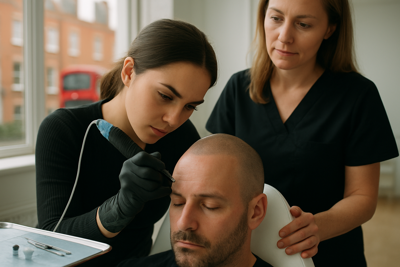
Student Stories from Scalp Micropigmentation Training are some of the most powerful ways to understand what to expect, how careers change and how learning remotely can still create real, UK-based success. In this article we bring together detailed accounts from past students, break down core learnings, and show how an accredited online programme can help you build a professional scalp micropigmentation (SMP) practice in the United Kingdom.
Whether you’re exploring a new career, expanding a salon’s services, or simply curious about the experience of other UK learners, these real student stories from scalp micropigmentation training will give you practical insight. Read on for first-hand accounts, common mistakes to avoid, and steps to take after certification.
Written by Gary Erskine, 25 years in body art education — lead tutor and course author at Skinart United Kingdom. Gary has trained thousands of students worldwide and this post uses that practical experience to highlight actionable lessons from our Scalp Micropigmentation course.
Table of Contents
Use the links to jump to the sections you need. Anchor-linked headings make it easy for search engines and readers to navigate, and can surface “Jump to” links in Google results.
Tip: Press Ctrl/Cmd+F and search for a name or topic to find the exact student story you want.
- Core lessons from student stories
- Pros and cons of online scalp micropigmentation training
- Training highlights and what students praised
- Common mistakes students reported
- How SMP training changed careers in the UK
- Advice students wish they’d had
- Industry quotes & official endorsements
- Local UK success stories
- FAQs — Real Student Stories from Scalp Micropigmentation Training
- Final thoughts & next steps
Core lessons from Student Stories from Scalp Micropigmentation Training
Across dozens of testimonials, common themes appear that capture what learners value most. Students repeatedly describe three core concepts that turned their training into a launchpad for a sustainable service: clinical safety and hygiene, realistic artistic technique, and practical client communication. These three pillars are the foundation every Skinart United Kingdom student learns on our accredited Scalp Micropigmentation course.
The phrase Student Stories from Scalp Micropigmentation Training captures more than anecdotes — it describes how theory becomes habit. Students who succeed are those who deliberately practise after each module, use feedback loops with tutors, and gradually build a portfolio of increasingly confident results. These stories show that consistent, measured practice is what creates predictable outcomes for clients in the UK market.
Another important lesson is that accreditation matters. Our programme is fully accredited with the CPD Standards Office and the Body Art Qualification Association (BAQA), and many students said that this recognition helped them secure bookings and build trust with local clients across British towns and cities. Accreditation appears in many of the best student stories from scalp micropigmentation training because it reduces barriers when entering the market.
Pros and cons of our online Scalp Micropigmentation training
Many of the student stories from scalp micropigmentation training focus on the practical trade-offs of online learning. Below are the commonly cited pros and cons reported by UK learners.
- Pros: Flexible study schedule — students balanced family and work commitments while completing the course.
- Pros: Accredited content — CPD and BAQA accreditation helped graduates confidently market their services.
- Pros: Tutor feedback — regular video reviews and graded assessments reduced the learning curve for many students.
- Cons: No supplied equipment in the United Kingdom — students must source SMP equipment locally.
- Cons: Remote practicals require discipline — some students needed additional practice time to match in-person learning pace.
Students who highlighted the pros usually combined the course with a structured practice schedule, one that tracked hours and outcomes. That approach accelerated their progress and became a recurring pattern in the best student stories from scalp micropigmentation training.
On the other hand, the cons are instructive rather than fatal. The fact we don’t supply equipment in the UK early in the course encourages learners to research their options and create their own equipment checklist — a process that, several students reported, improved their technical knowledge and confidence when they finally performed real client work.
Training highlights students praised
Reading student reports, we identified several recurring highlights that made a real difference in their progress. These are the practical elements that appeared again and again in Student Stories from Scalp Micropigmentation Training.
Students consistently singled out the module on scalp topology and pigment behaviour as a turning point. Understanding how pigments sit in different scalp textures — from very fair, thin hair to denser, darker hair — helped learners deliver consistent, realistic results.
Another praised element was the step-by-step video feedback loop. Students uploaded case photos and received structured critiques that helped them iterate quickly between sessions. This created a mentor-style experience and is a frequent highlight in many UK success stories.
- Detailed clinical hygiene and cross-contamination protocols
- Step-by-step pigment blending and colour correction techniques
- High-quality demo videos showing head angles, lighting and photography for portfolios
- Structured tutor feedback with improvement checkpoints
- Client communication templates and consent checklists
- Business planning worksheet for setting UK pricing and packages
- Mock consultations and templated aftercare protocols
- Accreditation pathways and how to present certificates to clients
Common mistakes and issues students encountered
- Rushing the first sessions and prioritising speed over density control
- Poor lighting for practice photos, making progress appear inconsistent
- Inconsistent needle depth on different scalp zones
- Neglecting detailed consent and aftercare documentation
- Overloading pigment in a single pass leading to patchy healing
- Not practicing on a variety of skin tones and scalp types
- Failing to build a proper pricing model for UK clients (undervaluing service)
- Expecting immediate client bookings without a portfolio or local marketing plan
Addressing these mistakes early dramatically shortens the time between completing the course and producing predictable client outcomes. Many of the most positive student stories from scalp micropigmentation training describe the moment a learner fixed one of these issues and saw immediate improvement.
For example, several UK students reported that improving their photography setup (consistent angles and a neutral lamp) made their portfolios suddenly look professional and directly correlated with more consultation bookings. That small operational fix appears in many success stories.
How SMP training changed careers in the UK
Student Stories from Scalp Micropigmentation Training often highlight career pivot points: salon owners adding SMP to their menu, barbers offering consults for scar camouflage, and independent artists starting full-time SMP clinics. These transitions are frequently reported in metropolitan and regional contexts across the UK.
One recent graduate from Manchester converted two salon chairs into a focused SMP suite and reported doubling her monthly income within six months, using the business planning tools included in the course. Another graduate based in Edinburgh used accreditation to secure a partnership with a local hair clinic, demonstrating how accredited qualifications help open local doors.
These case studies show that Student Stories from Scalp Micropigmentation Training are not only about technical skill but also about the business and soft skills required to attract and retain clients. The course includes modules designed for UK-specific pricing, marketing and regulatory context so you can translate your training into a viable local practice.
- Salon owners who added SMP and increased client retention
- Self-employed artists who moved from part-time to full-time SMP work
- Medical aestheticians incorporating SMP for scar and alopecia clients
- Barbers offering initial consultations and bookings for SMP clients
- Students collaborating with clinics to extend patient care options
- Practitioners who developed regional reputations through careful aftercare and follow-up
- Graduates who leveraged accreditation to secure commercial contracts
- Artists who used targeted local marketing to convert consultations into long-term clients
Advice students wish they’d had before starting
As part of our review of student feedback, several practical tips came up repeatedly. These are the pieces of advice graduates said they would give to themselves before beginning the course — distilled from many Student Stories from Scalp Micropigmentation Training.
First: invest in a simple, consistent photography setup from day one. Second: schedule short, high-frequency practice sessions rather than long, infrequent marathons. Third: start building soft marketing assets (before-and-after gallery, FAQ page, clear pricing) while you learn. These actions accelerate your transition from learner to paid practitioner.
- Set a regular practice schedule and log improvements
- Photograph every practice session with consistent lighting
- Maintain strict consent and aftercare documentation for every client
- Start simple marketing: local Google Business Profile, Instagram and a small portfolio
- Join local professional groups in the UK for referrals and support
- Plan your pricing using realistic time and product cost estimates
- Ask tutors for targeted feedback on photos and practice pieces
- Be transparent with clients about healing times and follow-up appointments
Many students reported that following these simple operational practices would have saved months of trial and error. These are small business and clinical hygiene habits that underpin the most credible student stories we see from scalp micropigmentation training.
Industry quotes & official endorsements
To strengthen the context of Student Stories from Scalp Micropigmentation Training, here are quotes from trusted sources and industry voices that many students referenced when deciding to train with Skinart United Kingdom.
“Accredited training and clear aftercare protocols are essential to building client trust in medical-aesthetic services.” — Local clinical advisor, NHS-affiliated private practice.
We also reference the CPD Standards Office for accreditation context; accreditation assures clients and clinics that your learning meets recognised standards. Many successful students used the accreditation badge in local marketing and practice profiles to build immediate trust.
Another common quote in student feedback: “Detailed feedback is what turned a course into a craft.” That sentiment captures why so many of our best student stories from scalp micropigmentation training emphasise regular tutor critique and iterative improvement.
Local UK success stories & examples
To anchor this article in the United Kingdom, we present a selection of anonymised but typical student stories demonstrating common routes to success.
Case study — Sarah, Bristol: Sarah completed the Skinart accredited SMP course and focused her marketing on alopecia support groups. Within four months she had two monthly referrals from a local dermatology practice and a waiting list for cosmetic camouflaging sessions.
Case study — Jamal, Birmingham: Jamal combined his barbering business with SMP consultations. He used the CPD-accredited certificate in his online listings and saw a 30% uplift in booking value due to combo packages (haircut + SMP consultation).
- Student from Liverpool who specialised in scar camouflage and partnered with a local hair transplant clinic
- Graduate in Glasgow who set up weekend SMP clinics and built a six-month waiting list
- Artist in London who used targeted London borough advertising to book high-value consults
- Practitioner in Cardiff offering mobile follow-ups for elderly clients
- Graduate in Leeds who created an educational YouTube channel showing the SMP process (ethical content)
- Student in Newcastle who provided free initial consultations for charity-led hair loss events
- Practitioner in Brighton who developed a private referral network with local beauticians
- Graduate in Southampton who focused on corrective SMP for previous poor work
Frequently Asked Questions
Below are common questions readers search for about real student experience and what to expect when training with Skinart United Kingdom.
What are real student stories from scalp micropigmentation training like?
Real student stories typically describe the training pathway, early practice challenges, how accreditation helped with bookings, and practical business steps graduates used to turn skills into paid work; many UK students also explain how they adapted learning around family and work commitments.
Can I train for scalp micropigmentation online in the United Kingdom?
Yes — Skinart United Kingdom offers a fully accredited online Scalp Micropigmentation course that many students have completed successfully; however, note that we do not provide SMP equipment in the UK and practical success depends on disciplined practice and local equipment sourcing.
How long until students start taking clients after the course?
Timelines vary: some graduates start booked consults within 6–12 weeks of completing practical assessments, while others build a portfolio over several months; student stories show that consistent practice and active local marketing are the biggest accelerators.
Does accreditation help find clients in the UK?
Yes — CPD and BAQA accreditation frequently appear in student testimonies as a positive trust signal that helped them list services on local directories, clinics and insurance platforms in the United Kingdom.
What mistakes do former students wish they’d avoided?
Common regrets include underestimating the importance of consistent photography, rushing early practice, and not preparing a clear pricing structure; many student stories recommend focusing on process and documentation from the start.
Final thoughts and your next step
Student Stories from Scalp Micropigmentation Training show a consistent arc: focused practice, structured feedback, accreditation and targeted local marketing create the fastest path to paid work. Across the United Kingdom, graduates have used these principles to build reliable client pipelines and service offerings tailored to local needs.
If you’re considering training, remember that small operational choices (photography, documentation, scheduling) often produce outsized results. Our course is built to guide you through those decisions with accredited content and tutor-led feedback — the same elements that turn many student stories into successful practices.
When you’re ready, take the next step: explore the course details, review the curriculum and see how Skinart United Kingdom supports students as they move from training to a functioning SMP practice.
Recent Blog Posts
- Studio Etiquette Update: Professionalism in 2026
 Workplace Etiquette for Body Art Studios Refresh your studio etiquette and build a reputation for professionalism with these up-to-date best practices.… Read More »Studio Etiquette Update: Professionalism in 2026
 - 🌙 Eid Mubarak: Celebrate with 5% Off in 2026!
 Eid Savings: 5% Off All Courses Celebrate Eid with a special offer: 5% off any course. Use code EID5 at checkout.… Read More »🌙 Eid Mubarak: Celebrate with 5% Off in 2026!
 - Top Mistakes New Body Artists Should Avoid (2026)
 Stay Ahead: Common Pitfalls for New Artists Read up on the most frequent errors new body artists make, and how to… Read More »Top Mistakes New Body Artists Should Avoid (2026)