Scalp Micropigmentation Certification & Insurance United Kingdom
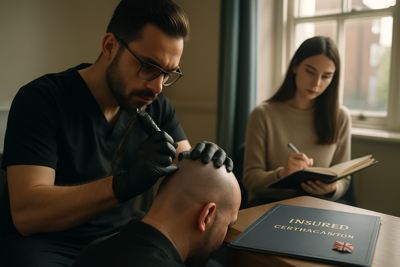
Scalp Micropigmentation Certification & Insurance United Kingdom is a crucial step for any practitioner who wants to offer professional, compliant SMP services across the UK. Whether you are beginning your career or expanding an existing clinic, understanding the interplay between accredited training, recognised certification, and the right insurance cover will protect your business and build client trust.
At Skinart United Kingdom we provide an accredited online Scalp Micropigmentation course designed to meet CPD Standards Office requirements and align with guidance from industry bodies. This article walks you through the practical steps to get certified, the types of insurance policies you should consider, and how to run a safe, legally compliant SMP practice in the UK.
Table of Contents
Use the links below to jump to the section you need. These anchor-linked headings help both readers and search engines find relevant guidance—perfect if you plan to reference local regulations or insurance details.
- What is Scalp Micropigmentation?
- Why Certification Matters in the UK
- Insurance for SMP Practitioners
- UK Regulatory Landscape & Local Authorities
- Recommended Training & Accreditation
- Common Mistakes to Avoid
- Setting Up Your SMP Service
- Client Consultation, Consent & Aftercare
- Frequently Asked Questions
- Final Thoughts & Next Steps
What is Scalp Micropigmentation?
Scalp Micropigmentation (SMP) is a specialised pigment depositing technique that recreates the appearance of hair follicles on the scalp. It uses purpose-designed pigments and needling techniques to build density, camouflage scalp scarring, or create the illusion of a closely shaved head. For many clients across the United Kingdom, SMP is a life-changing cosmetic solution that restores confidence after hair loss.
While the visual goal is straightforward, delivering safe and predictable SMP outcomes requires more than artistic skill. It demands a rigorous understanding of skin anatomy, colour theory, sanitisation, health and safety, and client management. Proper certification demonstrates that a practitioner has learned these essentials in a structured, assessed way.
In this article we look at Scalp Micropigmentation Certification & Insurance United Kingdom — explaining how UK practitioners can meet standards, protect themselves with appropriate insurance, and offer services that align with both client expectations and local regulations.
Why Certification Matters in the UK
Certification is the bridge between training and professional practice. It shows clients, local authorities, and insurers that you have completed a recognised course and that you understand the core safety and technical standards for Scalp Micropigmentation Certification & Insurance United Kingdom.
- Pros: Builds trust with clients; required by many insurers; demonstrates CPD compliance; supports good clinical outcomes.
- Cons: Cost of accredited courses and renewals; time required for study and assessment; standards can vary between providers.
Accredited certification (for example CPD Standards Office accreditation) is increasingly used by insurance underwriters to confirm competency. Insurers will often ask about the training provider, the syllabus, and practical assessment components before offering cover or setting policy limits.
At Skinart United Kingdom we make CPD-aligned certification accessible through our online Scalp Micropigmentation course, designed specifically to help practitioners satisfy both educational and insurance requirements in the UK market.
Insurance for SMP Practitioners: What You Need
Insurance is not optional if you want to run a professional SMP service. Appropriate cover protects your business from claims related to injury, infection, allergic reaction, or dissatisfied outcomes. When shopping for insurance consider public liability, professional indemnity, and product liability, as well as employers’ liability if you employ staff.
Insurers will ask questions about your training, whether you have a formal certification, what aftercare protocols you use, and how you maintain client records. That’s why Scalp Micropigmentation Certification & Insurance United Kingdom are often evaluated together—insurers want assurance that you follow recognised standards.
Below are practical cover types and considerations that UK SMP practitioners commonly need to arrange:
- Public Liability Insurance — protects against claims by clients and members of the public for bodily injury or property damage.
- Professional Indemnity Insurance — covers legal costs and settlements if a client alleges professional negligence, poor advice, or unsatisfactory service.
- Product Liability — important if you retail inks, pigments, or aftercare products to clients.
- Employers’ Liability — a legal requirement if you have employees working for you in the UK.
- Tools and Equipment Cover — replacement value for devices and tools (note: Skinart United Kingdom does not supply SMP equipment in UK).
- Clinical / Malpractice Cover — optional for deeper protection where medical-type claims may arise.
- Cyber Insurance — increasingly relevant where sensitive client records and images are stored digitally.
- Business Interruption — useful if your clinic is forced to close temporarily due to an insured event.
UK Regulatory Landscape and Local Authority Expectations
- Local Authority Inspection — many councils treat cosmetic tattooing similarly to tattoo and skin piercing; environmental health may inspect premises and procedures.
- Health & Safety — HSE guidance on safe working applies in terms of COSHH (Control of Substances Hazardous to Health) where pigments and disinfectants are used; see HSE for details.
- Reporting — some adverse events must be recorded and reported internally; maintain thorough client records and incident logs.
- Waste Disposal — sharps and clinical waste must be disposed of according to local authority rules and licensed waste contractors.
- Age Restrictions — verify client age and obtain legal consent for adult clients; minors are generally excluded from SMP treatments in most UK councils.
- Premises Requirements — cleanable surfaces, hand wash facilities, and dedicated treatment areas are expected in most inspections.
- Data Protection — GDPR compliance for client records and before/after images is mandatory.
- Training Records — local inspections may request evidence of training and certification for practitioners working on-site.
Municipal spokespeople and environmental health officers expect practitioners to demonstrate safe working practices. In Manchester, for instance, environmental health guidelines recommend clear client consultation records, evidence of training, and strict clinical waste handling. Similar expectations exist across councils in London, Birmingham, Glasgow, and other regions.
As a responsible practitioner, keep accessible copies of your certification, client consent forms, waste disposal contracts, and insurance certificates. These documents reassure both the public and inspectors that you run a compliant service.
Recommended Training and Accreditation
Choosing the right training course matters. Accredited programmes that combine theory, practical demonstrations, and assessments will give you the best foundation to manage clinical risks and achieve consistent results. Skinart United Kingdom offers a CPD-accredited online Scalp Micropigmentation course tailored to UK practice with units covering skin physiology, pigment chemistry, infection control, client consultation, and aftercare management.
Key elements to look for in any SMP course:
- Clear learning outcomes and assessed competencies.
- Modules on infection control and UK-specific legislative expectations.
- Detailed instruction on colour theory for scalp pigments.
- Supervised practical demonstrations and case study reviews.
- Templates for consent forms, medical history checks and aftercare advice.
- Information on insurance requirements and how to present your certification to underwriters.
- Ongoing support or mentoring for early client cases (where provided).
- Recognition by reputable bodies such as the CPD Standards Office and BAQA.
When you present a recognised certificate to insurers or local regulators, it reduces uncertainty about your skill level and training rigour. That translates into faster underwriting decisions and greater confidence from clients booking appointments.
Common Mistakes and How to Avoid Them
- Skipping comprehensive certification and relying solely on short demonstrations.
- Underinsuring or assuming general business insurance covers SMP treatments.
- Poor documentation — incomplete consent forms or lack of medical history checks.
- Inadequate infection control procedures or improper sharps disposal.
- Using non-specialist pigments not intended for scalp use.
- Rushing the colour-matching process and not accounting for skin undertones.
- Failing to provide clear written aftercare instructions to clients.
- Not maintaining clear before/after images and records for each case.
Each mistake above can lead to client dissatisfaction or regulatory intervention. For instance, using a pigment not suited for the scalp can lead to early fading or colour shifts that are difficult to correct. Insurers look closely at these risk factors, and avoidable errors can increase premium costs or result in declined applications.
Addressing these issues comes down to study, process, and documentation. Certification programs teach you clinical protocols and record-keeping that help satisfy both local authority standards and insurer requirements. At Skinart United Kingdom, our curriculum emphasises these practical policies so you can set up a robust, defensible service from day one.
Setting Up Your SMP Service: Practical Steps
Opening or adapting a treatment room for SMP requires careful attention to layout and hygiene. Valuable steps include designating a single treatment area with easily cleaned surfaces, a separate chair for clients, and a sanitation bench for preparing disposables and pigments. A clean workflow reduces cross-contamination risk and demonstrates professionalism during inspections.
Administrative processes are equally important. Implement a client booking system that records medical history, consent, and photo documentation. Digital records must be stored according to GDPR principles. Consider template forms that you can present to clients and inspectors as evidence of standardised practice.
- Designate a clinical treatment zone with non-porous surfaces.
- Install clear hand-wash facilities and display hand hygiene expectations.
- Use single-use needles and clinical-grade pigments intended for scalp use.
- Contract an authorised clinical waste disposal service for sharps and contaminated materials.
- Keep up-to-date training evidence and make it available if requested.
- Document every client case with before-and-after images and a signed consent form.
- Use written aftercare instructions tailored to SMP healing phases.
- Maintain an insurance folder with policy documents and renewal dates.
While we do not supply SMP equipment in the United Kingdom, our course prepares you to select suitable devices and pigments from reputable suppliers. We emphasise supplier due diligence, verifying product data sheets, and ensuring compatibility with UK clinical standards.
Client Consultation, Consent & Aftercare
A comprehensive consultation is the foundation of a successful SMP session. It covers medical history, medication reviews, realistic outcome setting, and clear photographic records. You should confirm client expectations, discuss pigment choices, and explain the staged nature of SMP treatments—often requiring multiple sessions for optimal density.
Consent must be informed and written. In the UK, this includes documenting any contra-indications (for example, active skin disease, clotting disorders, recent isotretinoin use) and having the client acknowledge post-procedure care and potential risks. Good consent documents reduce legal exposure and improve client satisfaction.
- Pre-treatment guidance (avoid alcohol, certain medications, sun exposure).
- Clear explanation of the staged SMP process and expected healing timeline.
- Written consent form with medical declaration.
- Aftercare sheet with contact details for complications.
- Advice on follow-up appointments and touch-up scheduling.
Written aftercare improves outcomes. Clients should be encouraged to contact you if they experience unusual pain, signs of infection, or pigment issues. Insurers value documented aftercare because it demonstrates an ongoing duty of care that can mitigate claims.
UK Success Stories and Local Examples
Across the United Kingdom, SMP has helped clients from all walks of life. From a recent case in Brighton where a client regained confidence after chemotherapy-related hair loss, to a Manchester barber successfully adding SMP services and expanding his client base, the pattern is consistent: accredited training + robust processes = safe good outcomes.
These local success stories matter because they demonstrate the economic opportunity of offering SMP alongside traditional barbering or aesthetic services. They also highlight the need for correct certification and insurance — clients in the UK expect a professional standard and will often ask about training and cover before proceeding.
Skinart United Kingdom alumni have launched clinics in towns and cities across the country, leveraging online training and local mentoring to meet area-specific regulations and client needs. If you’re exploring how SMP can fit into your clinic offering, consider starting with accredited education and a clear plan for insurance and record keeping.
Frequently Asked Questions
The following FAQs answer common searches related to Scalp Micropigmentation Certification & Insurance United Kingdom. If you have a specific situation, please contact us or your insurer for tailored guidance.
Do I need certification to get insurance for SMP in the UK?
Many UK insurers expect evidence of recognised certification before offering professional indemnity or public liability for SMP; presenting a CPD-accredited credential speeds underwriting and reassures insurers that you follow accepted clinical practices.
What types of insurance should I buy?
Commonly recommended covers include public liability, professional indemnity, product liability, and employers’ liability if you employ staff; discuss your service model with a broker to tailor limits and extensions to your needs.
Does every local council have the same rules?
Rules vary between local authorities; while the broad expectations are similar, premises inspections, waste disposal requirements, and documentation checks can differ — always check with your local environmental health department.
Will online certification count for insurers?
Many insurers accept high-quality online certification when it includes assessed practical components or verifiable competency evidence; ensure the course you choose is accredited and provides clear assessment records.
How often should I renew training or CPD?
Insurers and local authorities often look for continuing professional development; aim for annual CPD activities and keep records of completed training, refreshers, and case reviews to maintain standards and insurance eligibility.
Can I buy insurance before I complete training?
Some brokers offer provisional or limited cover for trainees, but full professional indemnity and public liability for independent practice typically require completed certification and evidence of competence.
Where can I find authoritative guidance?
UK practitioners can refer to the Health and Safety Executive (HSE) for workplace safety guidance and the CPD Standards Office for accredited training listings; these sources are useful when preparing for inspections or insurance discussions.
Final Thoughts & Next Steps
Scalp Micropigmentation Certification & Insurance United Kingdom go hand-in-hand. Accredited training provides the skills and documentation insurers and local authorities expect, while the right insurance secures your financial future and client trust. Investing in both protects your reputation, reduces liability, and helps you scale a sustainable SMP service.
If you are ready to take the next step, choose a recognised course that includes CPD-aligned content and clear assessment outcomes. Prepare your clinic systems — client records, consent forms, and waste contracts — and approach a specialist insurer or broker who understands cosmetic and aesthetic practices.
Written by Gary Erskine, 25+ years in Scalp Micropigmentation education. At Skinart United Kingdom we’ve trained hundreds of practitioners to the standards required by UK insurers and local authorities. Our online Scalp Micropigmentation course is deliberately practical, CPD accredited, and tailored for UK practice. Take the first step to professional accreditation and responsible business protection today.
Recent Blog Posts
- Studio Etiquette Update: Professionalism in 2026
 Workplace Etiquette for Body Art Studios Refresh your studio etiquette and build a reputation for professionalism with these up-to-date best practices.… Read More »Studio Etiquette Update: Professionalism in 2026
 - 🌙 Eid Mubarak: Celebrate with 5% Off in 2026!
 Eid Savings: 5% Off All Courses Celebrate Eid with a special offer: 5% off any course. Use code EID5 at checkout.… Read More »🌙 Eid Mubarak: Celebrate with 5% Off in 2026!
 - Top Mistakes New Body Artists Should Avoid (2026)
 Stay Ahead: Common Pitfalls for New Artists Read up on the most frequent errors new body artists make, and how to… Read More »Top Mistakes New Body Artists Should Avoid (2026)