Scalp Micropigmentation Healing Process: What to Expect
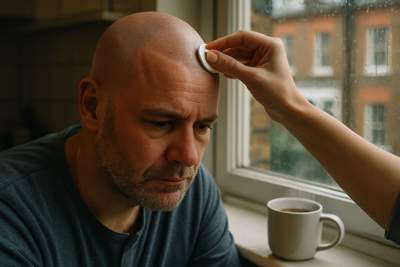
The Scalp Micropigmentation healing process is a carefully staged journey that determines how natural and long-lasting your results will look. Whether you’re considering the procedure for hair loss, scarring camouflage, or density enhancement, understanding every step of healing will help you set realistic expectations and follow the right aftercare. In this guide tailored for readers in the United Kingdom, we walk you through the timeline, common reactions, aftercare do’s and don’ts, and signs when you should seek professional help.
At Skinart United Kingdom, our online Scalp Micropigmentation course trains practitioners to manage the whole process — from sterile technique to advising clients about aftercare. Written by Gary, 23 years in Scalp Micropigmentation Healing Process education, this article condenses clinical experience and real client follow-ups into actionable guidance so you can feel confident whether you’re a client preparing for treatment or a budding practitioner learning best practice.
We cover everything from the immediate post-treatment appearance to the months-long pigment settling and retouch windows. Read on to learn what to expect day-by-day, how to reduce complications, and when a retouch might be needed to maintain the look you want.
Table of Contents
Use the links below to jump to sections — anchor-linked headings help Google generate “Jump to” links in search results.
- Understanding the Scalp Micropigmentation Healing Process
- Key Stages of Healing After Scalp Micropigmentation
- Typical Healing Timeline (Day-by-Day & Weeks)
- Aftercare: Dos and Don’ts
- Common Issues, Reactions and When to Seek Help
- Pain, Sensitivity and What to Expect
- Retouches, Colour Stability and Longevity
- FAQs: Scalp Micropigmentation Healing Process
- Final Thoughts
Understanding the Scalp Micropigmentation Healing Process
Scalp Micropigmentation healing begins the moment the procedure finishes and your practitioner applies the final wipe and dressing. The process is primarily a surface-level wound healing event: tiny epidermal punctures deposit pigment into the superficial dermis. Because the injury is controlled and shallow, healing follows a predictable pattern that most clients find manageable with basic aftercare.
Expect immediate redness and a slightly darker appearance of the pigment; the Scalp Micropigmentation healing process commonly produces what we call “pigment shock” — pigments look darker initially but soften as the skin recovers. This is normal and usually resolves across the first two weeks for most clients in the United Kingdom who follow recommended aftercare.
Understanding these biological basics helps both clients and practitioners set expectations: pigment sits higher in the first 1–2 weeks then drops slightly as the epidermis regenerates. Touch-ups and further sessions are scheduled based on how well that pigment has settled and the client’s individual skin behaviour.
Key Stages of Healing After Scalp Micropigmentation
Healing after scalp micropigmentation happens in stages. Below is a concise overview designed to help clients and practitioners recognise normal progress and spot early warning signs.
- Pros:
- Predictable surface-level healing for most clients
- Minimal downtime compared with surgical alternatives
- Immediate cosmetic improvement — appearance becomes more natural over weeks
- Cons:
- Initial intensity of pigment can surprise clients
- Possible scabbing which requires careful aftercare
- Some clients need retouches to refine density or correct minor fading
Pros and cons depend on factors like skin type, general health, and whether the scalp was sun-exposed after treatment. For example, clients with combination or oily scalps may experience slightly different settling behaviour than those with drier scalps.
Practitioners trained through Skinart’s Scalp Micropigmentation course are taught to explain these stages and to plan follow-ups tailored to each client. In the UK, advising clients about avoiding heavy sweating and sun exposure in the first two weeks is a standard part of good practice.
Typical Healing Timeline (Day-by-Day & Weeks)
Below is a practical timeline to help you anticipate the visible stages of the Scalp Micropigmentation healing process. Times are approximate; individual responses vary.
The timeline focuses on epidermal repair and pigment settling rather than deeper tissue healing, because SMP is a superficial procedure. Use this as a guideline for aftercare instructions and scheduling follow-up sessions.
For UK clients, environmental factors such as humidity and seasonal sun intensity can affect how scabs form and fall away — so localised advice is part of best practice.
- Day 0 (Treatment day): Slight redness, pinpoint bleeding in treated area, pigment looks very fresh and dark.
- Day 1–2: Redness reduces, scalp begins to feel tight, still looks darker than expected.
- Day 3–5: Tiny scabs and dry patches may form; avoid picking or scratching.
- Day 7: Scabs usually start to flake; pigment may appear patchy as the top layer sheds.
- Day 10–14: Most scabbing complete; colour softens and appears more natural.
- Weeks 3–4: Skin regains texture; true pigment depth begins to stabilise.
- Weeks 6–8: Settling complete for many clients; discuss retouch if density requires refinement.
- 3 months: Final retouch window for colour correction and density balancing — this is when true longevity can be assessed.
- 6–12 months: Monitor fade rates and sun-exposure effects; plan maintenance retouches as required (often yearly to every 3 years depending on skin and lifestyle).
Aftercare: Dos and Don’ts
Aftercare is the single most important factor in how well your Scalp Micropigmentation healing process proceeds. Following your practitioner’s guidance reduces the chance of infection, uneven pigment loss, and prolonged redness.
- Avoid heavy sweating and gyms for the first 7–14 days
- Do not swim in pools, the sea, or public baths until fully healed
- Keep the scalp clean with gentle, non-perfumed shampoo as advised
- Do not pick scabs — let them fall naturally
- Avoid direct sun exposure and tanning beds for at least four weeks
- Use the recommended ointment sparingly — too much can suffocate the skin
- Sleep on a clean pillowcase and avoid pressure to the treated zone for several nights
- Follow up with your practitioner for the planned top-up session at 6–12 weeks
Many UK clients are surprised how small changes, like avoiding heavy showers for the first few days or switching to a silk pillowcase briefly, can protect pigment during the critical epidermal regeneration phase. Practitioners should provide clear written aftercare to every client.
Remember, Skinart United Kingdom teaches precise aftercare instructions as part of our accredited Scalp Micropigmentation course so graduates can confidently guide clients through the Scalp Micropigmentation healing process and reduce complications in their clinics.
Common Issues, Reactions and When to Seek Help
Most clients heal without complications, but being aware of common issues helps you respond quickly. Redness and some swelling are normal immediately after the procedure. If symptoms persist or worsen, contact your practitioner or seek medical advice.
Below are common reactions and the appropriate responses practitioners teach during our Scalp Micropigmentation course in the UK.
- Prolonged redness beyond two weeks — review for possible sensitivity or superficial infection
- Excessive scabbing or large flaking patches — may indicate poor aftercare or epidermal reaction
- Uneven pigment loss after scabs fall — usually resolved at retouch but evaluate technique and pigment choice
- Blistering or raised lesions — stop any ointments and seek clinical assessment
- Allergic reaction (rare) — immediate review and potential medical referral
- Pigment migration (too deep or spreading) — usually technique-related; may require corrective planning
- Hyperpigmentation from sun exposure — protect treated areas with high-SPF or clothing
- Persistent itch with pustules — sign to see a clinician for infection control
When in doubt, advise clients to contact their practitioner. In the UK, most clinics will provide an emergency contact for signs of infection or unexpected reactions. Early intervention typically leads to simpler resolutions.
Skinart-trained practitioners are instructed to escalate care according to local health guidance and to document all communications to support safe outcomes and compliance with UK health standards.
Pain, Sensitivity and What to Expect
Pain perception during and after scalp micropigmentation varies. Most clients describe the sensation as a controlled scratching or vibrating discomfort rather than sharp pain. Topical numbing agents are commonly used to reduce intra-procedure discomfort, and sensitivity generally subsides within days.
After the procedure, expect a level of tenderness and a feeling of tightness similar to a mild sunburn. Over-the-counter analgesics (paracetamol or ibuprofen) are acceptable for most clients unless contraindicated — advise them to follow UK guidance or consult their GP.
Below are common sensory experiences and how to manage them safely in the UK context.
“SMP is typically low-risk in terms of pain and recovery when performed by a qualified practitioner using aseptic technique and appropriate numbing.” — CPD Standards Office guidance, summarised
- Mild aching for 24–72 hours
- Sharp sensations if scab area is accidentally scratched — avoid to prevent pigment loss
- Heightened sensitivity in clients with thin scalp skin
- Temporary scalp tightness that improves with gentle moisturising as recommended
- Some clients report increased sensitivity to cold or wind for a week
- Itchiness as scabs flake — manage with cool compresses and avoid scratching
- If severe pain or fever develops, seek medical assessment
- Keep a log of client symptoms to support aftercare and any necessary escalation
Retouches, Colour Stability and Longevity
Retouches are a normal part of the Scalp Micropigmentation healing process. They allow the practitioner to adjust density, refine edges and correct small areas of pigment loss. Most clients in the UK schedule a primary retouch 6–12 weeks after the initial treatment once the skin has fully settled.
Colour stability depends on pigment selection, application depth and individual skin chemistry. Skinart’s accredited training emphasises colour theory and how UV exposure, skincare products, and lifestyle impact long-term results. Conservative estimates suggest touch-ups every 1–3 years for maintenance, with many clients extending intervals by protecting the scalp from sun and avoiding abrasive exfoliation.
Practitioners should document pigment codes and settings at every session so future retouches match previous work. That continuity improves client satisfaction and reduces the need for corrective sessions.
FAQs: Scalp Micropigmentation Healing Process — Common Questions
How long does the Scalp Micropigmentation healing process take?
Most visible healing completes within 7–14 days, but pigment settling and final colour assessment take 6–12 weeks; many practitioners recommend a retouch during that period to perfect density and tone.
Will I need time off work after SMP?
Downtime is minimal: clients can usually return to normal activity after 24–48 hours but should avoid strenuous exercise and heavy sweating for at least 7–14 days to protect the healing scalp.
Why does my SMP look darker for the first two weeks?
The pigment initially sits more prominently in the epidermis and absorbs light differently; as the skin regenerates the colour softens — this “dark period” is a normal part of the healing process.
Can I wash my hair after SMP treatment?
Yes, gently — follow your practitioner’s exact instructions. Typically, light washing with a gentle, fragrance-free shampoo after 48 hours is acceptable; avoid direct high-pressure showers on the treated area for the first week.
When should I contact my practitioner during healing?
Contact your practitioner if you experience persistent redness beyond two weeks, spreading blisters, fever, pus or severe pain — early assessment reduces the risk of longer-term complications.
Final Thoughts
The Scalp Micropigmentation healing process is manageable and predictable when clients and practitioners understand the stages and follow established aftercare. Most outcomes are excellent provided aftercare is followed, retouches are scheduled appropriately and practitioners work within accredited protocols.
At Skinart United Kingdom we combine clinical standards, localised UK guidance, and the practical experience of tutors like Gary (23 years in Scalp Micropigmentation Healing Process education) so you can learn how to deliver safe, beautiful results. If you are a client, ask your practitioner for a clear aftercare plan and a retouch schedule; if you’re a practitioner, refine your approach through accredited training to reduce complications and improve client satisfaction.
We don’t offer in-person Scalp Micropigmentation training in the United Kingdom, and we do not supply SMP equipment in the UK — our online courses deliver the clinical knowledge, technique training and business support you need to operate safely and ethically, wherever you are based.
Ready to learn how to manage the Scalp Micropigmentation Healing Process professionally?
Join Skinart United Kingdom’s accredited online Scalp Micropigmentation course and learn the techniques, aftercare protocols and business essentials from experienced tutors.
Recent Blog Posts
- Studio Etiquette Update: Professionalism in 2026
 Workplace Etiquette for Body Art Studios Refresh your studio etiquette and build a reputation for professionalism with these up-to-date best practices.… Read More »Studio Etiquette Update: Professionalism in 2026
 - 🌙 Eid Mubarak: Celebrate with 5% Off in 2026!
 Eid Savings: 5% Off All Courses Celebrate Eid with a special offer: 5% off any course. Use code EID5 at checkout.… Read More »🌙 Eid Mubarak: Celebrate with 5% Off in 2026!
 - Top Mistakes New Body Artists Should Avoid (2026)
 Stay Ahead: Common Pitfalls for New Artists Read up on the most frequent errors new body artists make, and how to… Read More »Top Mistakes New Body Artists Should Avoid (2026)