SMP Machines and Pigments for Training
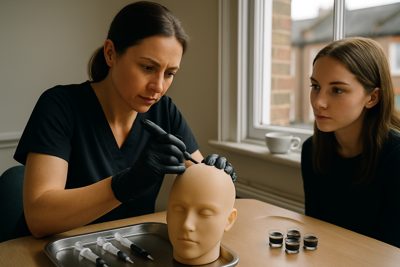
Understanding SMP Machines and Pigments is fundamental if you’re training to become a confident, professional scalp micropigmentation (SMP) practitioner in the United Kingdom. Whether you’re taking your first steps in our online Scalp Micropigmentation course or refining technique, the choice of machine and pigment will directly influence pigment retention, dot clarity, and client satisfaction. This guide is designed to give a practical, UK-focused overview so you can approach equipment and product decisions with confidence.
At Skinart United Kingdom we focus on evidence-based training and real-world skills that translate into safe, compliant practice. In this article you’ll find the core concepts behind machines, the chemistry of pigments, regulatory and safety considerations in the UK, common mistakes trainees make, and hands-on advice for building your kit and choosing supplies—without us supplying equipment directly.
Written by Gary Erskine, 25 years in SMP Machines and Pigments education — I’ve trained thousands of students worldwide and seen how the right combinations of machine setup and pigment selection accelerate learning and improve client outcomes. Read on to learn what matters most when choosing SMP machines and pigments for training, and how Skinart’s online Scalp Micropigmentation course supports your journey in the UK market.
Table of Contents
Use the links below to jump to specific sections — adding anchor-linked headings helps Google show “Jump to” links in search results.
- Core Concepts: How SMP Machines and Pigments Work Together
- Choosing the Right SMP Machine for Training
- Pigment Selection: Types, Undertones and Retention
- Common Trainee Mistakes with Machines & Pigments
- Safety, Hygiene and UK Regulations
- Training Curriculum: Machine & Pigment Modules
- Where to Source Machines and Pigments in the UK
- FAQ — SMP Machines and Pigments for Training
- Final Thoughts & Next Steps
Core Concepts: How SMP Machines and Pigments Work Together
At its simplest, scalp micropigmentation is a controlled deposit of pigment into the superficial dermal layer to simulate hair follicles. The machine creates micro-trauma and places the pigment; the pigment’s chemistry determines how the deposit will age and what colour the client will see once healed. Because they interact on a micro level, choosing a compatible machine and pigment pair is central to predictable outcomes.
Machines influence dot size, density and speed. A machine’s stroke length, needle configuration and power delivery affect how much pigment is carried into the skin and how the dot heals. Pigments vary by carrier fluids, pigment particle sizes and undertones—which affect how they oxidise and whether they remain neutral or shift warmer/cooler over time.
When training, understanding that machines and pigments are not independent choices is crucial. Trainees who learn to adjust machine settings for a given pigment achieve cleaner, longer-lasting results. Conversely, using a pigment with unpredictable retention in combination with an unfamiliar machine can make it harder to learn technique and diagnose retention issues in real cases.
Choosing the Right SMP Machine for Training
When starting out, trainees should prioritise a machine that is predictable, easy to adjust, and compatible with the needle cartridges and techniques taught in the course.
- Rotary pen-style machines — Quiet, versatile, and well-suited to variable dotting techniques. Easy for trainees to get consistent angles.
- Coil machines — Often heavier and deliver a different “impact.” Some practitioners prefer coils for certain density work but they require more adjustment experience.
- Plug-and-play cartridge systems — Simplify hygiene and needle swaps; excellent for classroom settings where speed and safety are priorities.
- PWM vs DC power units — The consistency of power delivery affects dot formation; trainees benefit from units with clear, repeatable controls.
- Disposable vs reusable cartridges — Consider waste, client safety, and supply chain when training in the UK.
- Ergonomics — Lightweight, well-balanced machines reduce fatigue during long practice sessions.
- Manufacturer support — Choose machines with documented maintenance guidance and UK-compatible servicing.
- Price-to-performance — For trainees, a mid-range machine that behaves predictably is better than an expensive unit with steep learning curve.
Pros and cons matter when you’re learning: a simple rotary pen is often the fastest route to mastering dot size and pressure, while more complex systems may be worth adopting only after you’ve mastered fundamentals.
At Skinart United Kingdom we structure our online Scalp Micropigmentation course so trainees understand machine settings, power curves and needle choices. Although we don’t supply machines in the UK, we train you to work with a wide range of industry-standard devices and teach troubleshooting so you can get the best results regardless of brand.
Pigment Selection: Types, Undertones and Retention
Pigments for SMP are typically iron oxide and organic-based blends designed for cutaneous use. They vary in particle size, carrier (glycerin, water, ethanol blends), and stabilisers. For training, it’s important to learn how a pigment behaves when placed at different depths and how it changes during healing.
Retention is influenced by pigment chemistry, needle depth, host skin type and aftercare. Some pigments are formulated for stronger immediate appearance but may fade faster; others retain but can shift undertone. Learning the differences helps trainees set accurate expectations with clients and plan for touch-ups.
In the UK climate and skin spectrum, neutral pigments with stable undertones often produce the most predictable, long-term results. However, darker skin types may demand different mixes to avoid ashy or muddy tones. Training must include practical pigment mixing and patch-testing protocols so you learn to match pigments to skin, not the other way around.
- Iron oxide vs organic-based pigments: consistency and how they age
- Carrier fluids: how glycerin and ethanol affect flow and settling
- Particle size: fine vs coarse particles and visual density
- Undertone management: cool, warm and neutral bases
- Mixing and dilution: achieving the correct opacity for scalp work
- Patch testing: localised tests to check retention, irritation and colour shift
- Colour correction: how to correct a warm or cool shift safely
- Manufacturer transparency: traceability, MSDS and stability testing
- Batch consistency: why buying from reputable suppliers is critical
- Aftercare influence: how healing protocol changes final colour
Common Trainee Mistakes with Machines & Pigments
- Working too deep and causing scarring or excessive pigment spread
- Too shallow placement leading to rapid fading and patchy results
- Using a pigment without understanding its undertone shift
- Mismatching machine speed/impact with needle configuration
- Relying solely on immediate results without accounting for healing
- Inconsistent needle angle and pressure across the treatment zone
- Failing to perform patch tests on diverse skin types
- Poor hygiene routines leading to contamination or customer complaints
- Over-diluting pigments and losing visibility once healed
- Ignoring environmental factors like humidity during storage
These mistakes are common because SMP sits at the intersection of technical skill and product chemistry. Training that addresses both the motor skills of needle control and the science of pigments will shorten the learning curve.
At Skinart United Kingdom we emphasise repeated, guided practice on realistic models and structured feedback so trainees can see how tiny adjustments to angle, speed and pigment dilution change the healed result. That feedback loop is what converts mistakes into reliable technique.
Safety, Hygiene and UK Regulations
Working safely is non-negotiable. In the UK, SMP practitioners should be familiar with Bloodborne Pathogen (BBP) controls, COSHH (Control of Substances Hazardous to Health) where applicable, local council licensing, and best-practice waste and sharps disposal. Training must place equal weight on safety procedures as it does on technique.
Skinart’s accredited online Scalp Micropigmentation course includes detailed modules on infection control, client consultation, consent and documentation. We also teach how to set up your workspace to be compliant with UK public health expectations and local authority guidance.
Below is a practical checklist trainees should internalise before performing live treatments in the UK.
- BBP awareness and handling of exposure incidents
- Sharps disposal compliant with UK waste regulations
- Patch testing and consent documentation for each client
- Use of single-use needles/cartridges where recommended
- Clinic hygiene flow: clean zone, dirty zone, aftercare instructions
- MSDS for pigments and storage best practice
- Local council registration and any required licensing
- Insurance requirements specific to scalp micropigmentation practice
- Record keeping for follow-ups and touch-up scheduling
Training Curriculum: Machine & Pigment Modules
Skinart’s online Scalp Micropigmentation course breaks down machine and pigment education into progressive modules. Effective training couples theory with practical application: machine operation, needle selection, pigment chemistry, and real-client simulation all form part of the curriculum.
We structure lessons so trainees can practise on high-quality synthetic skins, models and live demonstrations in controlled settings, with clear criteria for assessment. You’ll learn to calibrate machines for specific pigments, adjust depth and angle, and make aftercare plans that protect both client and practitioner reputations.
Below are the core practical elements covered in our accredited course modules.
- Machine fundamentals: parts, maintenance and set-up
- Needle and cartridge selection for density and softness
- Pigment chemistry: reading MSDS, storage and safety
- Colour theory for scalp — undertones, neutralising and blending
- Depth control practice on synthetic and ex-vivo skins
- Simulated client sessions: mapping, dot placement and blending
- Assessment of healed results and touch-up planning
- Hygiene, consent and record-keeping for each treatment
- Business setup: pricing, consultations and client expectations
“Accredited training must prioritise both clinical safety and artistic competence — only then can practitioners deliver reliable, ethical results.” — Council for Permanent Tattoo Practice (CPTP) spokesperson
Where to Source Machines and Pigments in the UK
Skinart United Kingdom does not supply SMP equipment directly. That said, sourcing reliable machines and pigments in the UK is straightforward when you know what to look for. Prioritise suppliers who can provide documentation (MSDS, batch numbers), UK customer support and clear return policies. Always choose vendors that ship sealed sterile consumables and have demonstrable product traceability.
Local examples: several UK-based distributors in London and Manchester specialise in SMP consumables and offer training bundles. Many practitioners in the UK recommend buying from suppliers that specialise in micropigmentation rather than general tattoo suppliers — the product mixes, cartridge compatibility and technical support are usually better aligned with SMP needs.
When evaluating vendors, check for industry reviews, ask for sample MSDS sheets, and verify that pigment formulations are intended for scalp application. Establish a relationship with a distributor who understands SMP retention behaviours across UK skin tones; this relationship becomes invaluable when you need quick advice on colour corrections or batch anomalies.
FAQ — SMP Machines and Pigments for Training
Below are answers to common questions trainees in the United Kingdom ask about equipment and pigments.
What is the best SMP machine for beginners?
For most beginners, a lightweight rotary pen-style machine with adjustable stroke and easy cartridge compatibility offers the smoothest learning curve; it provides predictable dot placement and easier angle control compared with heavier or coil-style devices.
How do I choose pigments for different skin tones?
Choose pigments with neutral undertones for fair to medium tones and work with warmer or cooler mixes only after patch testing; darker complexions often need deeper value pigments with careful undertone management to avoid ashy results after healing.
Can I use any tattoo pigment for SMP?
Not all tattoo pigments are formulated for scalp work; SMP pigments are designed for colour stability, particle size and retention suited to the scalp’s shallow placement—always use pigments intended for micropigmentation and check MSDS and manufacturer guidance.
Do I need special insurance or licences in the UK for SMP?
Yes — you should have professional indemnity and public liability insurance appropriate to cosmetic procedures and register with your local council for any premises where you perform treatments; requirements differ by council so verify local guidance.
Does Skinart supply machines and pigments in the United Kingdom?
Skinart United Kingdom provides accredited online training in scalp micropigmentation but does not supply machines or pigments in the UK; our course teaches you how to choose and evaluate equipment and reputable UK suppliers.
Final Thoughts: Confident Choices Lead to Better Outcomes
Choosing the right SMP machines and pigments for training in the United Kingdom is a strategic decision. It impacts how quickly you develop technical control, how well healed results match client expectations, and ultimately how sustainable your SMP practice will be. Focus first on predictable, well-documented products and a machine that lets you consistently replicate dots at the correct depth.
Skinart United Kingdom’s online Scalp Micropigmentation course gives you the knowledge to make these choices wisely: we teach the mechanics of machines, the chemistry of pigments, practical troubleshooting, and the regulatory framework for safe practice in the UK. If you’re committed to becoming a credible SMP practitioner, the right training is the fastest way to build skill and confidence.
Ready to Learn SMP Machines and Pigments the Right Way?
Join our CPD- and BAQA-accredited online Scalp Micropigmentation course tailored for practitioners in the United Kingdom. Gain the knowledge you need to select and work with machines and pigments confidently, and build a practice that stands up to UK standards.
Recent Blog Posts
- Studio Etiquette Update: Professionalism in 2026
 Workplace Etiquette for Body Art Studios Refresh your studio etiquette and build a reputation for professionalism with these up-to-date best practices.… Read More »Studio Etiquette Update: Professionalism in 2026
 - 🌙 Eid Mubarak: Celebrate with 5% Off in 2026!
 Eid Savings: 5% Off All Courses Celebrate Eid with a special offer: 5% off any course. Use code EID5 at checkout.… Read More »🌙 Eid Mubarak: Celebrate with 5% Off in 2026!
 - Top Mistakes New Body Artists Should Avoid (2026)
 Stay Ahead: Common Pitfalls for New Artists Read up on the most frequent errors new body artists make, and how to… Read More »Top Mistakes New Body Artists Should Avoid (2026)