How to Become a Tattoo Artist with No Experience
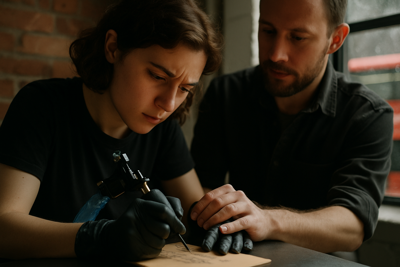
Thinking about how to become a Tattoo Artist with No Experience? You’re in the right place. Whether you’re in London, Manchester, Glasgow, or a coastal town in Cornwall, starting a career in tattooing without prior hands-on experience can feel daunting — but it’s entirely achievable with the right roadmap, training and mindset.
This guide, written by Gary Erskine (25 years in body art education, lead tutor at Skinart United Kingdom), lays out step-by-step, practical advice tailored for people in the United Kingdom. We’ll cover training options, legal and hygiene essentials, the soft skills you’ll need, common mistakes to avoid and how to build a portfolio from scratch.
Table of Contents
- Getting started: what being a tattoo artist really means
- Training options and accredited courses
- Building skills and a practice routine
- Common mistakes new artists make
- Hygiene, certification and UK regulations
- Portfolio, social media and first clients
- Career paths once you have experience
- FAQs
- Final thoughts & next steps
Tip: use the anchor links to jump to the section you need — Google can surface “jump to” links for these anchors.
Getting started: what being a tattoo artist really means
Becoming a Tattoo Artist with No Experience begins with understanding that tattooing is both an art and a regulated service. It’s creative work — adapting design, composition, shading and colour — and it also requires strict adherence to hygiene, client consultation and aftercare. For many new artists the most surprising part is how much client communication and business sense matter.
In the UK, most local councils require premises used for tattooing to meet hygiene standards and may inspect studios; artists must know infection control, safe disposal and basic first-aid considerations. This means your pathway to becoming a competent and trusted tattoo artist is a mix of structured learning and practical repetition.
Starting with no experience is common. Many successful UK artists began with sketchbooks, short courses and a disciplined practice regime. The key is to focus on foundational skills and accredited training that prepares you for the realities of a professional studio.
Training options and accredited courses
One of the most efficient routes to become a Tattoo Artist with No Experience is to enrol in an accredited tattoo course that covers both practical skills and essential health and safety training. Accredited courses give you structured learning, clear milestones and industry-recognised certification — exactly what local councils and employers look for in the UK.
- Pros: Structured curriculum, tutor feedback, CPD/BAQA accreditation available, quicker path to confidence.
- Cons: Cost (training fees), time commitment, some courses don’t provide equipment in the UK.
At Skinart United Kingdom we offer an online Tattoo course that’s fully accredited by CPD Standards and BAQA, designed specifically for beginners. While we don’t provide equipment within the UK, our course walks you through professional-level theory, needle theory, machine settings, and practice templates you can use with your chosen kit.
If you’re weighing options, look for courses that include modules on cross-infection control, BBP awareness and client consultation — these are non-negotiable for working in UK studios and passing local inspections.
Building skills and a practice routine
Practice is where talent becomes reliable skill. For someone starting with no hands-on experience, deliberate, focused practice is the fastest way to progress. Set up a consistent routine that balances drawing, machine technique and working on safe practice skins before you move to live clients.
Begin with foundation exercises: line work precision, consistent shading gradients, smooth colour packing and needle depth control. Use tracing, freehand sketching and value studies to develop an eye for contrast. Importantly, practice on synthetic skins, fruit (for needle feel) and volunteer clients only when you and your tutor agree you’re ready.
Below are practical drills you can repeat daily to accelerate progress:
- Daily drawing: 30–60 minutes focusing on lines and shading.
- Line drills: continuous single-line drawings for steadiness.
- Circle and spiral exercises to maintain even machine speed.
- Needle depth checks on practice skin: consistency over power.
- Shading gradients: smooth transition from dark to light.
- Colour blending: small palettes to learn saturation control.
- Stencilling: accurate transfer and adjustments on curved surfaces.
- Aftercare simulations: practice client instructions and documentation.
- Portfolio building: photograph each practice session with notes.
Common mistakes new artists make
- Rushing to tattoo live clients without consistent practice.
- Neglecting infection control theory and documentation.
- Poor stencil placement and not considering body contours.
- Overworking skin leading to blowouts or scar tissue.
- Underestimating aftercare communication and liability.
- Choosing cheap, incompatible equipment or bad needles.
- Not maintaining professional conduct and client records.
- Over-reliance on social media trends rather than fundamentals.
- Failing to ask for feedback from mentors and peers.
These mistakes are common because they stem from enthusiasm without structure. A measured approach — accredited learning, incremental live-work, and mentorship — prevents most of them.
In the UK context, remember that local councils may require proof of competency and evidence of safe practice. Avoid shortcuts: proper training and documentation protect you and your clients.
Hygiene, certification and UK regulations
Understanding hygiene and legal requirements is essential if you want to be taken seriously as a Tattoo Artist with No Experience. In the United Kingdom there is no single national licensing system for tattooists; instead, standards are enforced locally by councils. That said, the industry expects adherence to best practice across the board.
- Complete accredited training in cross-infection control and BBV awareness.
- Maintain accurate client records and treatment logs.
- Use correct personal protective equipment (PPE) and safe sharps disposal.
- Follow local council advice for premises and waste management.
- Understand consent, age restrictions and record-keeping.
- Be prepared for inspections and show CPD/BAQA documentation where requested.
- Register with local environmental health where applicable.
- Keep up with updated NHS/HSE guidance on bloodborne pathogens.
For reliable guidance on infection control and workplace safety, consult the Health and Safety Executive (HSE) and NHS resources. These sources help you understand obligations around sharps and bloodborne viruses — vital knowledge for studios and clients alike.
Quote from an industry official: “Local councils and environmental health teams expect clear documentation and demonstrated competency. Accredited training and good record-keeping reduce risk and increase client confidence,” says a spokesperson from a UK municipal public health office.
Portfolio, social media and first clients
Your portfolio and online presence are central to starting work. Even with no prior experience, you can build credibility by showcasing progression: early sketches, practice skin photos, and careful documentation of pieces done under supervision. High-quality photography and consistent branding help you appear professional to studios and clients.
- Create a portfolio page on Instagram and a simple website; be consistent with username and style.
- Document every practice session with clear before/after images and captions describing technique used.
- Offer free or low-cost charity events or friends-and-family sessions when appropriate and supervised.
- Ask for testimonials from early clients and tutors; these build trust.
- Use local community groups and forums to find volunteer models for small pieces.
- Network with local studios — many offer guest spots or observational opportunities.
- Keep client records and consent forms; studios will expect these to hire you.
- Respect copyright: always credit references and obtain permission for flash designs not created by you.
Real UK success stories include artists who used targeted local marketing to grow from weekend market stalls and small festivals into full-time studio bookings. The difference was a professional portfolio and documented proof of safe practice.
Career paths once you have experience
Once you’ve progressed from “Tattoo Artist with No Experience” to a competent practitioner, multiple career paths open up: studio artist, guest spot specialist, convention exhibitor, or apprentice tutor. Some artists specialise in styles such as realism, blackwork or colour realism, and build reputations that allow them to command higher rates and commission-based work.
Additional professional steps include seeking further CPD modules, BAQA endorsements, and building relationships with equipment suppliers (remember Skinart United Kingdom does not supply equipment in the UK). Many artists also diversify by offering tattoo removal consultations, cosmetic tattoo training or teaching workshops once they have a solid track record.
Success in the UK market is often about reliability — showing up, delivering consistent results and maintaining impeccable hygiene. This reputation is what transitions a newbie into a respected professional.
Frequently asked questions
Below are common questions people ask when they want to become a Tattoo Artist with No Experience. Each answer is concise and practical.
Q: Can I become a tattoo artist with no experience?
A: Yes. Start with accredited education, daily practice and good hygiene training. Progress gradually, document your work and seek feedback from mentors in local studios.
Q: Is hands-on apprenticeship required?
A: Apprenticeships are valuable but not the only route. Accredited courses combined with supervised practice, guest spots and mentorship achieve the same outcomes for many students.
Q: How important is portfolio photography?
A: Extremely important. Clear, consistent images of your work and step-by-step documentation help studios and clients judge your progress and professionalism.
Final thoughts & next steps
Becoming a Tattoo Artist with No Experience in the UK is a journey of steady improvement. With accredited training, disciplined practice and careful attention to hygiene and client care you can build a sustainable and creative career. Start small, keep records and keep learning.
At Skinart United Kingdom we’ve supported thousands of students worldwide. Our accredited online Tattoo course covers the theory, practical guidance and business basics to help you transition from beginner to confident practitioner. Gary Erskine and our tutors provide feedback and mentorship throughout the program.
Take the first step: invest in accredited learning, commit to daily practice and build a portfolio that showcases progress. You’ll be surprised how quickly consistent effort pays off.
Ready to get started?
If you’re serious about becoming a professional tattoo artist in the UK, take the next step with an accredited course designed for beginners. Our online Tattoo course covers every essential topic and gets you industry-ready.
Recent Blog Posts
- Studio Etiquette Update: Professionalism in 2026
 Workplace Etiquette for Body Art Studios Refresh your studio etiquette and build a reputation for professionalism with these up-to-date best practices.… Read More »Studio Etiquette Update: Professionalism in 2026
 - 🌙 Eid Mubarak: Celebrate with 5% Off in 2026!
 Eid Savings: 5% Off All Courses Celebrate Eid with a special offer: 5% off any course. Use code EID5 at checkout.… Read More »🌙 Eid Mubarak: Celebrate with 5% Off in 2026!
 - Top Mistakes New Body Artists Should Avoid (2026)
 Stay Ahead: Common Pitfalls for New Artists Read up on the most frequent errors new body artists make, and how to… Read More »Top Mistakes New Body Artists Should Avoid (2026)