How to Learn Fine-Line Tattooing in New Zealand
Fine-line tattooing is now part of Skinart’s tattoo course, alongside the wider tattoo styles and practical foundations. If your goal is delicate botanical work, lettering or minimalist designs, start by learning to make clear, controlled marks rather than collecting complicated references. This New Zealand guide explains how to connect drawing practice, online lessons and feedback, with an in-person option for learners who want practical training with the team.
Understand the difference between delicate and overcrowded
A fine-line design uses slender lines to describe a shape. It does not need a large number of tiny details. Draw a small sprig with a stem and a few leaves, then remove marks that do not help the viewer understand it. Print the design at the intended size instead of judging only a zoomed-in screen.
Look at the gaps between leaves, overlapping strokes and the endpoints. Prepare a cleaner alternative to discuss with your instructor. The planning exercise is about readability; it is not a promise that a particular size or placement will produce a particular healed result.
Use the fine-line lesson as a sequence, not a shortcut
Skinart’s Academy lesson, “Fine-Line Tattooing: Design, Control and Practice”, connects the topic with structured learning. Start with the design and control tasks, then follow your instructor’s assigned practice. Do not skip the underlying hygiene, equipment and preparation lessons because the style looks visually simple.
Keep a short record of each attempt: date, reference, material and the question you want answered. Existing students should open their enrolled tattoo course in the Academy learning portal. New students buy through the regional WooCommerce course page.
Practise curves, spacing and clean joins
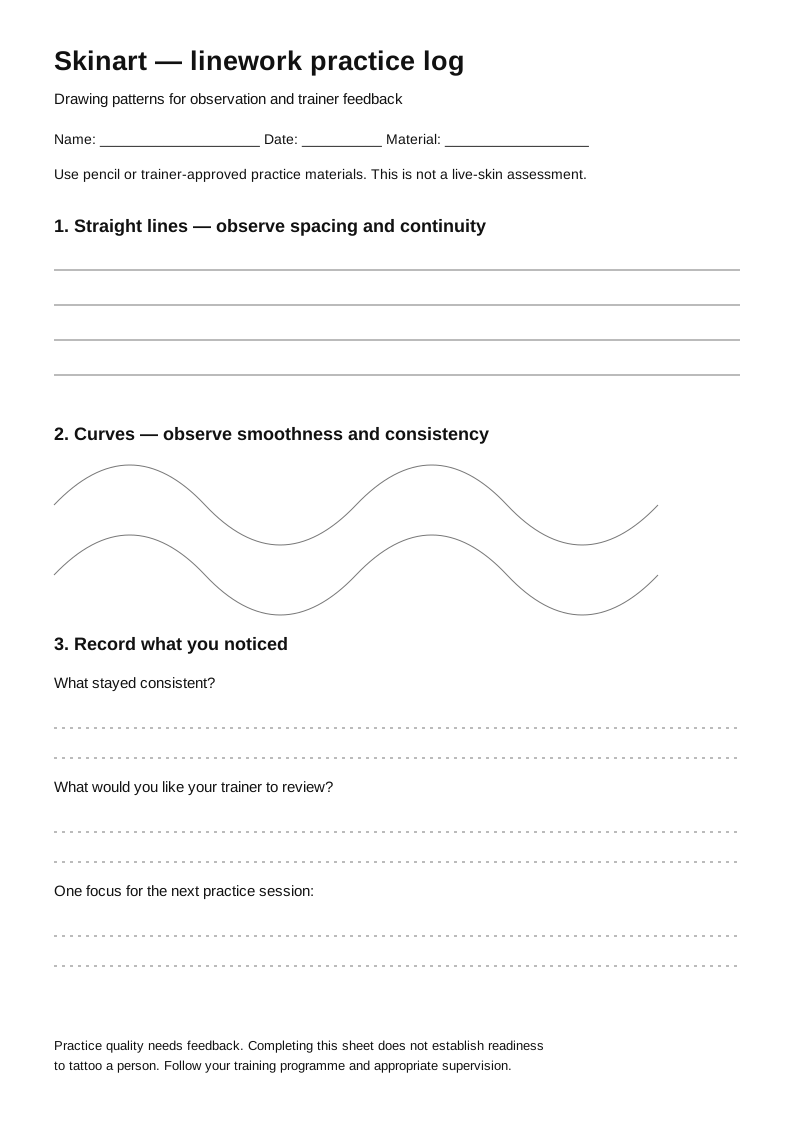
Start with Skinart’s free A4 line-control practice sheet for three pen or pencil exercises: lines between endpoints, curves and repeated circles. Choose one task and keep a note of what you want to improve. Use paper exercises to work on smooth curves, parallel spacing and lines that meet without an unintended hook. The linework sheet gives you patterns and a place to record progress. Compare the same task on two dates before changing several things at once.
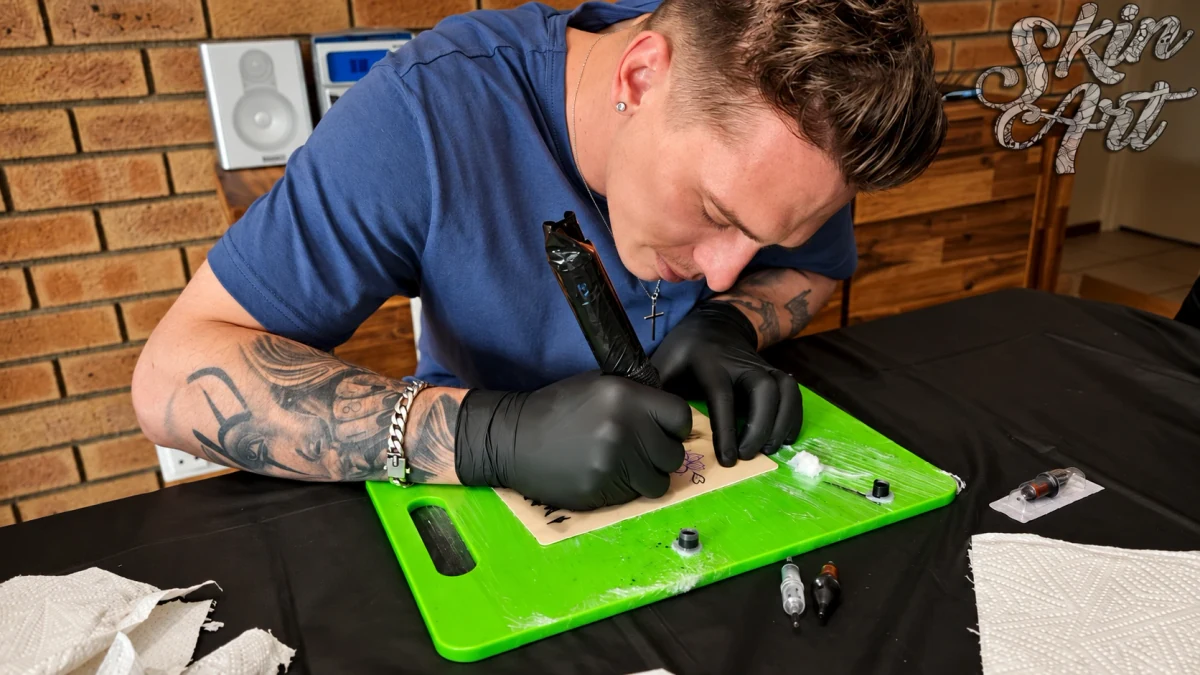
For equipment-based practice, use only the material and setup your instructor has specified. Submit visible changes in width or interrupted lines as observations, not as a diagnosis based on a photograph. A tutor can decide which correction belongs in your next attempt.
Learn fine line within a broad tattoo education
Fine line joins blackwork, tribal and Māori-inspired design exercises, traditional tattooing, watercolour and colour realism in the tattoo course. Each style gives you a different reason to consider composition, contrast, outlines and shading. Keep a portfolio that identifies which pieces are drawing or synthetic-skin practice.
In New Zealand, approach Māori design with proper cultural context and permission where relevant. Do not describe a general design assignment as training or authority in tā moko. Discuss the references you intend to use with your instructor.
Compare online and in-person learning in New Zealand
The NZ online tattoo course offers the full-course and published staged purchase options. The in-person tattoo course introduces trainer Tristan and the practical route. Ask the team about dates and the practice timetable before booking.
If you want to study another main discipline too, compare the New Zealand course bundle builder. Choose the learning format that leaves room for practice and feedback, rather than treating the number of lessons watched as evidence of readiness for clients.
For New Zealand workplace safety, see WorkSafe’s tattoo shops guidance. It covers common hazards and ways to manage them. Confirm the current requirements for your intended services and premises with your local authority before working on clients. For general information on caring for tattooed skin, the American Academy of Dermatology explains that UV light can fade some inks. No design or style guarantees an unchanged healed result.