Tattoo linework practice: paper exercises and a learning log

Start with one drawing goal you can observe, such as reaching an endpoint or comparing spacing. Keep the first attempt and record what changes. This paper practice session uses a pencil or drawing pen; it does not prescribe machine settings or establish readiness to tattoo someone.
Use the existing printable worksheet
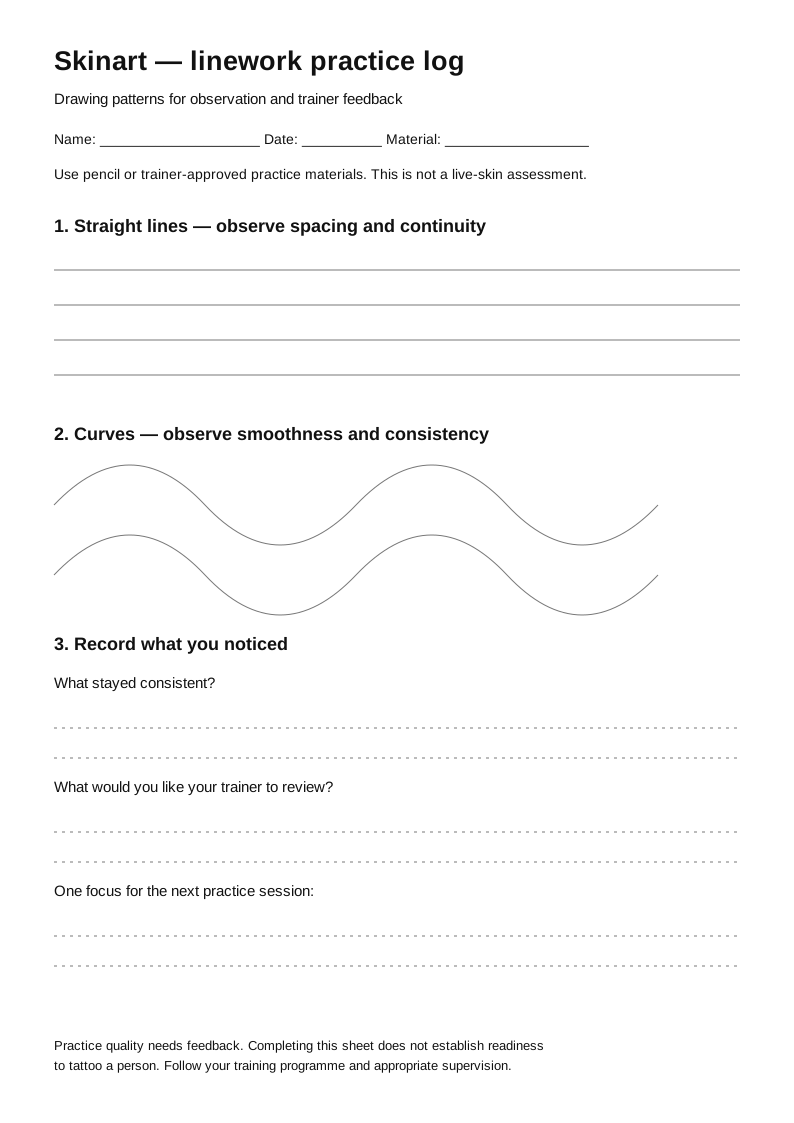
Download the printable linework practice sheet (SVG). It provides drawing patterns and a learning log. Print it for the paper exercises below or use the trainer-approved drawing task you have been given.
Record the tool, pattern, date and one objective. Keep the page orientation and tool consistent while comparing attempts.
Try three clearly defined paper tasks
- Connect two points. Mark paired dots and draw one line between each pair. Circle overshoots, early stops or changes of direction. Keep the attempt visible.
- Repeat a curve. Draw several C-shaped curves of similar size. Compare their opening, shape and endpoints. Label one change on the next row.
- Compare spacing. Draw a small group of parallel lines. Mark gaps that widen or narrow, then repeat beside the first group.
Record observations rather than a readiness score
Choose one feature that stayed consistent and one to discuss with the tutor. Avoid drawing over a first attempt to hide it or selecting only the best single line. The whole row gives a clearer comparison.
Bring the original and repeat to the review. Ask which observation matters most, how to interpret it and which exercise to try next.
Connect the task to directed learning
The online tattoo course includes design assignments and linework topics. The fine-line tattooing guide connects paper curves and spacing exercises with that style of design. Follow the course sequence and the tutor’s feedback for the next task. Machine-based practice needs its own materials, instructions and support.
Read the practice-skin learning guide when that stage is appropriate. A drawing worksheet documents observation and revision; practical assessment and professional requirements still need separate evidence.
View the online tattoo course, or ask Skinart about your training options. Explore the tattoo guide library for related reading.
Recent Blog Posts
 When to Pause a Tattoo or Piercing ConsultationPausing a tattoo or piercing consultation gives you time to clarify the client’s brief, expectations and next step before confirming a…
 Read product instructions before making a practice planA familiar product name does not tell you everything about its intended use. Product-specific questions belong at the start of planning,…
 Build a practice journal you will actually useA useful practice journal makes the next session easier to plan. It does not need to become a second project or…