Skip to content

How to Start a Scalp Micropigmentation Business from Home

How to Start a Scalp Micropigmentation Business from Home

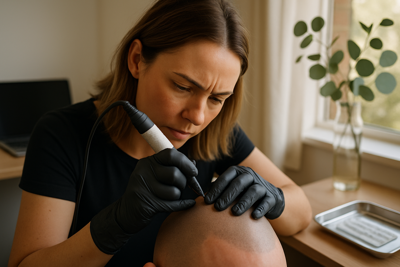
Starting a Scalp Micropigmentation business from home in Australia is an achievable, flexible way to build a rewarding career in the aesthetic and hair-replacement market. Whether you’re coming from tattooing, cosmetology or a totally new career path, this guide will walk you through the legal, practical and promotional steps you need to succeed. Read on for a clear roadmap and real-world examples tailored to the Australian market.

At Skinart Australia we’ve trained practitioners across the country — my name is Gary Erskine and I’ve been teaching body art and micropigmentation for over 25 years. This article is written to help you start confidently and ethically, and shows how an online Scalp Micropigmentation course can be the fastest, accredited route to opening your home-based clinic.

Table of Contents


Jump to the section you need — use the links below for quick navigation. These anchor-linked headings help Google generate “Jump to” results and make your research faster.

Suggested reading order: Why start, regulation, setup, marketing, mistakes, pricing, case studies and FAQs.

Why start a scalp micropigmentation business from home in Australia?


Beginning to Start a Scalp Micropigmentation Business from Home lets you enter a fast-growing, high-margin niche with relatively low overheads compared to many other cosmetic businesses. Demand for SMP services in Australia has increased as more clients seek a realistic, non-surgical solution for hair loss, thinning, scar camouflage and density enhancement. As a home-based practitioner you can offer competitive pricing, flexible scheduling and personalised care that larger clinics sometimes cannot match.

Home-based clinics are also attractive for new practitioners because they reduce fixed costs like shop rent and utilities. That means you can invest in quality training and professional-grade supplies sooner. However, success hinges on professional training, strong infection-control practices, and a clear business plan — not just technical skill. Accredited training, such as Skinart Australia’s online Scalp Micropigmentation course, gives you both the technical skills and the business framework to start ethically.

When you choose to start a Scalp Micropigmentation Business from Home, you also have the opportunity to specialise — for example, working with trans clients, post-surgical scar camouflage, or creating natural-looking density effects for women. Niche expertise helps you stand out locally and attract repeat bookings.

Tools, supplies and home studio setup


While Skinart Australia does not supply Scalp Micropigmentation equipment in Australia, you can build a dependable home studio using readily available professional-grade supplies. A safe, professional-looking workspace will build client confidence and meet regulatory expectations. Focus on infection control, ergonomics, and client comfort.

When you plan your home studio remember: functionality beats flash. Clients expect a clean, private environment with good lighting and comfortable seating. Proper lighting is critical — natural daylight plus adjustable LED clinical lights help you see pigment placement clearly. Good photography lighting is also essential for before/after images and marketing.

Here is a comprehensive equipment and supplies checklist to get you started. These items represent the typical essentials you should source from reputable suppliers in Australia or internationally.

  • Adjustable treatment chair or recliner with easy-to-clean upholstery
  • High-quality LED clinical lighting with variable brightness and colour temp
  • SMP machine and compatible needles/cartridges (choose reputable brands)
  • Range of pigments formulated for scalp use in multiple tones
  • Disposable gloves, face masks, and aprons (medical grade)
  • Surface disinfectants and medical-grade sterilisation wipes
  • Single-use needles and cartridge disposal containers (sharps bin)
  • Clinical waste bags and an agreement with a licensed clinical waste contractor
  • Record-keeping software or secure client consent forms and aftercare printouts
  • High-resolution camera or smartphone with a macro lens for portfolio photos
  • Client consultation and patch-test materials
  • Hand sanitiser stations and poster signage for hygiene expectations
  • LED ring light or softbox for consistent social media photography
  • Backup power bank or surge protector for your devices

Common mistakes new home-based SMP businesses make


  • Failing to check local council rules and starting bookings before approval
  • Inadequate infection control procedures and weak record-keeping
  • Poor lighting and substandard photography for before/after images
  • Using low-quality pigments that fade or change colour
  • Undercharging without understanding time per session and consumable costs
  • Not offering thorough consultations or patch-testing clients
  • Neglecting clear written aftercare instructions and follow-up
  • Trying to cut corners on equipment or training to save money
  • Mixing living spaces with treatment areas, which can breach council conditions
  • Weak online presence or no local SEO targeting in your suburb

Many of these issues are avoidable with correct training and preparation. A structured course covers infection-control policies, client consent, photographic standards and pigment choices so you don’t have to learn the hard way with paying clients. Skinart Australia’s online Scalp Micropigmentation course emphasises the procedural standards Australian clients expect.

Addressing these mistakes early protects your reputation, reduces the risk of complications and helps you scale your business from home into a trusted local service. Keep a checklist on your wall and review it before each client intake.

Marketing your at-home SMP business


Marketing a home-based Scalp Micropigmentation business in Australia is about building trust and showcasing results. High-quality before-and-after photos, client testimonials and a clean, professional website are essential. Optimise for local searches by using suburb names in your copy and Google Business Profile so clients searching “scalp micropigmentation near me” can find you.

Social platforms like Instagram and Facebook are great for visual proof. Post process photos, short educational videos, and honest client stories (with consent). Collaborate with local hair salons, dermatologists and barbers who can refer clients after consultations or surgical hair restoration.

Here are practical, actionable marketing steps you can take in your first 90 days:

  • Create a Google Business Profile with accurate opening times and address details (or service-area settings if you prefer privacy)
  • Build an Instagram portfolio with consistent photography style and hashtag strategy targeting Australian-specific keywords
  • Request and display written testimonials and short video reviews from satisfied clients (with signed consent)
  • Offer limited-time introductory packages to attract your first five clients and collect before/after content
  • Run highly targeted local Facebook ads promoting a free consultation or discount for referrals
  • Network with local barbers and clinics for cross-referrals and mutual promotion
  • Publish an FAQ and process page on your website addressing safety, expected results and session lengths
  • Use email follow-ups for booking confirmations, pre-care and aftercare to improve client outcomes and referrals

Pricing, packages and client management


Setting the right price involves calculating your hourly rate, consumable costs, pigment usage, and the total time you spend on consultations, aftercare and admin. In Australia, a common approach is to offer tiered packages based on the amount of scalp coverage and number of sessions required.

Packages often include an initial consultation, two to three treatment sessions and a follow-up top-up. Make your pricing transparent and clearly list what’s included, any exclusion clauses, and your cancellation policy. Properly managed expectations reduce disputes and improve client satisfaction.

Suggested pricing structure examples (use these as a starting point and adapt for your local area, overheads and experience level):

  • Consultation fee (deductible from first treatment) — $50–$100
  • Small area package (e.g., editing scar or small crown) — $500–$900
  • Medium coverage (partial hairline/density) — $900–$1,800
  • Full scalp packages (balding coverage across several sessions) — $1,800–$4,000+
  • Touch-up session (12–18 months typical) — $250–$800
  • Deposit policy — typically 20–40% non-refundable to secure booking
  • Payment plans — consider offering instalments for higher-value packages

Local Australian case studies and success stories


Real-world stories help illustrate how others have built a Scalp Micropigmentation business from home. Below are anonymised summaries of two Australian practitioners who started from small home studios and scaled through strong training and marketing.

Case study 1 — Melbourne suburb: A former barber completed accredited SMP training online, invested in a compact treatment chair and lighting, and partnered with local barbers for referrals. Within six months she had a waiting list and moved to price her work closer to clinic rates once her portfolio had 25+ excellent before/after photos.

Case study 2 — Brisbane area: A former medical assistant used her clinical knowledge to promote safety and aftercare. She focused on scar camouflage work post-surgery, developed content for local surgeons and patient support groups, and built a specialised referral path. Her niche focus allowed premium pricing and predictable repeat business from post-op clients.

Industry perspective


“Quality training and strict infection control are the foundations of a safe, professional micropigmentation practice. Practitioners working from home must meet or exceed local standards to keep clients safe and maintain public trust.”

— CPTP (industry training advisory)

This viewpoint mirrors what local health advisors and many councils state: training and documented processes matter. Where possible, keep written records of client consultations, patch tests and aftercare instructions.

Frequently asked questions


Below are common questions people ask when they decide to start a Scalp Micropigmentation Business from Home in Australia. Each answer is concise and practical.

Do I need special permission from my local council to operate from home?

Many councils require notification or approval for personal appearance services operating from a residential address; requirements vary by council and state, so contact your local council early to confirm permitted uses and any conditions.

What health and safety qualifications do I need?

You should complete accredited training that includes blood-borne pathogen management, cross-contamination controls and clinical cleaning protocols; these topics are included in recognised SMP courses and are commonly requested by insurers.

How long until I can start taking paying clients after training?

After completing a comprehensive accredited course and practicing on models under supervision, many new practitioners take their first paid clients within weeks; ensure you’ve completed assessments, consent documentation and test procedures first.

Can I run a Scalp Micropigmentation business part-time from home?

Yes — many practitioners start part-time while building a client base. Carefully manage your schedule, maintain clear communication with clients about appointment windows and build a referral program to accelerate growth.

Will training guarantee my success?

Accredited training equips you with skills and business knowledge, but success also depends on consistent practice, good marketing, client care, and adherence to standards — treat training as the foundation, not the whole journey.

Final thoughts — take the next step with confidence


Starting a Scalp Micropigmentation Business from Home in Australia can be an empowering way to control your income, schedule and professional development. By combining accredited training, careful preparation of your home studio and a consistent marketing approach, you can build a trusted local service that clients recommend. Remember that strong fundamentals — hygiene, documentation and clear communication — protect both you and your clients.

If you’re ready to take a professional, accredited step toward opening your own studio, Skinart Australia’s online Scalp Micropigmentation course provides the technical and business modules you need to start ethically and confidently.

Ready to start?


Get accredited, learn safe practice and build your home-based Scalp Micropigmentation business with a course designed for Australian practitioners.

Recent Blog Posts

Written by Gary Erskine, over 25 years in body art and scalp micropigmentation education. Skinart Australia — accredited with the CPD Standards Office and the Body Art Qualification Association (BAQA).

Quote from a municipal health spokesperson: “We support well-trained practitioners operating safely in their communities; proper documentation and infection control are essential to protect clients and practitioners alike.”