Planning a Permanent Makeup Business From Home in Australia
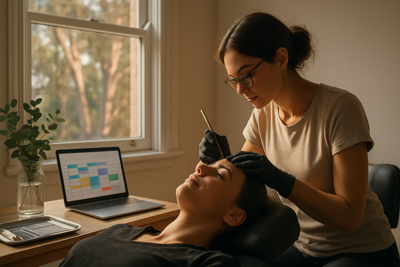
A home PMU business plan should answer three questions before you commit to a fit-out: can the proposed service operate at this address, what preparation is still needed, and what will it cost to run? Work through those questions together. A spare room or a completed course alone does not establish that the business is ready to open.
Define the Services Before Planning the Room
List the cosmetic tattooing services you intend to offer and the methods involved. Keep additional work, such as correction or removal, outside the initial scope unless you have separately checked its preparation and operating requirements.
For each proposed service, note the training evidence you hold, practical preparation still needed and equipment to confirm. Do not treat a general PMU course title as proof that every technique is included.
The Australian PMU curriculum overview helps you compare the published lessons with your goal.
Resolve the Premises Questions Early
Give the council the address, service description and any proposed alterations. Ask about planning, building and public-health requirements before spending on the room or advertising appointments.
The Australian Government’s home-business guidance explains that council approval, licences and landlord approval may be relevant. It also advises checking home insurance because ordinary policies often exclude business activity.
Use the PMU licensing guide for regional examples. Request requirements for your actual setting rather than copying a room layout from another business.
- What approvals must be obtained before opening?
- What information or plans must be submitted?
- Which premises features and inspection steps apply?
- Are there conditions affecting client visits, hours or signage?
Cost the Setup and a Quiet Month
Build an itemised sheet from quotes. Separate one-off setup costs from recurring costs and label estimates clearly. Do not assume that working at home makes the project inexpensive once alterations and operating requirements are included.
- Setup: confirmed training, equipment, approved alterations and initial stock.
- Recurring: consumables, waste arrangements, insurance, booking tools and other regular costs.
- Time: preparation, consultation, appointments, records and follow-up administration.
- Contingencies: unresolved quotes, replacements and delays before opening.
Compare a cautious booking scenario with your intended schedule. Show how many appointments the estimate assumes and which costs continue when bookings are lower. Avoid treating those assumptions as a forecast of customer demand.
The PMU equipment buying checklist can help you prepare supplier enquiries.
Make the Appointment Offer Clear
Describe what each displayed price includes. Explain the booking process, cancellation terms and how any follow-up appointment is arranged or priced. Avoid leaving clients to infer that an additional visit is included.
Plan the enquiry route, arrival instructions and required client information before launching promotion. Decide how you will handle questions that need a consultation rather than an instant booking response.
Use your own accurately described portfolio work with appropriate permission. The PMU portfolio guide explains stage labels and consistent photographs. Do not advertise a result as typical or guaranteed simply because it appears in a gallery.
Confirm Cover and Operating Responsibilities
Give an insurer or broker the actual service description, location and training documents. Ask about the activities, people and setting covered, relevant exclusions and conditions, and when cover starts.
The PMU certification and insurance enquiry guide helps organise those questions. A course certificate, an insurance quote and premises approval are different documents.
Keep a list of the records and client information required for your service and location. Confirm how they will be stored, who needs access and which reporting or review obligations apply.
Open Only When the Outstanding Items Are Resolved
Use a final readiness record with columns for requirement, evidence, date and unresolved action. Include premises approvals, training preparation, equipment, insurance and client-facing arrangements. Keep actual confirmation separate from an application awaiting a reply.
A small initial service range can make the plan easier to manage, but it does not remove any requirement. Recheck the affected arrangements before adding methods, changing operators or moving to another location.
For study preparation while these questions are being resolved, use the PMU home-study organiser. Keep learning progress and the business opening decision as separate milestones.
Course Details and Next Steps
Review the current course details for Australia and contact Skinart with questions about your selected option. Existing students can return to their lessons in the academy.