SMP Training Progress: Build a Weekly Learning Record
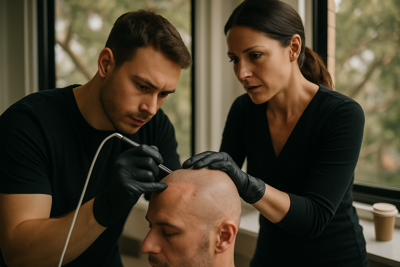
Student stories can be encouraging, but another person’s experience cannot tell you how quickly you will learn scalp micropigmentation. A weekly learning record gives you something more useful: evidence of the lessons you studied, the exercises you attempted and the questions still to resolve. Use it alongside the instructions and assessments in your selected course.
Choose a Manageable Study Aim
Start the week with one aim connected to your current lesson. This might be understanding terminology, completing an assigned drawing exercise or responding to earlier feedback. Write the aim as a task you can review, rather than a broad ambition such as becoming confident.
Plan time for questions and revision as well as watching lessons. If your available time changes, reduce the number of tasks instead of marking unfinished work as complete. Your record should describe what happened, not the schedule you hoped to follow.
Use a Simple Five-Part Record
- Lesson: the exact title or topic you studied.
- Task: the exercise or question you intended to work on.
- Evidence: the notes or files that show what you completed.
- Feedback: the guidance received, or the question still awaiting an answer.
- Next step: the specific action to take in your next study session.
Keep one entry per task. You can use a notebook or a simple document; the format matters less than being able to find the earlier attempt and the advice that followed it. Do not copy private information into a shared study document.
Separate Watching, Practising and Assessment
Record these as different activities. Watching a demonstration shows that you accessed the lesson; it does not establish that you can reproduce the work. An attempted exercise is also different from an assessment accepted by your tutor.
Use the practice materials and submission requirements specified by the course. If the next activity is unclear, ask before substituting a different task or moving beyond the assigned exercise. Keep tutor assessment decisions separate from your own reflections.
Turn a Vague Difficulty Into a Useful Question
Describe the feature you are struggling to understand and include the relevant lesson or instruction. A question about an assigned drawing might be: “My spacing changes across the page. Which part should I focus on when I repeat this exercise?” This is an example prompt, not a student testimonial or an assessment result.
For a repeat submission, include the previous advice and explain what you changed. Ask which views or notes the tutor needs rather than sending a large collection of unlabelled photographs. Keep the original attempt so the comparison remains clear.
Review Patterns at the End of the Week
Look for recurring questions, missing evidence and tasks you have repeatedly postponed. Choose one of those issues for the next discussion with your tutor. A quieter week can still produce a useful record if it identifies exactly what needs clarification.
- Which planned task did I actually complete?
- What can I now explain in my own words?
- Which question remains unanswered?
- What evidence or revision has the tutor requested?
- What is the first task for my next session?
Avoid comparing your number of study hours with an advertised success story. Starting experience, available time and the work being assessed may differ. Record progress against your actual course requirements.
Before Enrolling or Changing Your Study Plan
Check the current curriculum, required materials, access terms and assessment arrangements for the option you intend to buy. Ask who reviews exercises and how to request feedback. If studying from Australia, mention your time zone when discussing support availability.
A learning record helps organise study; it is not a qualification, a promise of earnings or proof that you are ready to offer a service. Discuss your next training step using the work and feedback you have actually recorded.
When selecting work from your learning record, use the SMP portfolio guide to keep photographs, permissions and descriptions accurate.
Course Details and Next Steps
Review the current course details for Australia and contact Skinart with questions about your selected option. Existing students can return to their lessons in the academy.