Skip to content

Permanent Makeup Machines & Pigments for Beginners

Permanent Makeup Machines & Pigments for Beginners

Welcome — if you’re in Australia and curious about starting a career in Permanent Makeup, this guide is crafted for you. Right from the outset, we’ll explain the essentials of Permanent Makeup Machines & Pigments, helping you make informed choices as a beginner. Whether you plan to specialise in brows, lips, or areola work, understanding machines, needle systems, pigments and safety is the foundation of professional, compliant practice.

Skinart Australia brings industry-grade training and accredited online learning to aspiring artists across Australia. This article breaks down how machines differ, what pigments are made from, how to mix and match systems, and the regulatory and safety considerations every beginner must know. Along the way, you’ll find practical tips, common mistakes to avoid, and links to trusted Australian resources to help you build a safe, skilled practice.

Written by Gary Erskine, 25 years in Permanent Makeup Machines & Pigments education — this is your practical, Australia-focused primer to get started confidently and professionally.

Introduction to Permanent Makeup Machines & Pigments


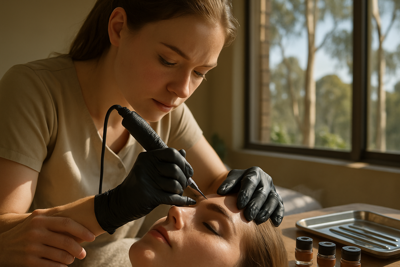
Permanent Makeup (PMU) combines artistry, medical hygiene and specialised equipment to deposit pigment into the skin in a controlled, predictable way. For beginners, understanding the distinction between machines and pigments is critical: machines are the delivery systems, pigments are the materials you deposit. Both must be chosen with care for safety, longevity and client satisfaction.

Machines used in PMU range from rotary cartridges to coil-style and pen machines. Each system has nuances — speed, needle compatibility, stroke type — that influence healing and the final look. Pigments, meanwhile, are formulated by manufacturers to perform differently in Fitzpatrick skin types, and Australian climates and sun exposure can affect pigment behaviour over time.

By mastering the basics of how machines interact with pigments you’ll achieve consistent results and lower complication rates. This section sets the foundation so you can evaluate kit options, interpret pigment labelling, and ask the right questions before buying or booking clients.

Machines, Drivers and Needle Systems


At the heart of PMU is the machine and its needle system. Beginners should focus on three core elements: the machine type, the needle/cartridge format, and the power/driver characteristics. Each affects pigment placement depth, trauma to the skin, and healing outcomes.

  • Rotary pen machines — smooth, quieter operation; friendly for shading and microblading-like strokes when using specialised cartridges.
  • Coil machines — sometimes used in heavier work; can be more aggressive and require significant skill to control depth.
  • Cartridge needles — single-use, sterile cartridges are the industry norm for infection control in PMU.
  • Needle groupings — round liners, magnums, flats and shaders each create different pigment deposit patterns.
  • Drivers/power supplies — adjustable voltage and stroke length change ink flow and skin response.
  • Machine ergonomics — pen-style grips and light-weight bodies reduce fatigue and improve precision.
  • Compatibility — confirm the cartridge brand fits your chosen machine to avoid wobble or inconsistent needle action.
  • Maintenance — proper cleaning, servicing and using disposable grips/cartridges keep your practice compliant.

Pros and cons exist for each system. Rotary pens are forgiving and easier for many beginners, while coil machines can provide an edge for experienced artists doing heavier pigment packing. Needle choice often matters more than machine brand — correct grouping and depth control lead to predictable pigment retention.

When selecting your first machine, look for a reputable brand with good service support. As trainers, we advise testing several cartridges and settings in practice skin or on supervised models before treating paying clients. Practise needle depth on synthetic skins and seek mentor feedback to calibrate your technique safely.

Pigment Chemistry, Colour Theory & Safety


Pigments used in Permanent Makeup are not the same as traditional tattoo inks. Many PMU pigments are formulated to be softer and to fade predictably over time. They contain organic and inorganic pigments, carriers, and stabilisers. Understanding pigment chemistry helps you choose products that suit skin tone, desired longevity and minimise adverse reactions.

Colour theory is critical: neutralising unwanted tones, compensating for warm or cool skin undertones, and predicting how a pigment will age. For example, some red-based lip pigments can shift in brighter sunlight, while certain dark pigments can warm to a brown or orange over years. Australian clients with high sun exposure require different considerations than clients in cooler climates.

All pigments should be sterile, single-use (when packaged that way) and compliant with manufacturer labelling. In Australia, pigment safety also ties into Therapeutic Goods Administration (TGA) guidelines and import controls — keep records of supplier documentation and ensure pigments are clearly labelled for professional cosmetic use. For guidance on therapeutic goods and safety check the TGA website.

  • Understand pigment base: iron oxides vs organic dyes.
  • Identify undertone: cool, warm, neutral — match to client’s skin.
  • Test patch for allergies when indicated, especially in sensitive areas.
  • Use small test mixes to observe healing colour changes before committing to a full procedure.
  • Store pigments as per manufacturer recommendations (temperature, light exposure).
  • Record batch numbers and lot information for traceability.
  • Prefer well-documented brands with published Safety Data Sheets (SDS) and ingredient lists.
  • Be cautious with imported pigments lacking Australian documentation — consult your trainer or regulatory body.

Choosing Tools & Supplies — Pros and Cons


Choosing the right equipment means balancing cost, quality, and training compatibility. As a beginner, your priority should be safety and learning — reliable, well-documented tools will help you focus on technique rather than troubleshooting gear failures.

  • Reputable machine brands — reliable warranty and local service options.
  • Disposable cartridges — safer than re-using needles; required in most modern studios.
  • Medical-grade gloves, barrier film, and disposable aprons — infection control basics.
  • High-quality pigments with SDS and clear ingredient lists.
  • Practice skins and simulation tools for repeated technique practice.
  • Aftercare products recommended by manufacturer or trainer.
  • Sharps containers and clinical waste disposal arrangements compliant with Australian law.
  • Record-keeping software or forms for client consent, medical history and pigment/lot tracking.

Pros: modern cartridge systems reduce cross-contamination risk and improve consistency. Cons: cartridges and premium brands can be more expensive upfront. For beginners, consider renting or borrowing machine setups for supervised practice sessions rather than investing in multiple costly systems before you’ve settled on a preferred workflow.

Important note for Australian learners: Skinart Australia does not supply permanent makeup equipment within Australia. Our courses teach you the selection criteria and safe usage, but you are responsible for sourcing equipment locally in compliance with Australian regulations and import rules.

Common Beginner Mistakes to Avoid


Beginners often rush into procedures without adequate practical experience or rely on price as the deciding factor for equipment. These shortcuts can lead to poor retention, client dissatisfaction, or complications. Below are common issues we see and how to avoid them.

  • Incorrect needle depth — too shallow causes patchy results; too deep causes excessive trauma and scarring.
  • Poor colour selection — choosing pigments without considering skin undertone or sun exposure.
  • Inadequate consent and medical screening — missing contraindications (e.g., isotretinoin, active skin disease).
  • Insufficient aftercare advice — not preparing clients for the healing timeline and colour shifts.
  • Using low-quality, unlabelled pigments — risk of allergic reactions or unpredictable fading.
  • Not tracking pigment batch numbers — makes resolving adverse reactions harder.
  • Skipping practice on synthetic skins or models — leads to inconsistent hand speed and pressure.
  • Rushing procedures — poor mapping and shaping leads to asymmetry and client dissatisfaction.

Learning to manage these issues takes time and guided practice. Our online course emphasises hands-on technique through video demonstrations, step-by-step mapping, and troubleshooting sessions so you can develop a steady hand and reliable outcomes.

Here’s a quote from a recognised industry source to underline the importance of training and safety: “Proper training and adherence to infection control are the most effective ways to protect clients and practitioners,” — Council of Professional Tattoo Practitioners (CPTP).

Safety, Hygiene and Regulation in Australia


Operating in Australia means complying with state and territory public health and clinical waste regulations. While regulations vary slightly across jurisdictions (NSW, VIC, QLD, WA, SA, TAS, ACT, NT), the principles of infection control and documentation are universal: use sterile single-use needles, dispose of sharps correctly, maintain a clean studio environment and keep clinical records for each client.

For up-to-date regulatory guidance, consult your local health department and the TGA for any therapeutic goods considerations. The Therapeutic Goods Administration provides information on safety requirements for substances and devices used in clinical cosmetics: https://www.tga.gov.au

Australian local councils commonly require registration for skin penetration businesses — contact your council to confirm requirements for operating a PMU service. Keep clear client records, informed consent forms, and photographic documentation of the procedure and aftercare instructions as part of your compliance routine.

Training Pathway & How Skinart Australia Helps


Becoming a competent PMU artist requires structured education and supervised practice. Skinart Australia offers an accredited online Permanent Makeup course that covers machines, pigments, colour theory, mapping, skin science and infection control. The course is aligned with CPD Standards Office and BAQA accreditation standards — designed to be practical, evidence-based and respectful of Australian regulatory expectations.

Our online format is ideal for Australian students who need flexible learning without on-site attendance — note that we do not offer in-person training in Australia. The course includes detailed demonstrations, downloadable resources, case studies and tutor feedback so you can build competence and confidence in PMU techniques.

Students who complete the course gain the knowledge and documented CPD-accredited training they need to practise safely and professionally. Many of our graduates across Australia have gone on to successfully build mobile services, work within clinics, or offer PMU as part of a broader beauty practice.

FAQs — Permanent Makeup Machines & Pigments for Beginners


Below are common questions beginners ask about machines, pigments and getting started in Australia.

  • What machine is best for absolute beginners? Many beginners find a rotary pen with compatible cartridges easiest to learn on because it offers smooth, controllable motion, lower noise and reduced vibration compared with older coil machines.
  • How do I choose the right pigment for different skin tones? Choose pigments with clear manufacturer guidance on undertones and recommended Fitzpatrick skin types; practise small test patches in supervised training to see how colours heal before committing to large fills.
  • Are pigments regulated in Australia? Pigments and devices may be subject to Australian regulatory controls; check the Therapeutic Goods Administration (TGA) and local council requirements for clinical skin penetration businesses.
  • Do I need a licence to perform PMU in Australia? Licensing varies by state and local council; some regions require business registration and adherence to council health standards. Confirm with your local council.
  • How do I avoid pigment migration or blowouts? Correct needle depth, appropriate machine settings and mastering hand speed will reduce migration. Overworking the skin or going too deep is the most common cause of blowouts.

Short answers like these are a primer — the full Skinart online course expands each topic into step-by-step modules, practice sessions and troubleshooting clinics to help beginners progress safely.

FAQ Schema: the above Q&A items are ideal for structured data on your site; when you publish, consider adding schema markup so search engines can feature these questions directly in results.

Final Thoughts & Next Steps


Starting with Permanent Makeup Machines & Pigments is a rewarding journey that blends technical skill, artistic judgement and rigorous hygiene. As you begin, prioritise accredited education, supervised practice and equipment choices that support safe outcomes. The difference between a good result and a great result is often patience and a commitment to continual learning.

Skinart Australia’s accredited online Permanent Makeup course is designed to guide you through each step — from machine selection and pigment chemistry to mapping techniques and client management. Although we do not provide in-person training in Australia or supply equipment locally, our course equips you with the knowledge to confidently source compliant tools and practice competently.

If you’re ready to build skills that deliver consistent client satisfaction and professional credibility, take the next step: learn with experienced tutors, receive accredited certification and join a community of practitioners across Australia.

Ready to Start Your PMU Journey?


Join Skinart Australia’s accredited online Permanent Makeup course and learn how to choose and use machines, select pigments confidently, and practise professional hygiene and client care.

Recent Blog Posts