Skip to content

How to Start a Permanent Makeup Business from Home

How to Start a Permanent Makeup Business from Home

Starting a permanent makeup business from home is an achievable and rewarding way to build a flexible career in beauty. Whether you’re experienced in cosmetics or are new to the industry, this guide explains the legal, practical and marketing steps to launch and grow a professional Permanent Makeup (PMU) service in Australia.

Your first step is training with an accredited provider — while you can practise from home, the industry expects recognised qualifications, infection-control competency and professional insurance. This article walks you through setup, client safety, pricing, marketing and the local requirements unique to Australia, and explains how Skinart Australia’s online Permanent Makeup course supports your journey.

Table of Contents


Use the links below to jump to the section you need. We recommend bookmarking this page and returning as you build your home-based PMU business — many readers find it useful during planning and setup.

Anchor-linked headings with semantic IDs help Google generate “Jump to” links in search results, improving visibility for the keyword Start a Permanent Makeup Business from Home.

Why start a home Permanent Makeup business?


Starting a Permanent Makeup business from home offers low overheads, flexible hours, and the chance to build a local reputation in your community. For many Australian technicians, home-based practice is the ideal first step: you can focus on skill-building, client care and repeat business before investing in a separate commercial premises. The keyword Start a Permanent Makeup Business from Home is central to this article because it describes the pathway many beauty professionals take to gain independence while keeping costs manageable.

Operating from home also gives you greater control over your brand experience — from the moment a client walks in, through to aftercare. By combining accredited training with strict safety protocols, a home PMU studio can match the professionalism of commercial salons while delivering the personal, appointment-based service many PMU clients prefer.

Finally, a home setup can be more resilient in changing market conditions. You can easily scale appointment times, add services such as microblading, lip blush or touch-ups, and test marketing strategies to discover what resonates with your local clientele in Australia.

Equipment, supplies and setting up your treatment space


Although Skinart Australia provides comprehensive online training, we do not supply Permanent Makeup equipment in Australia. You will need to source professional-grade machines, pigments approved for PMU, single-use needles or cartridges, medical-grade gloves, disposable towels, antiseptics and sharps containers from reputable suppliers.

When choosing equipment, select brands with clear safety documentation and local support. Look for pigments that state they are intended for cosmetic tattooing and meet the supplier’s quality standards. Where possible buy from Australian distributors to simplify returns and insurance compliance.

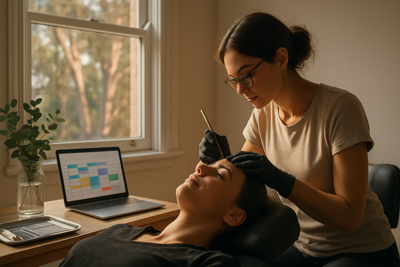
Setting up your treatment room at home should prioritise infection control and client comfort. Key elements include:

  • Dedicated treatment chair or bed with wipeable surfaces
  • Clear clinical workflow: a clean zone, a procedure zone and a dirty zone
  • Handwashing sink with soap, paper towels and alcohol-based hand rub
  • Single-use needle systems and colour-coded sharps bins
  • Clinical waste bags and contracts for medical waste collection (if required by your council)
  • Good lighting and magnification for precise work
  • Comfortable waiting area that respects client privacy
  • Secure storage for client records, pigments and controlled items
  • Clear visible signage if council requires it for home businesses

Beyond equipment, invest in a high-quality colour-correcting chart, measurement tools (calipers), and sterile disposables. Always retain supplier technical data sheets for pigments and devices — these support both client safety and insurance requirements.

Marketing, pricing and attracting clients


Marketing a home-based PMU business means balancing local reach with professional presentation. Use social media to showcase before-and-after images, but ensure photos are high quality, properly consented and comply with advertising rules. Local SEO is crucial: target terms such as “Permanent Makeup near me”, “Microblading Melbourne”, or the exact phrase Start a Permanent Makeup Business from Home when describing your services and blog content.

Pricing strategy should reflect your skill level, overheads and local market rates. Start with a competitive introductory price for your first 20–50 clients to generate testimonials and referrals, then move to standard pricing once you have a portfolio of healed results. Consider offering packages, touch-up pricing, and loyalty discounts to retain clients.

  • Build a portfolio with model clients or discounted trials (with clear consent)
  • Collect and display testimonials and healed photos
  • Use Google Business Profile for local search visibility
  • Partner with local beauty salons for referrals (where permitted)
  • Use Facebook groups and local community boards carefully and professionally
  • Invest in a simple booking system that sends automated reminders
  • Offer clear, downloadable aftercare instructions
  • Run periodic promotions tied to seasons (e.g., bridal packages)

Successful home PMU businesses in Australia focus on reputation and repeat clients. Word-of-mouth aftercare referrals are particularly powerful because PMU clients often return for touch-ups and refer friends based on healed results.

Remember to keep marketing compliant: avoid exaggerated claims or before/after images that mislead. If you’re unsure about advertising rules, consult the Australian Competition & Consumer Commission guidance on advertising claims.

Common mistakes to avoid


  • Skipping formal accredited training or inadequate infection-control training
  • Using unregulated or poor-quality pigments that cause reactions
  • Poor client consent and record-keeping
  • Inadequate sharps disposal or clinical waste handling
  • Failing to check council regulations for home-based businesses
  • Overbooking and rushing treatments — compromising quality
  • Unclear aftercare which leads to poor healing and complaints
  • Poor photography or dishonest marketing of results

These mistakes can harm clients and your reputation. For example, pigments not intended for PMU can cause allergic reactions or uneven retention — always keep supplier safety data sheets and choose reputable manufacturers.

Another frequent pitfall is underestimating the administrative side: client intake forms, medical histories, and follow-up reminders are crucial for healing outcomes and for defending against disputes or complaints. A clear refund and touch-up policy documented before treatment avoids misunderstandings later.

Clinical skills, consultation and aftercare


Proper consultation and clinical technique are at the heart of a reputable home PMU practice. Consultations should include medical history, medication checks (e.g., blood thinners), allergy screening and realistic expectation setting. Photograph the treatment area with client consent for records and comparisons.

During the treatment, maintain aseptic technique: use single-use needles, fresh gloves for each client, and disinfect surfaces between appointments. Record pigment brands, needle configuration, and impressions of pain or skin reaction in the client file. This documentation is invaluable for touch-ups and managing rare complications.

Aftercare must be practical and clear. Provide printed and digital aftercare instructions that cover healing stages, when to return for touch-ups, and what to do if signs of infection appear. Offer emergency contact information and explain the expected timeline for colour settling and scabbing.

  • Pre-treatment consultation and consent forms
  • Medical history and medication checklist
  • Standard operating procedures for each treatment
  • Photographic records (before, immediately after, healed)
  • Written aftercare handed to client
  • Follow-up reminder in 6–12 weeks for touch-up
  • Clear cancellation and refund policy
  • Process for managing complications and referrals to medical professionals

Administration: bookings, record-keeping and taxes


Running a smooth home PMU service requires systems. Use appointment-booking software that integrates SMS or email reminders, deposits and client records. Taking deposits for new clients reduces no-shows and compensates for short-notice cancellations.

Keep meticulous client files. In Australia, there is no single federal retention period for PMU records, but a good rule is to retain client data for at least 7 years, or longer if required by state guidelines. Secure digital backups and locked physical files are both recommended.

Financial administration also matters. Register for an ABN, decide whether to operate as a sole trader or company, and keep expense records for tax deductions — thoughts that will affect pricing and cash flow. Consider a separate business bank account to simplify accounting and GST if you exceed the threshold.

  • Booking software with deposit and reminder features
  • Standardised intake and consent forms (digital and paper)
  • Client file retention and secure storage
  • Supplier invoices and device maintenance logs
  • Insurance documents (public liability and professional indemnity)
  • Tax records: income, expenses, superannuation (if employing staff)
  • Payment processing solutions (EFTPOS, payment links)
  • Receipts and proper GST treatment if applicable

Growing your business and advanced training


Once you’re established, growth comes from refining your niche and expanding services. Consider specialising (e.g., microblading, combination brows, paramedical work) or offering advanced colour correction. Regularly update your skills and keep CPD records — accredited continuing professional development (CPD) is recognised and valued by insurers and clients.

We emphasise accredited online training because it provides the theory and observation hours you need to be safe and professional. Skinart Australia’s online Permanent Makeup course is fully accredited with the CPD Standards Office and the Body Art Qualification Association (BAQA). Note: we do not offer in-person training in Australia; all courses are delivered online with tutor support.

Build a clear path for clients: introductory offers, standard procedures for touch-ups, and referral incentives. Many Australian PMU artists build relationships with bridal stylists, cosmetic nurses and beauty therapists — collaboration expands visibility and trust.

  • Invest in CPD and advanced technique modules
  • Attend industry conferences and online masterclasses
  • Collect healed results and testimonials for your portfolio
  • Create clear upgrade paths for existing clients (e.g., brow microblading to ombré)
  • Implement client referral rewards
  • Document outcomes for ongoing learning
  • Consider limited guest spots in salon settings for exposure
  • Regularly review supplier updates for pigments and devices

Industry views and a practical reminder


“Safe practice and clear client communication are non-negotiable. Accredited training and local compliance protect both the technician and the client,” says a representative of a municipal health team in Victoria. This advice reflects what councils across Australia ask of home-based skin-penetration businesses.

At Skinart Training, we also advise students to maintain an evidence-based approach. Below is a short operational checklist and a quote that sums up the ethos you should adopt when you Start a Permanent Makeup Business from Home.

“Quality training, documented hygiene systems and transparent client care are the foundation of a long-term PMU practice.” — Gary Erskine, Lead Tutor, Skinart Australia

Frequently asked questions


The questions below are written the way prospective students and new business owners search online. Short, practical answers will help you move from planning to action.

Can I start a Permanent Makeup business from home in Australia?

Yes — many Australian technicians operate from a home studio, but you must comply with local council rules, maintain strict infection-control standards, hold appropriate insurance, and be able to demonstrate accredited training and client records.

What qualifications do I need to do Permanent Makeup in Australia?

While formal national licensing is evolving, reputable insurers and clients expect accredited PMU training. Skinart Australia’s online Permanent Makeup course is accredited by the CPD Standards Office and BAQA, providing recognised learning and tutor support.

How much does it cost to set up at home?

Startup costs vary depending on equipment, pigments and whether you need council approvals. Expect to invest in a professional machine, pigments, disposables, sharps bins, furniture and marketing; budgeting realistically helps avoid cash-flow stress.

Do I need a business insurance for home PMU work?

Yes. Public liability and professional indemnity cover is strongly recommended and often required by suppliers and councils.

How long before I earn a stable income from home PMU work?

Income depends on your local market, pricing and marketing effectiveness. Many practitioners start seeing steady bookings within 6–12 months when they combine good training, quality healed results and consistent local promotion.

Skinart Australia: Online Permanent Makeup Course


Skinart Australia provides an accredited online Permanent Makeup course designed for new and experienced beauty professionals who want to start a Permanent Makeup Business from Home. Our course covers theory, colour science, brow mapping, safety, consent and business essentials — all accredited by the CPD Standards Office and BAQA.

We do not offer in-person training in Australia; our online course includes detailed modules, video demonstrations and tutor feedback from industry professionals led by Gary Erskine, who has 25+ years’ experience in the body art industry.


Final thoughts: your next steps


Starting a Permanent Makeup Business from Home in Australia is an exciting way to craft a flexible career with low initial overheads. The keys to success are accredited training, meticulous hygiene standards, clear client communication and a marketing plan that attracts your ideal clients.

Take a pragmatic approach: validate council requirements, complete accredited training, purchase quality supplies and make your first 20 clients your best marketing investment by delivering excellent results and follow-up care. By doing so you’ll build the reputation that secures steady bookings and long-term growth.

When you’re ready to learn the technical and business essentials, Skinart Australia’s online Permanent Makeup course is designed to guide you step-by-step — accredited, tutor-supported and tailored for practitioners who wish to operate professionally from home.

Ready to start?


If you’re serious about building a professional, accredited home PMU business in Australia, start with the right training. Our online Permanent Makeup course is structured to take you from fundamentals to clinic-ready with tutor support and accreditation.

Recent Blog Posts

Written by Gary Erskine, Lead Tutor — 25+ years in body art and Permanent Makeup education. Skinart Australia is internationally accredited and has trained thousands of students worldwide.

Quote from an industry source: “Council compliance and accredited training are the backbone of safe, trusted PMU services,” — Municipal Health Officer, City of Sydney (paraphrased).