Skip to content

How to Build a Scalp Micropigmentation Portfolio
How to Build a Scalp Micropigmentation Portfolio

Whether you’re starting out in Australia or refining an existing practice, knowing how to Build a Scalp Micropigmentation Portfolio is essential. A well-crafted portfolio demonstrates your technical skill, clinical judgment and artistic sensibility — and it’s the single most powerful tool to attract clients, clinics and referral partners.

In this guide I’ll walk you step-by-step through the elements every professional scalp micropigmentation (SMP) portfolio needs: photography, case selection, storytelling, legal and ethical safeguards specific to Australia, and how to present your work online and in-clinic. Use these proven methods to showcase your best work and grow your business with confidence.

Written by Gary Erskine, 25 years in scalp micropigmentation education. Skinart Australia is fully accredited with the CPD Standards Office and the Body Art Qualification Association (BAQA). This article is tailored for Australian practitioners and students exploring our Scalp Micropigmentation course at Skinart Australia.

Core concept: what a strong SMP portfolio shows


At its heart, a portfolio is evidence. For scalp micropigmentation this evidence must prove you can safely and consistently reproduce natural-looking hairlines, density adjustments and scar camouflage. When you Build a Scalp Micropigmentation Portfolio, think of it as a clinical record, a visual CV and a marketing brochure all in one.

Your portfolio should communicate four things clearly: technical competence (needle control, pigment deposit), consistency (multiple similar outcomes), judgement (suitable style choices for different hair types and skin tones) and patient care (pre/post documentation, consent and follow-up). Clients and clinics scrutinise these elements before they book a consultation.

In Australia, where clients are increasingly informed and regulators emphasise infection control and record-keeping, your portfolio should also reflect a professional clinic approach. Photographs of your workspace, PPE and written aftercare are part of a modern SMP portfolio and reassure clients that they are in safe hands.

Photographing SMP: lighting, angles and editing


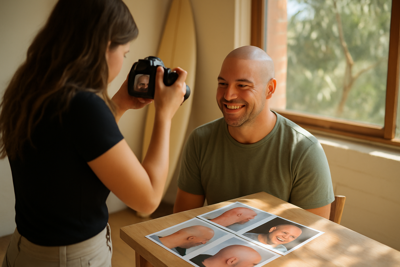
Great photos are the backbone of a portfolio. No matter how talented you are, poor lighting or inconsistent angles will dilute the impact of your work. When you Build a Scalp Micropigmentation Portfolio, invest time to standardise photography so each case is easily comparable.

Start with three consistent shots for every case: a front-on hairline view, a 45-degree angle on each side, and a top-down density view. Use the same neutral background and consistent camera height. Even modern smartphones produce excellent results if you use indirect natural light or a softbox.

Editing should be conservative: colour balance, exposure and cropping only. Never alter the appearance of the SMP itself to exaggerate results. Authenticity builds trust — and misleading images can harm your reputation and expose you to regulatory complaints.

  • Use consistent backgrounds (neutral, clutter-free)
  • Shoot in soft, even light (avoid harsh sun and strong overheads)
  • Maintain consistent camera distance and angles
  • Capture before, immediate after, and healed photos (8–12 weeks)
  • Include close-up and contextual headshots for scale
  • Shoot multiple angles: front, both sides, crown/top view
  • Use a tripod for repeatable framing where possible
  • Edit only exposure, white balance and minor cropping
  • Label images with case ID, procedure date and notes (securely)

Client selection, consent and documentation


Choosing suitable cases is a critical step when you Build a Scalp Micropigmentation Portfolio. Early on, you should prioritise clients whose hair loss patterns or scarring match the techniques you’re most confident in. Selecting the right clients lets you demonstrate repeatability and ranges of skill.

  • Pros: builds demonstrable, repeatable outcomes quickly
  • Cons: you may miss complex cases that demonstrate advanced skills

Always secure written consent before photographing or publishing client images. In Australia, informed consent and privacy protections are taken seriously; document the client’s agreement to use photos on your website, social channels and marketing materials. Keep signed consent forms linked securely to each case record.

Record essential clinical details for every case: skin type, scalp condition, pigment formula, needle configuration, session times and aftercare instructions. This granularity not only makes your portfolio more credible — it also supports better outcomes and helps if a client returns for touch-ups.

Structure and storytelling: case studies that convert


A portfolio that merely shows before/after images is helpful, but a portfolio that tells the story of the client’s problem and your clinical solution converts better. For each case consider a short, structured case study: presenting complaint, your assessment, the intervention and the healed outcome.

Make each case scannable: headline (age, male/female, hairloss type), three labelled photos, a short paragraph on treatment plan and one line of measurable outcome (e.g., improved hairline symmetry, scar concealment). People make decisions fast — clear structure reduces doubt and encourages bookings.

Include testimonials and brief video clips where possible. Video testimonials are persuasive because they humanise results and allow potential clients in Australia to hear real experiences from people in their time zone and cultural context.

  • Case headline (age bracket, concern)
  • Primary photos (before, immediate after, healed)
  • Treatment notes (session count, pigment used)
  • Aftercare provided and follow-up recorded
  • Client testimonial (short quote)
  • Outcome measured or client satisfaction metric
  • Any adjunctive treatments (PRP, hair transplant) noted
  • Link to related blog post or video for deeper reading
  • Privacy-safe case ID and consent confirmation

Marketing & SEO for SMP portfolios


Once your portfolio content exists, make it discoverable. For Australian SMP practitioners, optimising for local search terms like “scalp micropigmentation Sydney” or “SMP Melbourne clinic” helps. Your portfolio pages should load quickly, be mobile-friendly and use clear H1/H2 headings with case metadata.

Use social platforms strategically: Instagram for before/after visuals, YouTube for longer healed-case videos, and Facebook or LinkedIn for clinic updates and local community engagement. Always link back to a portfolio page on your website so you control the user journey.

Include structured data where possible (schema for Service, LocalBusiness and FAQ). This helps search engines display rich results. If you’re a Skinart Australia student, our online Scalp Micropigmentation course covers essential marketing best practices so you can showcase results professionally and ethically.

  • Optimize image filenames and alt text (include location and procedure)
  • Create individual portfolio pages for high-value cases
  • Use short, keyword-rich captions and case summaries
  • Encourage clients to leave reviews on Google and Facebook
  • Pin case studies as highlighted posts on Instagram
  • Repurpose content into blogs and short video clips
  • Cross-link related cases and training pages
  • Monitor analytics and test CTA wording to improve conversions

Top portfolio mistakes to avoid


  • Using inconsistent photo angles that make comparison impossible
  • Relying only on immediate post-work photos (omit healed images)
  • Showing a single “perfect” case that isn’t representative of normal results
  • Failing to include consent documentation and privacy notes
  • Over-editing images to misrepresent outcome
  • Ignoring follow-up photos that demonstrate longevity
  • Publishing client images without signed permission
  • Not documenting clinical settings, pigment formulas and needle setups
  • Having an unstructured website that buries portfolio content
  • Failing to use local SEO signals (NAP, Google My Business)

When you Build a Scalp Micropigmentation Portfolio, consistency beats occasional excellence. A string of honest, reproducible cases will attract more clients than a handful of retouched “hero” shots. Australian clients value transparency and clinical professionalism — show those qualities in the portfolio and in every client interaction.

Fixing these mistakes is simple: standardise your photography routine, document every case, get signed consent and include healed photos. If you need help, Skinart Australia’s Scalp Micropigmentation course includes modules on case documentation, clinical photography and portfolio construction.

Tools and extras to strengthen your portfolio


While Skinart Australia does not supply SMP equipment in Australia, being familiar with industry-standard tools and accessories can improve outcomes and make your portfolio more credible. Mention equipment choices (needle grouping, machines, pigments) in your case notes so other professionals understand your approach.

Consider these practical additions to a professional portfolio: healed videos showing movement and natural light behaviour, a short “about the clinic” section, a downloadable aftercare PDF and a brief section on expected session timelines and pricing ranges.

Adding contextual content like blog posts (explaining differences between SMP and hair transplant scarring solutions) builds authority and helps prospective clients make informed decisions — perfect for converting consultation leads into bookings.

  • Healed case videos (8–12 weeks)
  • Clinic photos (hygiene and setup)
  • Short case narrative for each portfolio item
  • Downloadable aftercare instructions
  • Clear session timeline and expected touch-up policy
  • Link to your accreditation and CPD certificates
  • Accessible contact and booking information
  • Client testimonials and star ratings
  • Local business listings (Google My Business)

Industry perspectives and a practical quote


To underline why standards matter, here’s a guiding statement many CPD-aligned organisations follow: “High-quality training and robust case documentation are essential to patient safety and public trust.” That principle informs how Skinart Australia teaches portfolio construction and case governance.

“Clear, consistent documentation and transparent photography protect both the practitioner and the client. A portfolio is not just marketing — it’s a clinical archive.” — Clinical Educator, Skinart Australia

Embedding authoritative perspectives in your portfolio (for example, noting BAQA accreditation or CPD-aligned training) reassures prospective clients and clinics. It signals you treat SMP as a clinical cosmetic service, not just aesthetic art.

Where to publish your portfolio (platform choices)


Your website is the canonical home for portfolio content — it’s where you control messaging, load speed and SEO. Social channels are referral engines: Instagram for visuals, YouTube for longer-form healed-case narratives and Facebook for local community engagement in Australian cities. Link back to your website portfolio from every social post.

For students and new practitioners, an organised website with clear case categories (hairline, crown, scar camouflage) helps potential clients quickly find relevant examples. Cross-post to local groups and collaborate with hair transplant clinics for referral case studies.

  • Main website portfolio page (canonical)
  • Individual case pages with structured data
  • Instagram for daily photos and Stories
  • YouTube for healed-case videos and “how it healed” walkthroughs
  • Facebook for community and local groups
  • Google My Business (for local search visibility)
  • LinkedIn for clinic partnerships and professional networking
  • Clinic brochures and in-room digital displays

Frequently asked questions about building an SMP portfolio


Below are common questions people ask when they want to Build a Scalp Micropigmentation Portfolio. Short, clear answers help both students and practising clinicians.

How many cases should I include in my initial SMP portfolio?

Aim for 10–20 representative cases that show consistency across hairline restorations, crown work and scar camouflage. Quality and variety matter more than a large number of uncurated photos.

Do I need healed photos or are immediate after photos acceptable?

Healed photos (typically 8–12 weeks after treatment) are essential — they show how the pigment settles and how natural the result looks in everyday lighting.

Can I post client photos on social media in Australia?

Yes, but only with written consent. Keep signed release forms and show the client the exact images you will publish. Respect privacy and data protection laws.

Should I include clinical notes and materials used in case studies?

Include non-identifying clinical notes such as session count, pigment family and basic aftercare to show professionalism and assist peers in understanding your method.

How do I balance marketing with clinical honesty?

Show true outcomes and avoid exaggerated claims. Use testimonials and case narratives to set realistic expectations rather than overstating results.

Those answers align with best practice and what Skinart Australia teaches in its Scalp Micropigmentation course, which emphasises clinical documentation, ethics and practical portfolio building.

Final thoughts: turning your portfolio into bookings


Building an effective SMP portfolio is a process, not a one-off task. When you Build a Scalp Micropigmentation Portfolio thoughtfully — with clear photos, case stories, consent and accreditation — you do more than show results: you build trust. In Australia, trust equals bookings and referrals.

If you’re starting out, aim to document every case with the same care you give the treatment itself. Over time, your portfolio becomes a living record of your growth, and the best marketing tool you own.

We encourage you to take the next step: refine your portfolio using the checklist in this article, and if you want structured guidance, explore Skinart Australia’s online Scalp Micropigmentation course to learn portfolio best practices, clinical photography and the ethics of case publishing.

Ready to Build a Scalp Micropigmentation Portfolio?


Join our fully accredited online Scalp Micropigmentation course and learn clinically sound portfolio practices, photography techniques and marketing strategies tailored for Australian practitioners.

Recent Blog Posts