Common Mistakes in Tattoo Removal and How to Avoid Them
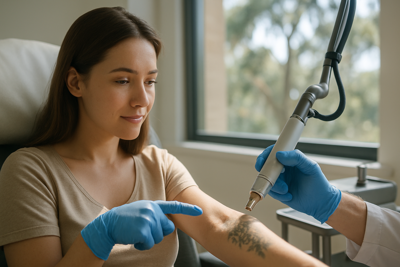
Whether you’re a studio owner in Melbourne, a mobile technician on the Gold Coast, or a curious client in Perth, understanding the most common mistakes in tattoo removal is essential. Tattoo removal methods and expectations have evolved dramatically in recent years, and in Australia the demand for safe, effective alternatives to traditional laser removal is growing fast.
At Skinart Australia we teach the ink-rejection tattoo removal method—an approach that targets pigments with a specialised removal solution delivered via tattooing techniques. This method reduces the number of sessions for many colours and often lowers the risk of scarring when performed correctly. This article walks you through the mistakes we see most often and, crucially, how to avoid them.
Written by Gary Erskine, lead tutor at Skinart Australia with over 25 years in the industry and thousands of trained students worldwide. Our courses are fully accredited with the CPD Standards Office and the Body Art Qualification Association (BAQA).
Table of Contents
Jump to any section — we use anchor-linked headings so Google and readers can quickly navigate.
- Understanding Mistakes in Tattoo Removal
- Client Consent and Expectations
- Technical Errors That Cause Problems
- Top Mistakes We See (and How to Prevent Them)
- Aftercare Failures and Infection Risk
- Product Selection and Safety
- Training, Accreditation and Best Practice
- Frequently Asked Questions
- Final Thoughts
Understanding Mistakes in Tattoo Removal
Tattoo removal is not simply “erasing” ink. It involves interacting with skin biology, ink chemistry, and wound healing responses. Many mistakes in tattoo removal arise from misunderstanding this interplay. Technicians who treat removal as a fast fix can cause prolonged downtime, poor aesthetic outcomes, infection, or scarring.
In Australia, where health regulations and body art standards vary between states and territories, staying within safe professional practice is crucial. Mistakes often happen during assessment and planning—skipping a full medical history, not assessing skin type, or misjudging ink composition are common starting points for problems.
At Skinart Australia we emphasise a methodical approach: accurate assessment, clear consent, correct product selection, and meticulous aftercare instructions. The goal is safe ink removal with predictable results and minimal complications.
Client Consent and Expectations
Clear communication is the first line of defence against poor outcomes. Mistakes in tattoo removal often begin when clients have unrealistic expectations about speed, pain, or guaranteed results.
- Pros: Builds trust, reduces disputes, improves compliance with aftercare.
- Cons: Takes time during client consultations; may reduce impulse bookings.
To avoid misunderstandings, technicians should provide written consent forms that explain the ink-rejection method, likely session count ranges, expected sensations, and realistic timelines for fading. This is especially important in Australia where consumer protection laws emphasise informed consent.
Record photographs before each session, and explain the variables—skin tone, ink type, and previous tattooing methods—that affect results. When clients understand the process, they are more likely to follow aftercare and complete recommended sessions, improving outcomes.
Technical Errors That Cause Problems
Many technical errors are avoidable once you understand the principles behind the ink-rejection method. Common technical mistakes include incorrect needle depth, using the wrong solution concentration, or too-aggressive coverage of the tattooed area.
Needle depth matters: penetrating too shallowly will fail to deliver the removal solution to the ink particles; going too deep increases trauma and scarring risk. Training emphasises consistent hand speed, controlled pressure, and the importance of accurate mapping and test patches.
Another technical pitfall is over-treating in a single session. Pushing too much removal solution into an area to force faster results may seem efficient, but it increases inflammation, extends healing time, and worsens scarring outcomes. The ink-rejection approach is designed to create controlled pigment extraction across multiple well-planned sessions.
- Incorrect needle depth (too shallow or too deep)
- Inconsistent device technique and hand speed
- Wrong solution concentration or mixing errors
- Over-treatment in a single session (excess trauma)
- Insufficient patch testing for skin reactivity
- Poor lighting or inadequate magnification
- Not documenting progress with photos
- Failing to adapt technique for scarred or textured skin
Top Mistakes We See (and How to Prevent Them)
- 1. Skipping a thorough medical history (missed contraindications)
- 2. Poor client expectation management (promising instant results)
- 3. Incorrect needle depth and inconsistent technique
- 4. Over-treating in a single session (excess tissue trauma)
- 5. Using unverified or unsafe removal solutions
- 6. Inadequate aftercare instructions or follow-up
- 7. Not performing test patches on sensitive skin
- 8. Neglecting documentation (no before/after photos)
- 9. Failing to adapt technique for older or scarred tattoos
- 10. Poor infection control practices and workspace hygiene
- 11. Accepting high-risk clients without medical consult (e.g., keloid formation, immunosuppression)
- 12. Not being accredited or following recognised standards
Many of the items above are interrelated: for example, failing to take a medical history (item 1) often leads to poor decision-making during treatment (items 3–5). The remedy is systematised intake, consistent technique, and strict hygiene protocols.
Skinart Australia’s online Tattoo Removal course emphasises these systems. We do not supply equipment in Australia, and we teach the ink-rejection method — so students learn an evidence-based, reproducible workflow that reduces common pitfalls. If you want to practise safely and confidently, follow a step-by-step protocol every time.
Aftercare Failures and Infection Risk
Aftercare is where good removals become great ones. Many mistakes in tattoo removal occur after the client leaves the studio—either because they didn’t get clear instructions, or the instructions were too generic.
- Not advising on sun protection (increases hyperpigmentation risk)
- Failing to warn about signs of infection and when to seek medical care
- Advising inappropriate topical products (e.g., occlusive creams too early)
- Not offering a staged timeline for healing expectations (redness, flaking, pigment lift)
- No written aftercare sheet or photograph-driven progress notes
- Providing no emergency contact for complications
- Overlooking prophylactic measures for at-risk clients
- Inadequate skin prep advice (e.g., avoid retinoids before session)
To avoid aftercare failures, hand clients an easy-to-follow aftercare sheet and review it verbally. Use before-and-after photos so clients can recognise normal healing vs something that needs attention. In Australia, advising on UV protection is especially important: high sun exposure can worsen pigmentation changes during healing.
If an infection is suspected, advise prompt medical review. As part of safe practice, many studios maintain a local GP or dermatology referral pathway for complications—this professional link builds trust and protects clients.
Product Selection and Safety
Choosing the right removal solution and consumables is critical. Not all products labelled “removal” are safe or effective. In Australia, usage must comply with local health and chemical regulations—avoid products with unverified ingredients or inadequate safety data.
We teach students to prefer formulations with documented safety profiles and to document batch numbers and supplier information. This traceability is essential if a client has an adverse reaction and you need to escalate to a medical professional.
Remember: Skinart Australia does not supply tattoo removal equipment in Australia. Our course teaches protocols and product handling so technicians can source compliant supplies locally and safely.
- Verify supplier credentials and SDS (safety data sheets)
- Use single-use consumables where possible to limit cross-contamination
- Record lot numbers and batch details for all solutions
- Avoid home-made or DIY formulations without safety testing
Training, Accreditation and Best Practice
Education is the most effective tool to prevent mistakes in tattoo removal. Skinart Australia’s online Tattoo Removal course covers assessment, technique, infection control, and aftercare. Our curriculum is aligned with CPD Standards and BAQA to ensure you meet recognised benchmarks in practice.
We teach the ink-rejection method in detail: mapping, test patches, solution handling, and staged treatment planning. Our training emphasises clinical reasoning rather than shortcuts. Adelaide, Sydney and Brisbane studios that have students from our courses report fewer complications and higher client satisfaction.
Note: We do not offer in-person tattoo removal training in Australia. Our online program is comprehensive, evidence-based, and taught by Gary Erskine and the Skinart team.
- CPD Standards Office-aligned modules
- BAQA recognised content and assessment
- Practical demonstrations via video and case studies
- Access to a moderated student community for case discussion
Frequently Asked Questions
Below are common questions clients and technicians ask about mistakes in tattoo removal and how to avoid them.
Q: What should I ask during a consultation?
A: You should take a detailed medical history, record medication use (including Accutane and antibiotics), assess for tendencies to keloid, record previous tattoo layering and any prior removal attempts, and perform a test patch if there is uncertainty about skin reactivity.
Q: How soon can I treat a fresh tattoo?
A: Fresh tattoos require complete healing—typically a minimum of 8–12 weeks—before any removal work is considered. Rushing a removal on an unhealed tattoo increases trauma and scarring risk.
Final Thoughts
Understanding and avoiding common mistakes in tattoo removal makes the difference between good outcomes and avoidable complications. The ink-rejection removal technique we teach at Skinart Australia is built around control, respect for the skin, and evidence-based staging to reduce the risks listed in this article.
If you run a studio or work as a freelance technician, adopting standardised intake forms, documented protocols and accredited training will help protect your clients and your business. Mistakes are less likely when you have structured systems and up-to-date knowledge.
Ready to build competence and confidence in tattoo removal? Our online Tattoo Removal course, taught by Gary and the Skinart team, will give you the practical frameworks and accreditation you need to implement safe, effective services in Australia.
Get Started with Skinart Australia
Take the next step to avoid the most common mistakes in tattoo removal. Our online Tattoo Removal course covers assessment, the ink-rejection method, aftercare, and accreditation pathways in Australia.
Recent Blog Posts
- 🌙 Eid Mubarak: Celebrate with 5% Off in 2026!
 Eid Savings: 5% Off All Courses Celebrate Eid with a special offer: 5% off any course. Use code EID5 at checkout.… Read More »🌙 Eid Mubarak: Celebrate with 5% Off in 2026!
 - Top Mistakes New Body Artists Should Avoid (2026)
 Stay Ahead: Common Pitfalls for New Artists Read up on the most frequent errors new body artists make, and how to… Read More »Top Mistakes New Body Artists Should Avoid (2026)
 - Client Communication Skills: 2026 Body Art Success
 Master Consultation for Better Results Top communication strategies for client satisfaction and better outcomes in 2026 and beyond. X Send Chat