Licensing & Insurance for Microblading in Australia
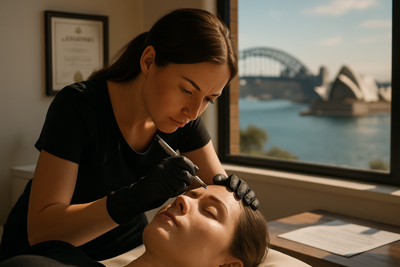
Starting a microblading business in Australia is exciting — but the most important foundations are the legal and protective ones. Licensing & Insurance for Microblading in Australia are not just paperwork: they protect your clients, your reputation and your livelihood. This guide walks you through state-by-state requirements, the insurance options that matter for microblading artists, and practical steps to stay compliant while building a successful career.
Whether you work from a home studio, a salon space, or offer mobile services, understanding local council rules, infection-control standards and the types of insurance relevant to microblading is essential. We’ll also explain how Skinart Australia’s accredited online Microblading course prepares you to meet these obligations and present yourself as a professional practitioners who clients can trust.
Written by Gary, 23 years in Licensing & Insurance for Microblading in Australia education — Gary Erskine leads Skinart Australia’s microblading tuition and has helped thousands of students get accredited, insured and ready to work with confidence.
Table of Contents
Use these links to jump to the section you need — Google may show “Jump to” links for our clear, anchor-linked headings.
- Overview: Licensing & Insurance for Microblading in Australia
- Why Licensing Matters for Microblading
- State and Territory Requirements
- Insurance Types for Microblading Artists
- How to Get Proper Insurance
- Common Licensing & Insurance Mistakes
- Records, Consent & Waste Disposal
- Training, Accreditation & Ongoing Compliance
- FAQ: Licensing & Insurance for Microblading in Australia
- Final Thoughts & Next Steps
Overview: Licensing & Insurance for Microblading in Australia
Licensing & Insurance for Microblading in Australia means two related but distinct responsibilities: meeting local and state health or council regulations (licensing, registration and infection-control) and carrying appropriate insurance to manage risk. Both parts are needed to operate legally and to instill trust in clients.
The rules vary by state and local council. Some councils treat microblading under “cosmetic tattooing” or “skin penetration” regulations, others require business registration, and most expect proof of infection-control training, waste disposal arrangements and insurance. This section lays the groundwork so you can approach each jurisdiction with confidence.
Across Australia the trend is toward clearer regulation: councils increasingly require documented training, written procedures and evidence of insurance. Understanding these requirements early saves time and protects your business from fines, shutdowns, or client complaints that could cost far more than any policy.
Why Licensing Matters for Microblading
Licensing is the public assurance that you meet minimum standards for safety and hygiene. For clients, a licensed practitioner signals training, compliance with infection-control and a responsibility to follow reporting and record‑keeping rules. For you as an artist, licensing reduces risk and makes it easier to obtain insurance at competitive premiums.
Key benefits of formal licensing include:
- Public trust and professional credibility
- Lower barriers to business premises approval from councils
- Access to better insurance products and lower premiums
- Clear expectations for infection control and client safety
- Protection against disciplinary action for non-compliance
Licensing also ties into complaint handling: if a client raises an issue and you are licensed, you can demonstrate you followed accepted procedures. If you are unlicensed, councils and health departments can act quickly — fines and forced closures are possible in some jurisdictions.
At Skinart Australia we emphasise licensing as a business tool: our Accredited Microblading course includes modules on professional standards, documentation and the information local councils typically request when assessing a skin penetration business.
State and Territory Requirements
Australia does not have a single national licence specifically for microblading. Instead, regulation is handled at state/territory and local council level, often under broader “skin penetration” or “cosmetic tattooing” rules. We summarise the main points for each jurisdiction so you can quickly see what to check locally.
Below is a concise state-by-state guide. Use it as a starting point and always confirm with your local council or state health department before trading.
Key local checks to make:
- Does your council require registration of skin penetration premises?
- Is a separate business or personal licence required?
- What infection-control evidence is accepted (e.g., CPD, accredited course certificates)?
- Are there special requirements for mobile services or home-based studios?
- What sharps disposal and clinical waste rules apply?
Example summary (high level):
- New South Wales (NSW): Many councils require premises registration and infection-control policies. NSW Health provides guidance on skin penetration.
- Victoria (VIC): Local councils regulate skin penetration; practitioners commonly need documented training and premises approval.
- Queensland (QLD): Councils set local rules; mobile services may have additional requirements.
- Western Australia (WA), South Australia (SA), Tasmania (TAS), ACT and NT: Varying local council approaches — always check with your specific council.
Because council officers apply these rules, an environmental health or community standards officer is often the best contact. One municipal spokesperson told us: “Councils aim to protect public health — clear written procedures and training certificates make registration straightforward.” That practical approach applies across the country.
Insurance Types for Microblading Artists
Choosing the right insurance cover is one of the most important business decisions you’ll make. For microblading, several different insurance products are relevant, each covering a different type of risk. Understanding what each policy covers helps avoid gaps that could leave you personally liable.
- Public Liability Insurance — protects you if a client or member of the public is injured on your premises (e.g., a slip, allergic reaction related to your service environment).
- Professional Indemnity Insurance — covers claims arising from advice, negligence or failures in service delivery. This can be relevant if a client alleges poor technique, scarring or pigment issues due to your treatment.
- Treatment Risk / Malpractice Insurance — specialist cover for cosmetic procedures; some insurers offer policies tailored to cosmetic tattoo artists that include treatment-related claims.
- Product Liability — if a product you use causes a reaction and the manufacturer or supplier is implicated, product liability can protect your business.
- Business Insurance — contents, equipment (if you own it), and business interruption policies are useful for securing your premises and assets. Note: Skinart Australia does not supply microblading equipment in Australia.
- Workers’ Compensation — where you employ staff, state-based workers’ compensation is mandatory.
Most microblading artists in Australia purchase public liability plus a tailored treatment-risk policy or professional indemnity. Be explicit with insurers about the services you provide — “microblading”, “cosmetic tattooing”, “skin penetration” — and whether you operate mobile services, because insurers price based on scope of work.
Skinart Australia advises students to ask for a written quote that lists inclusions, exclusions, sub-limits and any requirement to hold specific training (for example, Bloodborne Pathogen or first aid training) to qualify for the policy.
How to Get Proper Insurance
Getting insured involves clear steps: identify your business model, document the services you offer, collect evidence of training and policies, and then speak to insurers who specialise in beauty or cosmetic tattoo risks. Avoid general small-business policies that exclude “medical procedures” or “skin penetration”.
- Step 1: Confirm your business model (home studio, rented salon room, mobile service).
- Step 2: Gather documentation — your accredited microblading certificate, bloodborne pathogen training, sterilisation procedures and client consent templates.
- Step 3: Contact insurers or brokers who list cosmetic tattooing and skin-penetration services on their product descriptions.
- Step 4: Get written confirmation of coverage details and policy wording, including limits for treatment claims.
- Step 5: Review exclusions carefully — allergies, pre-existing conditions and aftercare behaviours can be excluded or require specific client screening.
Many insurers require accredited training to add treatment-risk coverage. Skinart Australia’s Microblading course is CPD and BAQA-accredited, which helps students meet insurer requirements. We recommend obtaining at least public liability and a treatment-risk policy before taking paying clients.
Finally, remember to disclose all aspects of your practice honestly when applying. Non-disclosure can void a claim. If you change the nature of your work (e.g., add permanent eyeliner or microshading), update your policy immediately.
Common Licensing & Insurance Mistakes to Avoid
Even experienced artists can miss administrative details. These mistakes compromise safety and may lead to rejected insurance claims or enforcement action by councils.
- Working without notifying your local council or registering premises when required
- Holding only public liability and not having treatment-risk or professional indemnity cover
- Using consumer-supplied equipment but not checking product safety or labelling
- Failing to document client screening, consent or aftercare instructions
- Not telling the insurer about mobile services or home‑based clients
- Relying on informal verbal agreements instead of written consent
- Buying the cheapest policy without reading the PDS (Product Disclosure Statement)
- Not updating insurance when you add services (e.g., scalp micropigmentation or permanent eyeliner)
Two short follow-up points: first, keep detailed client records — they are essential if a claim arises. Second, keep training and infection-control certificates ready to show insurers and council officers; this often smooths approval and reduces premiums.
Remember this simple rule: document what you do and do what you document. Clear policies and consistent record-keeping protect you, your clients and your insurance cover.
Records, Consent and Waste Disposal
Good documentation is the backbone of compliance. Councils and insurers expect records that show you followed accepted procedures for client screening, consent, aftercare and sharps/waste disposal.
Essential documents to have and maintain:
- Client screening form (medical history, medications, allergies)
- Informed consent form that explains procedure, benefits and risks
- Before-and-after photos with client consent for marketing
- Aftercare instructions provided in writing and verbally
- Incident and adverse reaction register
- Sharps disposal certificates and waste collection receipts
- Cleaning and disinfection logs for treatment areas
- Staff training records and vaccination logs where applicable (e.g., hepatitis B considerations)
Sharps and clinical waste handling: use council-approved or licenced medical waste contractors, and keep disposal receipts for at least 2–3 years or as local rules specify. If you operate a mobile service, maintain a secure sharps container in the vehicle and carry documentation of safe transport and disposal.
These records protect clients, support a professional service experience, and are often required to qualify for specific insurance policies. When a claim or complaint arises, good records demonstrate professional conduct and reduce the likelihood of punitive action.
Training, Accreditation and Ongoing Compliance
Insurers and councils commonly require evidence of formal training. Skinart Australia’s Microblading course is accredited by the CPD Standards Office and the Body Art Qualification Association (BAQA), and is designed to address both practical technique and the regulatory needs that councils and insurers expect to see.
Core topics that help with licensing and insurance include:
- Infection-control protocols and sterilisation
- Bloodborne pathogen awareness and client screening
- Consent, record-keeping and aftercare protocols
- Pigment selection and skin safety considerations
- Legal responsibilities, business set-up and risk management
- Client communication and photographing procedures
- How to prepare documents for council inspection and insurance evidence
- Understanding when to refer a client to medical professionals
Completing an accredited microblading course helps demonstrate to insurers that you have the competency they require. Note: Skinart Australia provides accredited online training for microblading across Australia; we do not offer in-person training in Australia, and we do not supply equipment locally.
Practical tip: after finishing training, prepare a concise “compliance pack” to present to insurers and councils: course certificate, infection-control policy, sample consent form, photos of treatment area, and copies of sharps disposal receipts. A well-prepared pack makes audits and policy applications faster and more likely to succeed.
Eight Common Mistakes That Lead to Claims or Enforcement
- Failing to register premises with the local council when required.
- Not carrying treatment-risk insurance or assuming public liability will cover procedure-related claims.
- Poor client screening — missing medical history items or contraindications.
- Inadequate consent forms or failing to explain risks such as pigment migration and allergic reactions.
- Improper sharps and clinical waste disposal — no receipts or secure containment.
- Using unlabelled or unapproved pigments without safety data sheets.
- Inconsistent cleaning logs or no evidence of routine disinfection practices.
- Undeclared mobile work or off-site treatments that are excluded by insurers.
When these issues occur, insurers may decline a claim or cancel policies for non-disclosure. Councils can also require remedial action, fines, or temporary closure until compliance is reached. Practically, the financial and reputational damage often outweighs the cost of doing things correctly from the start.
We recommend periodic internal audits of your processes: review client files monthly, ensure disposal receipts are current, and renew training when CPD requirements arise. Asking a peer or mentor to review your compliance pack is a low-cost way to catch gaps you might miss.
Practical Steps to Prepare for Council or Insurer Review
Preparing a single folder or digital file that contains everything a council officer or insurer asks for makes the process fast and stress-free. Below is a checklist you can use to assemble that compliance pack.
- Course certificates (Skinart Australia CPD & BAQA accreditations)
- Proof of public liability and treatment-risk insurance (policy wording and certificate)
- Client screening and consent templates
- Cleaning logs, SOPs for surface disinfection and instrument handling
- Sharps disposal receipts and waste contractor details
- Photos of treatment room setup and sterilisation area
- Emergency procedures and first-aid arrangements
- Business registration or ABN details as applicable
When you present this pack, highlight the policies that directly reduce risk: infection-control procedures, client screening and aftercare. Insurers and councils are most concerned with anything that increases the probability of an adverse event; documentation shows you are actively managing that risk.
A local council environmental health officer once summed it up: “We want to see consistency — if your forms, procedures and room setup match, approval is typically straightforward.” That practical advice applies across Australia and helps when you apply for mobile or home-studio permits.
Local Examples & Success Stories
Skinart Australia students routinely use their accredited certificates to satisfy council inspection requirements and secure tailored insurance. For example, a recent graduate in Melbourne used our compliance pack to register a home-based studio with her council; she secured both public liability and treatment-risk insurance within a week and began taking clients with confidence.
Another student in Brisbane combined the online Microblading course with a first-aid course and was able to negotiate a lower premium from her insurer because she demonstrated additional training and robust aftercare procedures. These local examples show that accreditation plus good documentation directly helps with licensing and insurance outcomes.
Practical takeaway: accreditation matters to insurers and councils. If you want to fast-track approvals and obtain better insurance terms, choose accredited training and prepare a thorough compliance pack.
FAQ: Licensing & Insurance for Microblading in Australia
Below are frequently asked questions phrased as readers commonly search. Each answer is a concise, actionable response.
Do I need a licence to do microblading in Australia?
There is no single national microblading licence; requirements are set by state and local councils. Most councils treat microblading as skin penetration or cosmetic tattooing and require premises registration, documented infection-control procedures and evidence of accredited training.
What insurance should microblading artists carry?
At minimum, carry public liability insurance and seek treatment-risk or professional indemnity insurance that explicitly covers cosmetic tattooing or microblading procedures. If you employ staff, you must also hold workers’ compensation insurance as required by your state.
Can I work from home for microblading in Australia?
Home-based microblading can be possible but many councils require registration and will inspect the treatment area. Mobile services often attract additional conditions. Always check your local council rules and ensure your insurance covers home or mobile work.
Will insurers accept an online microblading course?
Many insurers accept accredited online training if the provider is recognised and the certificate includes clear practical learning outcomes. Skinart Australia’s CPD and BAQA-accredited Microblading course is designed to meet insurer expectations; always confirm with your chosen insurer.
How much does microblading insurance cost in Australia?
Premiums vary by insurer, location, claims history and the level of cover. Expect to budget for public liability plus an additional treatment-risk or professional indemnity policy. Getting multiple quotes and demonstrating accredited training can reduce costs.
Final Thoughts: Move Forward Confidently
Licensing & Insurance for Microblading in Australia may seem complex at first, but most practitioners succeed by taking a methodical approach: get accredited training, prepare a compliance pack, check local council rules, and obtain the correct insurance for your services. This protects clients and helps build a sustainable business.
Skinart Australia’s CPD and BAQA-accredited online Microblading course is tailored to give you the practical skills and the regulatory knowledge insurers and councils look for. If you’re ready to make microblading your profession, start with training that prepares you for both excellence in technique and solid compliance.
Ready to Get Licensed and Insured?
Take the next step with Skinart Australia’s accredited online Microblading course — designed to equip you with the skills, documentation templates and compliance knowledge insurers and councils expect.
Recent Blog Posts
- 🌙 Eid Mubarak: Celebrate with 5% Off in 2026!
 Eid Savings: 5% Off All Courses Celebrate Eid with a special offer: 5% off any course. Use code EID5 at checkout.… Read More »🌙 Eid Mubarak: Celebrate with 5% Off in 2026!
 - Top Mistakes New Body Artists Should Avoid (2026)
 Stay Ahead: Common Pitfalls for New Artists Read up on the most frequent errors new body artists make, and how to… Read More »Top Mistakes New Body Artists Should Avoid (2026)
 - Client Communication Skills: 2026 Body Art Success
 Master Consultation for Better Results Top communication strategies for client satisfaction and better outcomes in 2026 and beyond. X Send Chat