Online Permanent Makeup Course: What You’ll Learn
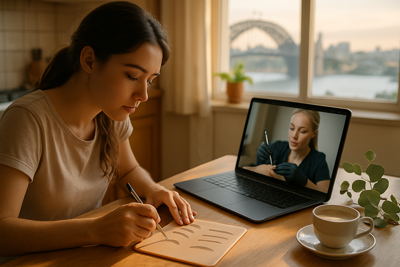
Welcome to a thorough guide to our Online Permanent Makeup Course in Australia. If you’re considering building a career in cosmetic tattooing, this article explains exactly what the course covers, how it fits local Australian regulations, and how Skinart Australia supports your learning journey. The term Online Permanent Makeup Course will appear through this article because it’s the central focus of what you’re about to discover.
Our online programme is written and delivered by experienced educators and practitioners, led by Gary Erskine, who brings over 25 years of industry experience and global teaching success. You’ll find the course practical, clinically informed, and tailored for students in Australia who want a professional, accredited route into permanent makeup.
Below you’ll find an organised breakdown of modules, hands-on skills, safety and legal considerations specific to Australia, common mistakes to avoid, student success stories, and practical next steps. If you want a course that’s CPD and BAQA accredited and built by seasoned tutors, read on — and use the jump links to go straight to the sections you need.
Table of Contents
- Core concepts: What is permanent makeup?
- Pros and cons of online learning for PMU
- What you’ll learn: Course modules and skills
- Common mistakes new artists make
- Tools, consumables and Australian supply notes
- Safety, infection control and legal requirements in Australia
- Student outcomes and local success stories
- FAQs: Online Permanent Makeup Course questions
- Final thoughts and next steps
Core concepts: What is permanent makeup?
Permanent makeup (PMU) or cosmetic tattooing is the precise implantation of pigment into the uppermost layers of the dermis to enhance facial features such as eyebrows, eyeliner, and lips. This is not the same as decorative tattooing—PMU focuses on delicate colour, shape, and technique to create natural-looking results that age gracefully.
In an Online Permanent Makeup Course, you’ll learn the science behind the colour, pigment behaviour, and how skin type affects healing. The course covers how to select the correct pigment tone, create symmetrical designs, and adapt approaches for different Fitzpatrick skin types — all essential skills to produce predictable outcomes.
Understanding the core concepts helps you set realistic expectations with clients and apply techniques safely. Our course teaches both the conceptual foundation and the hands-on sequencing so you can replicate clinical-standard results in an Australian practice environment.
Pros and cons of learning PMU online
Online learning offers flexibility, a self-paced classroom, and the ability to study theory in depth before practising techniques. For many students across Australia — whether in regional Queensland, suburban Melbourne, or Perth — an online course removes travel barriers and lets you balance study with work and family commitments.
- Pro: Learn theory and colour science thoroughly before hands-on practice.
- Pro: Access structured modules, video demonstrations, and assessment remotely.
- Pro: Accredited CPD and BAQA recognition supports professional credibility.
- Con: Practical skills still need supervised practice; online learning must be paired with local practice sessions or supervised assessments.
- Con: We do not supply PMU equipment in Australia — students must source their own machines and consumables locally.
Skinart’s online approach blends detailed video demonstrations, close-up technique breakdowns, and step-by-step client workflows so theory is translated clearly into practice. Where online training falls short is in live oversight — that’s why we emphasise supervised practice, local mentoring and clear assessment criteria so your practical skills are reviewable against industry standards.
For Australian students, we include guidance on sourcing supplies locally, understanding state and territory regulations, and preparing for safe, compliant client work. The Online Permanent Makeup Course gives you the knowledge foundation; your commitment to practice and assessment completes the professional skillset.
What you’ll learn: Course modules and skills
The Online Permanent Makeup Course covers a comprehensive curriculum that takes you from fundamentals to advanced applications. Each module includes written lessons, annotated images, and high-resolution videos demonstrating real client procedures. You’ll also complete assessments that test both your theory knowledge and your ability to plan treatments.
Core learning outcomes include anatomy and physiology of skin, colour theory for diverse skin tones, pigment selection and dilution, mapping and symmetry, eyebrow techniques (microblading and shading), eyeliner application, lip pigmentation, corrective tattooing basics, and aftercare management.
Modules are designed to build on each other so you gain confidence. Every student receives detailed client consultation templates and treatment consent forms adapted for Australian practice, plus practice logs to record client cases and healing results.
- Module 1: Skin science and client consultation
- Module 2: Colour theory and pigment behaviour
- Module 3: Brow design — mapping, symmetry, and hair stroke placement
- Module 4: Microblading mechanics and needle selection
- Module 5: Machine techniques — shading, ombre brows, and blending
- Module 6: Eyeliner application — safety around the eye and lid anatomy
- Module 7: Lip colour — contouring, colour correction, and retention strategies
- Module 8: Corrective colour work and scar blending
- Module 9: Infection control, cross-contamination prevention, and waste management aligned to Australian expectations
- Module 10: Business essentials — pricing, client records, marketing ethically and establishing a compliant workspace
Throughout the course we emphasise assessment criteria that meet CPD Standards Office and BAQA accreditation. You’ll be guided on how to collect photographic evidence of healed work and submit case studies for review. The Online Permanent Makeup Course is intentionally practical and focused on results you can reproduce safely.
Because the course is online, students can revisit modules and watch technique breakdowns multiple times while they practise on synthetic skin and live models under supervision. While Skinart Australia does not provide in-person training in Australia, our remote feedback system and assessment checklists are designed to give you the confidence to progress professionally.
Common mistakes or issues new PMU artists face
- Incorrect depth control causing pigment blowout or uneven retention
- Poor colour selection that doesn’t account for undertones or skin type
- Lack of proper mapping leading to asymmetry
- Inadequate patch testing and allergy screening
- Insufficient aftercare instructions that affect healing and longevity
- Using inappropriate needles or equipment settings for the technique
- Poor photographic documentation resulting in rejected assessments
- Neglecting local regulations and not having correct consent forms
- Failing to manage client expectations around colour fade and touch-ups
- Inadequate infection control procedures that risk client safety
Each one of these issues is addressed directly in the Online Permanent Makeup Course. For example, we cover depth control with multiple video angles, explain how pigments behave across Fitzpatrick scales, and provide downloadable mapping templates that you can use in client consultations.
A practical emphasis on assessment means we evaluate not only finished results but also your internal processes: consultation notes, consent, photography, and aftercare. This holistic approach reduces common mistakes and builds professional habits that protect both you and your clients.
Tools, consumables and sourcing advice (Australia)
Understanding equipment and consumables is a key practical step. In the Online Permanent Makeup Course we explain needle types, machine settings, pigment properties, numbing protocols, and the consumables required for a compliant treatment setup. Importantly for Australian students: Skinart Australia does not supply PMU equipment. You are guided on how to choose reputable local suppliers and what to look for when purchasing devices and pigments.
We recommend sourcing regulators-approved disposables and single-use packs from well-known Australian distributors. This includes barrier protection, disposable needles/cartridges, medical-grade gloves, disinfectants acceptable in Australia, sharps containers, and client aftercare products that meet safety standards.
- Single-use cartridges or sterile microblades (as appropriate for technique)
- Reputable PMU pigments formulated for cosmetic tattooing
- Disposable gloves (nitrile), masks and face shields
- Clinical disinfectants recommended for cosmetic procedures in Australia
- Sharps containers and biohazard disposal compliant with local council rules
- Client aftercare kits and printed aftercare instructions
- High-resolution camera or smartphone with consistent lighting for documentation
- Practice skins, models and a well-lit, ergonomically arranged workspace
We provide checklists and supplier criteria so you can make informed purchases. Always verify that pigments and devices meet Australian import and safety guidelines, and keep receipts and product data sheets for client records and audits.
If you’re unsure where to start, our course points to reputable industry suppliers and offers guidance on comparing product specs — from needle geometry to pigment particle size — so you buy tools that help you achieve consistent, safe outcomes.
Safety, infection control and legal requirements in Australia
Safety is non-negotiable in any permanent makeup practice. Our Online Permanent Makeup Course places infection control and clinical hygiene at the centre of training: from single-use disposables and work flow zoning to effective decontamination procedures for reusable items. These practices protect clients and practitioners alike.
Throughout Australia, local council and state health departments publish guidance on cosmetic tattooing and bloodborne pathogen controls. We reference Safe Work Australia for bloodborne pathogen information and align our infection control modules with national best practice so you can build compliant operating procedures for your clinic.
- Understanding bloodborne pathogens and safe sharps handling
- Client screening, medical history, and contra-indications checklist
- Proper use of PPE and surface disinfection between clients
- Waste management and sharps disposal aligned with local council rules
- Record keeping, consent forms and photographic documentation standards
- Managing adverse events and post-procedure complications
- Insurance considerations and professional indemnity for PMU practitioners
- How to access further local training or supervised clinical practice if required
For authoritative guidance on workplace safety and handling bloodborne pathogens, Safe Work Australia is a useful resource: https://www.safeworkaustralia.gov.au. We also show how to adapt national guidance to your state or territory requirements, and recommend discussing local registration or licensing with your council.
In the course we include downloadable consent templates and post-care instructions you can adapt for Australian clients. These are practical tools you can use immediately to run safer consultations and create a transparent client relationship.
Student outcomes and Australian success stories
Our graduates in Australia have gone on to open home studios, join established clinics, or expand existing beauty services. We regularly hear from students in regional towns who appreciated learning advanced colour theory online and then refining hands-on technique with a local mentor.
One example: Jess from Cairns completed the Online Permanent Makeup Course and used the course templates and photographic guidance to document four client cases for assessment. She then secured a position with a Brisbane clinic where she expanded PMU services within six months.
Another student, Omar in Adelaide, focused on corrective colour work after the course and built a niche helping clients with faded or uneven old tattoos. These case studies demonstrate how combining solid theory with disciplined practice and good documentation can accelerate your career locally.
- How to present healed-case photography for accreditation
- Using client testimonials ethically to grow local bookings
- Strategies for pricing and packaging PMU services in Australia
- Transitioning from beauty to PMU with minimal downtime to business
- Building referral pathways with local clinics and medi-spas
We emphasise real-world outcomes and practical business guidance so you can translate skills into a sustainable, compliant practice. The Online Permanent Makeup Course is built to give you the professional language and evidence you need to negotiate work opportunities and insurance cover in Australia.
Frequently asked questions
Below are common questions students ask about the Online Permanent Makeup Course and concise answers to help you decide if this is the right pathway for you.
What students often search for
- How long is the Online Permanent Makeup Course? Answer: Study pace varies; the course modules are self-directed.
- Do I need prior tattoo experience? Answer: No — the course starts with fundamentals and builds toward advanced work.
- Can I get insurance after this course? Answer: Many insurers accept CPD and BAQA-accredited qualifications; confirm with your insurer.
Each FAQ above is answered in more detail inside the course materials, and our support team is available to clarify state-specific licensing or insurance queries for Australian students.
Final thoughts: Take the next step in Australia
Choosing an Online Permanent Makeup Course is the first step in a rewarding and creative career. Skinart Australia’s curriculum is intentionally designed to be practical, clinic-focused and accredited, giving you recognised credentials and a professional framework to grow your abilities in Australia.
Remember that qualification is just part of the journey: regular practice, good record keeping, and ongoing CPD will build your reputation. Skinart’s online model pairs theoretical rigour with clear pathways for practical assessment and feedback so you can progress confidently.
If you’re ready to invest in your career, the next step is simple — explore the course overview, read the module breakdown, and get in touch with our team for any state-specific questions. We’re here to support your professional development every step of the way.
Recent Blog Posts
- 🌙 Eid Mubarak: Celebrate with 5% Off in 2026!
 Eid Savings: 5% Off All Courses Celebrate Eid with a special offer: 5% off any course. Use code EID5 at checkout.… Read More »🌙 Eid Mubarak: Celebrate with 5% Off in 2026!
 - Top Mistakes New Body Artists Should Avoid (2026)
 Stay Ahead: Common Pitfalls for New Artists Read up on the most frequent errors new body artists make, and how to… Read More »Top Mistakes New Body Artists Should Avoid (2026)
 - Client Communication Skills: 2026 Body Art Success
 Master Consultation for Better Results Top communication strategies for client satisfaction and better outcomes in 2026 and beyond. X Send Chat
Written by Gary Erskine, over 25 years in permanent makeup education. Gary has trained thousands of students worldwide and leads the Skinart Australia teaching team.
“Accredited online training paired with practical supervised practice is the fastest way to become a safe and confident PMU professional.” — CPTP Australia spokesperson