Permanent Makeup Courses Australia: Start Your Career Today
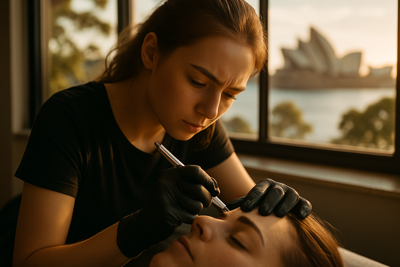
Thinking about a creative, flexible career in beauty? Permanent Makeup Courses Australia open doors to a skilled profession with strong demand across salons, clinics and mobile services nationwide. Whether you want to elevate brows, lips or eyelash enhancements, our fully accredited online course gives you the technical knowledge and business confidence to launch a PMU career from anywhere in Australia.
At Skinart Australia we build every module to Australian standards and CPD-accredited learning outcomes. You’ll learn safe pigment selection, skin anatomy, colour science, needle technique and client management — all designed to prepare you for real-world practice and ethical, professional service.
Written by Gary, 23 years in Permanent Makeup Courses Australia education. Gary Erskine has trained thousands of students globally and leads Skinart’s curriculum design and tutoring. Read on to discover course options, career paths and how to begin today — this guide is tailored specifically to Australia and the local regulatory landscape.
Table of Contents
Use these links to jump to a section — search engines may show “Jump to” links for semantic headings. Click any item to navigate.
Permanent Makeup Courses Australia — Quick Links
Why choose Permanent Makeup Courses Australia?
Permanent Makeup Courses Australia combine creative artistry with technical skill and robust health-and-safety training. For many Australians, PMU represents a chance to build a flexible career that blends beauty services, client relationships and long-term earning potential. The demand for qualified technicians has grown across metro and regional areas, and clients increasingly look for accredited, insured practitioners.
Many students choose accredited online courses because they offer structured theory, CPD-recognised certification and practical exercises that you can practice under supervision. An online pathway allows you to study theory modules at your own pace while completing practical assessments that demonstrate your competence.
At Skinart Australia our curriculum emphasises safe practice, pigment science and consultation skills so you can confidently provide services like microblading, powder brows, lip blush and cosmetic eyeliner. Because we understand the Australian context, we include local examples, regulatory notes and a clear business-start checklist tailored to state and territory rules.
Course options and what Skinart offers
Skinart Australia delivers a CPD-accredited online Permanent Makeup course designed for beginners and experienced beauty professionals. The course focuses on core PMU techniques, client safety and consultation, with practical assessments to verify your competency.
- Pros: Accredited modules, flexible online theory, tutor feedback, clear practical assessment criteria, business-start guidance.
- Cons: We do not offer in-person training in Australia, and Skinart Australia does not supply PMU equipment or starter kits — students must source devices locally.
We made the decision to focus on high-quality online education because it allows us to reach learners across every Australian state and territory while maintaining consistent CPD standards. Our online model includes extensive video demonstrations, downloadable learning packs and one-to-one tutor feedback on practical submissions.
Because we don’t supply devices in Australia, we include clear equipment lists and trusted supplier guidance so you can purchase locally compliant tools and pigments. You’ll also receive detailed checklists for infection control, client consent and aftercare templates that align with best practice.
Skills you will learn
Successful PMU artists combine artistic judgement with clinical precision. Our course breaks these competencies into clear, trainable skills so you can track progress and demonstrate readiness for practice. You’ll develop a foundation in colour theory, technique selection and client consultation.
The practical modules include step-by-step demonstrations and assignments: pre-drawing brows, working with simulated skin, practice on models under documented supervision, and photographic submissions for tutor review. We emphasise progressive competence over rushed completion.
Beyond technique, we teach client communication, realistic expectation management and aftercare instructions — all essential for high satisfaction rates and referrals. These soft skills are what separate a reliable clinician from someone who simply applies pigment.
- Skin anatomy and wound healing basics — understand epidermis, dermis and healing timelines
- Colour theory and pigment selection for different skin tones
- Needle configuration and machine technique (microblading, rotary/PMU machine use)
- Brow mapping, symmetry assessment and aesthetic facial ratios
- Lip blush techniques: shape, saturation and pigment behaviour
- Cosmetic eyeliner: lash line definition and safety around the eye
- Patch testing, contraindication screening and client medical history
- Infection prevention, cross-contamination control and clinical hygiene
- Aftercare protocols and managing common client queries
- Photographic documentation, consent forms and record keeping for legal compliance
- Client consultation and designing a treatment plan that aligns expectation with outcome
- Basic colour correction strategies and touch-up scheduling guidance
Common mistakes to avoid
- Skipping thorough consultation — not documenting medical history or expectations
- Poor colour selection — choosing pigments that oxidise badly on certain skin types
- Overworking the skin during placement — causing excessive trauma and poor retention
- Inadequate aseptic technique — risking infection or localised reactions
- Failing to do a patch test when indications suggest sensitivity
- Rushing mapping and symmetry — resulting in uneven outcomes and client dissatisfaction
- Poor photographic records — inadequate before/after documentation compromises assessment
- Inappropriate pricing or not accounting for touch-ups and pigment fading
- Marketing unproven results or using misleading before/after imagery
- Not understanding state/territory local rules for cosmetic tattooing
These mistakes are common among practitioners who train informally or rely solely on short weekend courses. Our program emphasises strong foundations — proper mapping, conservative pigment choices and staged treatments — to reduce complications and deliver consistent results.
By learning how to recognise and avoid these pitfalls you not only protect your clients’ safety but also build trust, a reputation for quality and, ultimately, a more sustainable business. Skinart’s assessments and tutor feedback target these common failure points so you develop reliable habits from the start.
Regulation and insurance in Australia
Regulation for permanent cosmetics in Australia varies by state and territory. Many local councils classify cosmetic tattooing under body art or skin penetration laws and require registration or adherence to specific infection-control standards. It’s essential to check the public health and local council guidance where you intend to operate.
Professional indemnity and public liability insurance are critical before seeing paying clients. Insurers typically require evidence of accredited training (such as CPD-recognised courses), documented practice records and clear aftercare protocols. Skinart provides completion documentation aligned with CPD Standards Office expectations to support your insurance applications.
We also recommend joining an Australian industry association for ongoing professional development, peer support and updates on regulatory changes. Associations often provide resources to help you navigate council requirements and recommended infection-control checklists.
- Check your local council’s requirements for skin penetration and cosmetic tattooing
- Obtain public liability and professional indemnity insurance before trading
- Keep detailed client records: consultation, consent, photos and aftercare
- Follow standard infection-control practices, including single-use needles and proper disposal
- Understand local waste disposal (sharps and clinical waste) requirements
- Be able to provide completion/certification documentation for insurers
- Maintain regular CPD to meet insurer and industry association standards
- Ensure advertising and before/after images are honest and compliant with local advertising codes
Starting your business and marketing
Once qualified, many graduates offer services from a small home studio, a salon room or a mobile service. Each model has different cost structures, insurance implications and marketing tactics. Our training includes a practical checklist to help you choose the model that fits your lifestyle and compliance obligations.
Marketing for PMU relies heavily on accurate before/after imagery, client testimonials and clear information about the process. We advise students on ethical marketing, how to write realistic service descriptions and ways to build a steady client funnel using social media and local partnerships.
Pricing should account for consumables, practice time, required touch-ups and overheads. We provide worksheets that help you calculate break-even pricing and build a sustainable service menu for brows, lips and eyeliner.
- Create a professional online portfolio with high-quality photos and clear service descriptions
- Use before/after galleries that are honest and show realistic timelines (immediate vs healed)
- Collect and display client testimonials (with consent)
- Partner with salons, cosmetic clinics or med-spas to expand referral sources
- Offer introductory consultations and educational content to reduce client anxiety
- Price services to include follow-ups and touch-ups where required
- Keep a waiting list and post-consult reminders to minimise no-shows
- Attend local events or collaborate with hair/beauty professionals for cross-promotion
Financing, pricing and career pathways
Starting capital for PMU can vary. If you choose to buy a portable machine, needles and pigments upfront, expect a modest initial outlay. Because Skinart does not supply equipment in Australia, we provide recommended spec lists and guidance on choosing reputable Australian suppliers to avoid import issues or non-compliant products.
Many graduates begin by offering promotional introductory pricing to build a portfolio and then move to full rates as their healed results gallery grows. Another common pathway is to subcontract with established clinics and split revenue while gaining exposure and client referrals.
Longer-term opportunities include advanced colour correction, paramedical tattooing and teaching. Building a reputation for consistent, safe work opens the door to collaborations with dermatologists, cosmetic surgeons or aesthetic clinics looking for accredited PMU specialists.
Frequently asked questions
Below are common questions prospective students ask when researching Permanent Makeup Courses Australia. The answers are concise to help you make an informed decision quickly.
Q: Can I do Skinart’s Permanent Makeup course from anywhere in Australia?
A: Yes. Skinart’s course is delivered online for Australian students — theory and video demonstrations are available remotely and practical work is submitted for tutor assessment. We do not offer in-person training in Australia.
Q: Is the course accredited and recognised by industry organisations?
A: Yes. Skinart’s Permanent Makeup course is accredited with the CPD Standards Office and recognised by the Body Art Qualification Association (BAQA), ensuring that the learning outcomes meet professional development benchmarks.
Q: Do you provide equipment or starter kits in Australia?
A: No. Skinart Australia does not supply Permanent Makeup equipment. We provide a detailed equipment list and reputable supplier recommendations so you can purchase devices, needles and pigments that comply with local requirements.
Q: How long does it take to complete the course?
A: Completion time varies by student. The course is structured to allow you to learn practical skills and submit evidence for assessment; many students complete modules over several weeks while practising under supervision.
Q: Will this course help me get insurance?
A: Yes. The course provides CPD-accredited documentation and assessments that insurers accept as evidence of training. We also include advice on the records and policies insurers commonly request.
Local success stories and student outcomes
Skinart graduates work in diverse settings across Australia — from busy inner-city clinics in Sydney and Melbourne to mobile services in regional Queensland and boutique studios in Perth. One recent graduate in Brisbane built a six-month waiting list by focusing on healed-results photography and targeted local Instagram campaigns.
Another student from Adelaide pivoted from salon hairdressing to full-time PMU and now collaborates with cosmetic clinics for scar camouflage and areola restoration referrals. These pathways highlight how accredited PMU training can lead to varied income streams and professional recognition.
We include student case studies in the course materials so you can see realistic timelines for portfolio growth, client acquisition and pricing adjustments. These examples are specific to Australian markets and designed to help you create realistic short- and long-term goals.
Industry quotes and guidance
Below is an industry perspective to underline the importance of accredited training and safe practice in Australia.
“Accredited education and strict infection-control practices are vital to maintaining public trust in cosmetic tattooing. Practitioners who prioritise safety and transparent communication deliver better outcomes and fewer complications.” — CPD Standards Office spokesperson
We include this quote not to alarm, but to emphasise the profession’s responsibility. As the sector matures, clients expect accredited training and reliable aftercare. Accreditation also helps you secure insurance and commercial partnerships.
Final thoughts
Permanent Makeup Courses Australia offer a meaningful way to build a creative and reliable professional path. With appropriate training, sound infection-control practices and clear business planning, PMU can be both personally rewarding and financially sustainable. Skinart Australia’s online course is tailored to local needs and accredited to help you meet insurer and industry expectations.
If you feel ready to invest in your skills and start serving clients with confidence, the next step is simple: choose a course that focuses on safe, accredited learning and provides tutor-guided feedback. That’s the fastest route to producing consistent healed results and building a loyal client base.
Recent Blog Posts
- 🌙 Eid Mubarak: Celebrate with 5% Off in 2026!
 Eid Savings: 5% Off All Courses Celebrate Eid with a special offer: 5% off any course. Use code EID5 at checkout.… Read More »🌙 Eid Mubarak: Celebrate with 5% Off in 2026!
 - Top Mistakes New Body Artists Should Avoid (2026)
 Stay Ahead: Common Pitfalls for New Artists Read up on the most frequent errors new body artists make, and how to… Read More »Top Mistakes New Body Artists Should Avoid (2026)
 - Client Communication Skills: 2026 Body Art Success
 Master Consultation for Better Results Top communication strategies for client satisfaction and better outcomes in 2026 and beyond. X Send Chat