Common SMP Mistakes Beginners Make
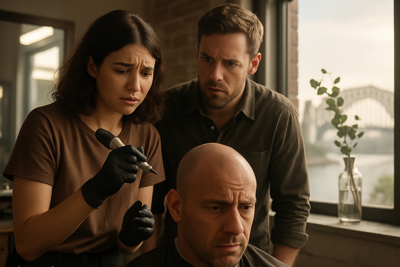
If you’re new to Scalp Micropigmentation (SMP) in Australia, it’s vital to understand the Common SMP Mistakes that trip up beginners. This guide examines the pitfalls we see most often, why they matter for safety and results, and how to avoid them — whether you’re learning to build a professional practice or simply aiming for better client outcomes. The first steps you take shape your reputation; understanding common mistakes helps you produce predictable, long-lasting, and safe results.
Skinart Australia’s online Scalp Micropigmentation course is designed with those practical errors in mind. Written by Gary Erskine (lead tutor) — who has over 25 years in the industry and has trained thousands worldwide — this article pairs experience-driven advice with technical detail. We’ll cover technique, colour, consent, sanitation, client management and business systems so you can avoid the typical traps that beginners fall into.
Throughout this article you’ll find actionable tips and links to trusted guidance. Use these sections as a checklist while you study or practice. If you want a structured, accredited approach to learning SMP in Australia, our online Scalp Micropigmentation course is tailored for progressive skill building and CPD/BAQA accreditation.
Table of Contents
Use these anchor links to jump to the section you need. Search engines may show “Jump to” links in results when headings use clean IDs.
We recommend bookmarking this article while you train — it doubles as a quick reference checklist for common SMP mistakes.
- Introduction: Why these mistakes matter
- Foundations: Technique, tools and training
- Consent, infection control and legal basics
- Colour, density and tonal planning
- Skin variables and client selection
- Top 10 Common SMP Mistakes beginners make
- When things go wrong: corrections & removal
- Client communication and aftercare
- Advanced tips and stepping-up safely
- FAQs – quick answers
- Final thoughts & next steps
Introduction: Why these mistakes matter
Scalp Micropigmentation is a precise, cosmetic, and semi-permanent procedure. The difference between an excellent outcome and a client who is dissatisfied often comes down to avoiding a handful of repeatable errors. Understanding Common SMP Mistakes helps you build safer habits, improves client satisfaction, and protects your legal and professional standing in Australia.
Beginners frequently underestimate how much planning goes into each session. SMP is not “point-and-shoot” tattooing; it requires measured decisions about pigment selection, needle depth, stroke placement, scalp mapping and density progression. A rushed or poorly planned session leads to uneven pigmentation, patchiness, or unnatural dot patterns that are difficult to correct.
Finally, there’s the business dimension. Mistakes in documentation, consent and aftercare can create compliance issues — especially with rising regulatory attention in Australia. Knowing the common pitfalls is the first step to becoming a confident, accredited practitioner.
Foundations: Technique, tools and training
Every skilled SMP artist begins with solid foundations. Technique, proper training, and an understanding of equipment dynamics are more important than flashy marketing or shortcuts. Beginners who skip fundamentals are more likely to repeat the Common SMP Mistakes that cost time and reputation.
- Pros: Structured learning speeds competence, builds safety and client trust.
- Cons: Training requires time and investment; there’s a learning curve before profitability.
Choosing accredited training is essential. Skinart Australia’s Scalp Micropigmentation course is CPD Standards Office and BAQA aligned; the curriculum emphasises how to think about depth, dot size, placement and tonal layering, rather than simply teaching a single machine technique. Accreditation demonstrates to clients and regulators that you follow recognised best practice.
Remember: equipment alone doesn’t make you competent. We do not supply SMP equipment in Australia, and while a new practitioner might be tempted to buy the cheapest machine available, poor-quality gear can increase the chance of inconsistent results and client complications. Invest time in practice and choose training that includes critiqued case studies and mentorship.
Consent, infection control and legal basics
In Australia, safety and documentation are not optional. Many Common SMP Mistakes stem from poor consent processes, incomplete medical histories, or insufficient infection control. These errors risk client health and may create regulatory exposure for your practice.
Ensure clear informed consent that covers expectations, risks, aftercare and realistic outcomes. A thorough medical screening will flag contraindications such as certain skin conditions, blood-borne virus status concerns, or medications that affect healing. When in doubt, consult a medical professional and refer the client.
Sanitation protocols (single-use needles, correct PPE, surface disinfection, waste disposal) are fundamental. Local councils in Australia may have specific requirements about skin penetration services, so check with your municipal public health unit. For general guidance, reputable resources include the Australian Department of Health and local council pages that outline clinical waste and infection prevention.
- Not using single-use needles and supplies
- Failing to document client consent and photos before/after
- Inadequate medical screening or ignoring advised contraindications
- Poor sterilisation of reusable tools
- Improper disposal of clinical waste
- Not following local council requirements for skin penetration
- Failing to record pigment batch numbers for traceability
- Poor ventilation or unsuitable workspace hygiene
Colour, density and tonal planning
- Underestimating how pigments heal (they often soften and lighten)
- Applying too high a density in the first session (created an artificial crown)
- Poor understanding of pigment undertone versus final healed colour
- Not testing pigment on skin tone variations (e.g., olive vs fair)
- Using a single density for all areas of the scalp (no tapering)
- Failing to plan progression across sessions (overcorrection risk)
- Applying dark pigment at the hairline without feathering
- Ignoring post-healing photos to calibrate next session
Colour planning is an art and a science. Many beginners learn the hard way that a pigment’s immediate colour is rarely the final healed result. Pigments oxidise and settle; environmental factors and client skin chemistry influence the final tone. That’s why a session plan that factors in staged density and progression is crucial.
Start lighter and build density across separate sessions. This is both safer and, in most cases, more attractive. Use mapping tools and temporary guidelines to visualise how density will appear at natural hairlines and crowns; avoid heavy-block appearances by graduating density carefully.
Skin variables and client selection
Not all scalps respond to SMP uniformly. Beginners often overlook how skin texture, scar tissue, sun damage and melanated skin respond to pigment. These variables determine needle selection, energy, pigment type and placement strategy.
- Active eczema/psoriasis on the scalp — avoid until resolved
- Scar tissue — requires different needle depth and slower density build
- Very oily scalps — higher chance of pigment migration or blowouts
- Very dry scalps — may need gentler passes to avoid excessive trauma
- Sun-damaged skin — unpredictable pigment uptake and colour shifts
- Thinner scalps — risk of deeper penetration and blurred dots
- Darker Fitzpatrick tones — manage undertones to avoid warm cast
- History of keloid scarring — screen carefully and consider medical advice
Good client selection isn’t about turning away business — it’s about setting the correct expectations and planning sessions appropriately. In Australia, some clients will have occupations or lifestyle factors (e.g., extensive outdoor work) that influence healing; incorporate these in your consultation and aftercare instructions.
We teach student clinic scenarios that include a full medical intake, patch testing strategies and how to adapt technique for scarred or sun-damaged scalps. Practical exposure to a wide range of skin types reduces the risk of early-career mistakes.
Top mistakes beginners make (detailed list)
Below is an expanded list of the Common SMP Mistakes beginners make, each paired with why it happens and how to fix it in practice. Use this as both a training checklist and a pre-session audit before you take on clients.
- Incorrect needle depth — causes blown dots or premature fading. Fix: learn consistent hand pressure, machine tuning and depth testing on practice skins.
- Poor pigment selection — using pigments with the wrong undertone. Fix: test pigments on similar skin tones and understand warm vs cool undertones.
- Overworking the scalp — leads to scabbing, pigment loss and client discomfort. Fix: stage sessions and stop before the scalp becomes overly traumatized.
- Applying uniform density — creates an artificial ‘topped’ look. Fix: map and taper density to match natural hair patterns.
- Rushing consultations — leads to mismatched expectations. Fix: use intake forms and show healed before/after photos for realistic outcomes.
- Insufficient photography — poor records hinder corrections and marketing. Fix: standardise pre/post photos with consistent lighting and angles.
- Skipping aftercare instructions — clients who don’t follow aftercare risk poor heal. Fix: provide clear written aftercare and verbal reinforcement.
- Not practising on varied skin types — lack of experience causes unexpected results. Fix: seek supervised practice and case reviews across diverse clients.
- Poor documentation for consent and clinical notes — leads to disputes and regulatory risk. Fix: use templates that include medical history, pigment batch numbers and signed consents.
- Mismanaging client expectations about longevity — clients expect permanence or full hair-like results. Fix: explain the semi-permanent nature and maintenance plan clearly.
- Neglecting business systems — no booking/recall system increases no-shows and lost revenue. Fix: implement simple booking, reminder and follow-up workflows.
- Using unverified online advice exclusively — many forums contain myths. Fix: rely on accredited training and peer-reviewed clinical guidance.
- Ignoring local regulatory requirements — municipal rules differ. Fix: register where required and consult your local public health guidance.
- Attempting complex corrections without experience — can worsen the issue. Fix: seek mentorship and pass on clients needing advanced colour correction until you have supervised practice.
Each of these mistakes is common because they arise from haste, lack of planning, or insufficient supervised practice. Systematic training, careful client selection, and reflective practice dramatically reduce their frequency.
Skinart Australia emphasises evidence-based technique progression: practise, review, receive feedback, then advance. When you build quality steps into your workflow, you not only avoid common mistakes but also develop a consistent brand that clients trust.
When things go wrong: corrections & removal
Even experienced artists face correction cases. Misapplication or client-specific healing unpredictability sometimes necessitates correction or removal. Beginners often attempt aggressive fixes that worsen the visual outcome. Corrective work requires careful assessment, patience and often a staged plan with corrective pigments or in some cases, referral to laser removal specialists.
Correction strategies vary by cause: for colour shift, consider safer fading strategies and colour balancing in subsequent sessions; for over-density, lightening and blending may be needed over multiple sessions. Laser removal is effective but costly and not always required; proper consultation about options is critical.
Document the case comprehensively before any corrective work: photos, skin maps, pigment records and client consent. Consult an experienced mentor if you are unsure — attempting complex reversal without guidance is a frequent contributor to long-term client dissatisfaction and professional risk.
Client communication and aftercare
Some of the Common SMP Mistakes are not technical but relational: failing to set expectations before the first needle, not providing clear aftercare, or neglecting follow-up. Effective communication reduces perceived problems and ensures clients heal optimally.
- Provide a written aftercare sheet tailored to SMP rather than generic tattoo aftercare
- Explain staged results — the look immediately after and the healed look are different
- Set expectations around touch-up sessions and maintenance
- Collect contact details and schedule follow-up photos at 6–12 weeks
- Be explicit about activities to avoid (swimming, heavy sweating, direct sun early)
- Record and recall clients for touch-up reminders
- Use before/after photography as both legal record and client education
- Encourage honest feedback and provide a clear complaints process
Good aftercare reduces complications and improves long-term satisfaction. In Australia, clear documentation and accessible aftercare instructions are also evidence of professionalism and enhance defensibility if a client disputes their outcome.
Advanced tips and stepping-up safely
As you progress from beginner to intermediate practitioner, it’s time to refine your diagnostic and artistic judgment. Advanced tips include mastering stroke variance, mapping for natural recession patterns, and synchronising dot size to the client’s remaining hair density. Avoid the temptation to accelerate learning by taking on complex cases prematurely.
Regular case reviews with a mentor, attending industry seminars, and practicing on a wide variety of skin types reduces the chance of repeating Common SMP Mistakes. We recommend documenting each corrective case and using it as a study of cause and effect — the best educators are often one or two corrections behind a major breakthrough.
- Keep a learning log for each client case
- Photograph every stage with standardised lighting
- Use remote mentorship for critical feedback when local support isn’t available
- Practice simulated corrections on synthetic skins first
- Develop a network of laser and dermatology contacts for referrals
FAQs — Common questions about Common SMP Mistakes
What are the most frequent mistakes beginners make in SMP?
The most frequent mistakes include incorrect needle depth, poor pigment choice, overworking the scalp, and inadequate client screening or consent. Each of these leads to predictable healing problems that can be avoided with proper training and planning.
How can I prevent pigment colour shifts after healing?
Prevent colour shifts by testing pigments on similar skin tones, understanding undertones and starting lighter with staged sessions. Always review healed photos before deciding on further pigmentation.
Is there a legal requirement for SMP training in Australia?
Requirements vary by state and local council. While specific “SMP certificates” may differ, accredited training (CPD/BAQA) and documented infection control practices are widely recognised as best practice. Check your local council for specific obligations.
What should I include in aftercare instructions?
Aftercare should include wound management, activities to avoid (e.g., swimming, heavy sweating, direct sunlight during the first week), product guidance, and when to return for a review. Clear written instructions reduce complications and set expectations.
Can mistakes be fully corrected?
Many mistakes can be improved with staged correction or, in some cases, laser removal. Correction is often multi-step and should be approached conservatively; incorrect corrective work can make matters worse, so mentorship is advised for novices.
Final thoughts — how to avoid the common pitfalls
Mastering SMP takes deliberate, incremental practice. The Common SMP Mistakes listed here are surmountable when you commit to quality training, methodical practice, and reflective case review. Your goal should be consistent, safe, and aesthetic outcomes rather than rapid turnover.
Skinart Australia’s online Scalp Micropigmentation course was built to address precisely these early-career issues. We teach evidence-based mapping, pigment theory, sanitation and client management — everything to reduce common mistakes and build a professional practice aligned with CPD and BAQA standards. We do not provide physical equipment in Australia, but we do teach how to choose and use equipment safely.
Take the next step: commit to structured learning, seek mentorship, and treat every client as a structured learning opportunity. You’ll reduce errors, increase referrals, and build a thriving practice that stands out for its quality and safety.
Ready to avoid Common SMP Mistakes?
Join Skinart Australia’s accredited online Scalp Micropigmentation course and learn step-by-step from industry experts. Our curriculum targets the most frequent early-career errors so you graduate with confidence and demonstrable competence.
Recent Blog Posts
- 🌙 Eid Mubarak: Celebrate with 5% Off in 2026!
 Eid Savings: 5% Off All Courses Celebrate Eid with a special offer: 5% off any course. Use code EID5 at checkout.… Read More »🌙 Eid Mubarak: Celebrate with 5% Off in 2026!
 - Top Mistakes New Body Artists Should Avoid (2026)
 Stay Ahead: Common Pitfalls for New Artists Read up on the most frequent errors new body artists make, and how to… Read More »Top Mistakes New Body Artists Should Avoid (2026)
 - Client Communication Skills: 2026 Body Art Success
 Master Consultation for Better Results Top communication strategies for client satisfaction and better outcomes in 2026 and beyond. X Send Chat