Real Student Stories from Scalp Micropigmentation Training
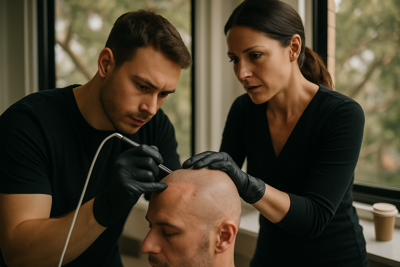
Welcome — in this in-depth article we share real student stories from Scalp Micropigmentation training with a focus on Australia. Whether you’re exploring a new career, expanding services at your clinic, or curious how accredited online courses translate into real success, these stories and takeaways will help you understand the practical and professional impact of certified SMP education.
Skinart Australia’s online Scalp Micropigmentation course has helped many students move from curiosity to confident practice. Here you’ll read about the learning curve, the first clients, common challenges, and how a CPD-accredited course makes a measurable difference. These student stories from Scalp Micropigmentation training are grounded in real Australian experiences — local clients, local regulations, and local business growth.
Table of Contents
Jump to the section that helps you most — we use semantic IDs so search engines can surface useful “Jump to” links.
Quick links
- Why student stories matter
- Student experiences: real journeys
- Skills gained: pros and cons
- Top lessons students learn
- Common mistakes new practitioners make
- How graduates build a career in Australia
- Testimonials and industry quotes
- Course details & how to enrol
- FAQ — Real Student Stories from Scalp Micropigmentation Training
- Final thoughts
Why student stories matter for Scalp Micropigmentation
Hearing student stories from Scalp Micropigmentation training brings technique and outcomes into focus the way a textbook cannot. These narratives show how accredited education converts into practical client work in an Australian setting: consultation protocols, scalp mapping, colour matching for varied skin tones, and post-procedure care. For prospective students, these accounts explain not just “what” is taught, but “how” real people move from training modules to the treatment chair.
Student stories also highlight the role of mentorship, practice hours, and feedback loops. Many Skinart Australia students report that receiving structured critique from a seasoned tutor accelerated their skill development far more than unguided practice. That’s why our course is accredited with CPD Standards Office and BAQA principles — the curriculum emphasises safe technique as well as artistry.
Finally, these accounts are essential for gauging business outcomes. In Australia’s competitive market, understanding how previous students marketed their services, priced treatments, and built client trust is invaluable. We’ll share detailed examples below to help you map a pathway from training to a thriving practice.
Student experiences: real journeys
Every student’s path is different: some come from tattooing, others from hairdressing, nursing, or completely different careers. The common thread in our student stories from Scalp Micropigmentation training is a period of focused practice and the application of structure learned in the course.
- Pros: Structured curriculum that balances theory and hands-on practice; CPD-aligned modules that improve credibility; tutor feedback that shortens the learning curve.
- Cons: Skill-based learning requires deliberate repetition; building a local client base takes consistent marketing; some students initially underestimate the importance of consultation and scalp mapping.
Pros commonly cited by graduates include the depth of the infection control and client consent modules, which are essential in Australia where health and safety expectations are high. Graduates regularly say these elements helped them win trust from clients and local clinics.
As for cons, new practitioners sometimes find that mastering realistic dot density, pigment layering, and blending takes time. That’s normal — the course is designed to break the process into achievable steps so that gradual improvements are both documented and repeatable.
Skills students consistently gain
Graduates repeatedly mention several tangible skills that transformed their practice. These include consultation techniques tailored for thinning hair vs. scar camouflage, practical scalp mapping for realistic hairlines, and pigment choice across a range of Australian skin tones. The course focuses on reproducible techniques that students can use immediately with confidence.
Another consistent outcome shared in student stories from Scalp Micropigmentation training is improved client communication. Students report that learning how to set expectations, photograph progress, and manage follow-up appointments reduced misunderstandings and improved client satisfaction.
Finally, students gain business skills: pricing strategies, client intake forms, and marketing pathways that work in Australian markets. Many alumni combined these soft skills with practical ability to create a reliable service offering in private studios or shared clinics.
- Scalp assessment and realistic hairline design
- Micro-needle technique and dot density control
- Pigment selection for diverse skin tones found across Australia
- Layering techniques for depth and natural appearance
- Client consultation, consent, and medical screening
- Post-procedure care and managing touch-ups
- Photography and before/after documentation
- Basic business setup: pricing, marketing, and local compliance
- Infection control and client safety protocols aligned to CPD principles
Top lessons students learn in the course
Students often say that a few lessons stand out above the rest: the importance of conservative initial density, accurate pre-treatment photography, thorough client screening, and the art of natural blending. These lessons reduce revision work and enhance long-term client satisfaction.
- Underestimating the consultation phase
- Overworking pigment on the first session
- Incorrect scaling of hairline to facial proportions
- Poor lighting and photography for documentation
- Insufficient mapping of scalp zones and scar areas
- Relying on a single pigment without understanding fading
- Not tracking progress or client expectations clearly
- Ignoring subtle tonal differences across ethnicities
- Not planning for touch-ups in the treatment plan
Those mistakes are common, and they’re exactly what our training addresses. Students practise mapped sessions, controlled dot techniques, and progressive density planning to avoid over-saturation and unnatural results.
In Australia, accurate documentation and clear consent are not optional — they’re professional imperatives. Our modules emphasise how to set expectations and write client agreements that minimise disputes and foster repeat business.
Common mistakes or issues new practitioners face
Even well-trained students can encounter issues when they first begin taking paying clients. The good news is most issues are avoidable with the right preparation. Below are frequent pitfalls described by Australian students and the practical steps they took to resolve them.
- Rushing the consultation and missing scalp history like sun damage or medications
- Using too much pressure or incorrect needle angles, causing excess trauma
- Mismatch between pigment choice and client skin undertone
- Inadequate photographic records so progress cannot be reviewed objectively
- Not factoring client lifestyle (swimming, sun exposure) into aftercare
- Failing to include touch-up windows in pricing and client agreements
- Poor scheduling that doesn’t allow time for careful mapping and placement
- Underestimating the impact of scalp scar tissue on pigment uptake
Students who overcome these challenges tend to be methodical: they use checklists, document each stage with photos and notes, and schedule follow-up sessions proactively. Our training teaches these habits so students can avoid the most common early-career setbacks.
Addressing these issues head-on also improves reviews and referrals — two essential growth levers for new Australian practitioners operating in both metropolitan and regional markets.
How graduates build a career in Australia
Students who completed Skinart Australia’s online course report multiple pathways to earning: adding SMP as an additional service in a salon, offering mobile treatments, or renting a chair in a shared clinic. The accreditation and CPD alignment gave many graduates the confidence to approach local practices and negotiate treatment partnerships.
Case study highlights from Australia include a Melbourne graduate who began with weekend clinics and, within six months, transitioned to full-time SMP services through targeted local advertising and referral partnerships with hair salons. Another student in regional Queensland used clear before-and-after portfolios to attract clients from neighbouring towns.
These student stories from Scalp Micropigmentation training show that building a career is less about instant virality and more about consistent quality, local reputation, and professional accreditation. Graduates who tracked outcomes, asked for reviews, and maintained clear communication scaled up more predictably.
- Start with a few local promotions to build your portfolio
- Partner with complementary businesses (barbers, salons)
- Use CPD accreditation to reassure clients and clinics
- Offer clear aftercare and a defined touch-up plan
- Collect testimonials and share case studies online
Testimonials and industry quotes
Real feedback from students is the best indicator of what our Scalp Micropigmentation course delivers. Below are condensed excerpts from Australian graduates and an industry perspective on accredited training.
“Taking Skinart’s online SMP course transformed how I consult and plan treatments. The mapping techniques alone saved me months of trial and error.” — Luke, Sydney
“Accredited content made it easy to talk to clinics about collaboration. Clients felt reassured when I referenced the CPD alignment.” — Emma, Brisbane
We also include a statement reflecting industry standards: the CPD Standards Office recognises the value of structured professional development for regulated and non-regulated sectors alike. Their framework guides how ongoing learning should be documented, which helps practitioners demonstrate competence to clients and partners (see CPD Standards Office for guidance).
In practice: use accredited training as a credibility tool. When students can show formal training, clear outcomes, and documented practice, they attract better clients and partnerships.
Course details and how to enrol
Skinart Australia’s online Scalp Micropigmentation course covers theory, technical skills, and client management tailored for the Australian market. The course is CPD Standards Office aligned and reflects BAQA principles of best practice. It is delivered online with structured modules, demonstration material, and tutor feedback to guide students as they practice locally.
Important local notes: we do not supply Scalp Micropigmentation equipment in Australia, and we do not offer in-person training in Australia. The course is fully accredited, so graduates receive recognised CPD certification upon successful completion, which supports professional credibility when approaching clinics and clients.
To join, click the button below. The online format lets you progress through modules at your own pace while receiving expert feedback from tutors with decades of industry experience.
FAQ — Real Student Stories from Scalp Micropigmentation Training
Below are common questions prospective students ask when evaluating our course and reading student stories from Scalp Micropigmentation training.
What do students say about learning Scalp Micropigmentation online?
Students frequently report that the online modules are clear and practical, and that tutor feedback makes the difference between isolated practice and confident client work. Many highlight improved consultation and mapping skills as immediate benefits.
Will accreditation help me find clients in Australia?
Yes — CPD-aligned accreditation and a structured portfolio reassure clients and clinic partners. Australian clients often look for evidence of training and safe practice, and accreditation is an effective trust signal.
Do students get equipment supplied as part of the course in Australia?
No — Skinart Australia’s course does not supply Scalp Micropigmentation equipment within Australia. Students arrange their own equipment locally and are guided on safe and appropriate choices during the training.
How quickly do students typically take their first paying client?
Timing varies, but many students take their first paying client within weeks to a few months after dedicated practice and tutor feedback. Building a local portfolio and clear before/after documentation speeds client acquisition.
Final thoughts — your next step
Real student stories from Scalp Micropigmentation training show that consistent practice, structured feedback, and accredited learning combine to produce reliable outcomes. If you’re in Australia and want to add SMP to your skill set, an accredited online course is a proven pathway to competence and credibility.
We encourage you to take the next step: review our course details, speak with our admissions team if you have specific local questions, and use our alumni stories as a roadmap for your own progress. With the right learning plan and dedication, you can take these demonstrated student outcomes and make them your own.
Written by Gary Erskine, 25 years in body art education. Gary is the lead tutor for Skinart Australia and has trained thousands of students worldwide. If you want guidance rooted in real student experiences, our course and tutor feedback are here to help you succeed.
Ready to start your journey?
Recent Blog Posts
- 🌙 Eid Mubarak: Celebrate with 5% Off in 2026!
 Eid Savings: 5% Off All Courses Celebrate Eid with a special offer: 5% off any course. Use code EID5 at checkout.… Read More »🌙 Eid Mubarak: Celebrate with 5% Off in 2026!
 - Top Mistakes New Body Artists Should Avoid (2026)
 Stay Ahead: Common Pitfalls for New Artists Read up on the most frequent errors new body artists make, and how to… Read More »Top Mistakes New Body Artists Should Avoid (2026)
 - Client Communication Skills: 2026 Body Art Success
 Master Consultation for Better Results Top communication strategies for client satisfaction and better outcomes in 2026 and beyond. X Send Chat