Skip to content

Learn Scalp Micropigmentation from Home: Beginner’s Guide

Learn Scalp Micropigmentation from Home: Beginner’s Guide

Whether you’re in Brisbane, Melbourne, Perth or a regional town, Learn Scalp Micropigmentation from Home is an achievable, professional pathway for beginners in Australia. This guide walks you through the basics, explains what you need to know about safety and regulation, and shows how an accredited online course can get you started with confidence.

Skinart Australia’s online Scalp Micropigmentation course is designed to be accessible, practical and aligned with Australian standards. You’ll discover step-by-step technique, client assessment, colour theory for scalp work, and business-ready advice — all from a trainer with over 25 years’ industry experience.

If you’re asking “Can I really learn scalp micropigmentation from home?” — the short answer is yes. With focused practice, clear feedback, and an accredited training program, you can build the essential skills needed to begin offering SMP services professionally in Australia.

What is Scalp Micropigmentation?


Scalp Micropigmentation (SMP) is a specialised cosmetic tattooing technique that recreates the appearance of hair follicles on the scalp. Practitioners deposit tiny, pigment-based impressions into the upper dermis to simulate density, restore hairline definition, or camouflage scarring.

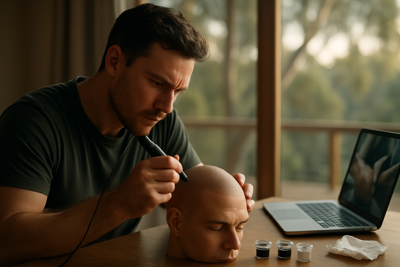
When you Learn Scalp Micropigmentation from Home through a structured online course, you study the theory of pigments and needle work alongside practical drills, stencil placement, and session planning. Good courses combine video demonstrations, step-by-step breakdowns, and technician-led feedback so you can practise and improve safely.

For Australians considering SMP as a service offering, it’s important to recognise SMP is a regulated invasive cosmetic procedure in many local councils and medical boards expect practitioners to hold accredited training and blood-borne virus (BBV) awareness. An accredited online course from Skinart Australia gives you the knowledge to meet client needs and comply with local requirements.

Benefits of Learning Scalp Micropigmentation from Home


There are several advantages to choosing an accredited online SMP course in Australia: flexibility to learn at your own pace, repeated access to clear demonstrations, and the ability to practise techniques in a controlled home environment before performing client work. When structured correctly, online training delivers the same theoretical foundation as classroom courses.

  • Pros: learn at your own schedule, reduced travel costs, detailed video resources.
  • Cons: no supplied equipment from us in Australia, requires disciplined practice and a plan to get supervised feedback.

Most students tell us the biggest win is being able to replay technique videos while practising. The combination of recorded close-ups, layered explanations and assessment activities helps new technicians refine hand speed, needle angle and dot placement.

At Skinart Australia we support online learners with tutor review, progressive assessment and clear learning modules so you can confidently transition from practice skin to paying clients when you’re ready.

Essential Tools and Supplies


When you Learn Scalp Micropigmentation from Home, you’ll need a clear checklist so practice sessions are productive. Note: Skinart Australia does not supply SMP equipment in Australia — you will source tools locally or from reputable Australian suppliers.

Below is a practical gear list to guide your purchases and practice setup. Prioritise safety-rated disposable items and Australian-compliant antiseptics.

  • Practice skins (high-quality silicone practice pads)
  • Disposable SMP needles/cartridges compatible with your machine
  • SMP machine with adjustable speed and stroke length
  • Pigments formulated for scalp work (test on practice skin)
  • Disposable gloves, surgical masks, and face shields
  • Skin prep solutions (medical-grade antiseptic, alcohol wipes)
  • Aftercare products and client information sheets
  • Sharps containers and clinical waste disposal supplies
  • Good lighting and magnification (LED lamp, loupe)
  • High-resolution camera or phone for before/after photos
  • Record-keeping tools (client consent forms, medical history)

Learning at home means you can stage structured practice sessions — for example, 30–60 minute block drills focusing on dot size and spacing, followed by longer single-session simulations where you work across a larger area to practise blending and hairline shaping.

Always keep an audit trail of your practice: photos, notes on needle settings, pigment mixes and any problems you encounter. These records are invaluable when you ask your tutor for feedback or when you begin building your portfolio.

Planning Your Learning Journey


Setting a clear learning plan is the difference between slow progress and efficient skill development. When you Learn Scalp Micropigmentation from Home, map out weekly goals, practise routines, and assessment milestones so both you and your tutor can measure progress objectively.

  • Week 1–2: theory, skin anatomy, pigment behaviour, and hygiene
  • Week 3–4: machine handling, dot drills on practice skin
  • Week 5–8: hairline shaping, blending techniques, multi-density work
  • Week 9–12: full-session simulations, photo documentation, client communication drills
  • Ongoing: business setup, pricing, local compliance and marketing

Track hours, note which drills feel inconsistent, and request targeted feedback from your tutor. Accredited online programs include assessment criteria so you know what “competent” looks like at each stage. Keep realistic timelines: many students find structured daily or weekly practice sessions accelerate progress more than occasional long sessions.

Remember: learning SMP is a blend of art and clinical technique. Give equal attention to both the aesthetic elements (hairline design, natural density) and to safe, repeatable clinical practice.

Basic Techniques for Beginners


Technique is the heart of SMP. As you Learn Scalp Micropigmentation from Home, your tutor will break down the fundamental movements: consistent dot size, density mapping, layering, and soft blending at the hairline. These basics are practised over and over on practice skins before you move to real skin.

A simple, repeatable framework to practise: start with single-dot drills, progress to clusters, then replicate natural direction and scale across a strip of practice skin. Focus on rhythm and pressure — these are what determine dot clarity and longevity.

Another core element is colour and tone selection. Pigments behave differently on varied skin tones and scalp conditions. Your course will teach pigment dilution, mixing strategies and how lighting affects perceived density.

  • Single-dot control drills
  • Gradient density practice (light to dark)
  • Hairline feathering techniques
  • Shadowing for cranium curvature
  • Scar camouflage methods
  • Session mapping and client notes
  • High-density blending patterns
  • Post-session touch-up planning
  • Photography for consistent documentation

Health, Safety and Regulation in Australia


Safety is non-negotiable. When you Learn Scalp Micropigmentation from Home, you study blood-borne pathogen control, cross-contamination prevention, and client consent procedures. Accredited courses include training on BBP awareness and record-keeping that meets Australian local council expectations.

  • Strict hand hygiene and PPE use
  • Single-use disposables and safe sharps disposal
  • Client medical screening and informed consent
  • Post-treatment aftercare instructions
  • Understanding when to refer to a medical professional
  • Local council compliance (check your council’s requirements)
  • Record-keeping for client safety and legal protection
  • Recognising adverse reactions and escalation procedures

The Council for Professional Tattoo Practitioners (CPTP) and many local Australian councils emphasise accredited training and BBP awareness. For example, a CPTP advisory reads: “All practitioners should follow documented infection control procedures and undertake accredited training to protect clients and practitioners.” Always check with your local council for specific licensing requirements for cosmetic tattooing in your suburb or state.

Skinart Australia’s course modules cover infection control and client safety to ensure you understand both the technical and legal responsibilities of performing SMP in Australia.

Costs, Time and What to Expect


Online accredited SMP training is a cost-effective way to enter the industry. Costs break down into the course fee, consumables for practice, and the eventual investment in clinical-grade equipment when you’re ready to work on clients. Skinart Australia’s online Scalp Micropigmentation course provides the tuition and assessment; students arrange their own equipment.

Time to competency varies — many motivated students reach a confident beginner level within 8–12 weeks of daily practice, while others prefer a slower pace. The key is deliberate, measured practice and consistent feedback from your tutor.

Expect to spend initial weeks on theory and basic drills, then move into session simulations with photographic records. Once assessment criteria are met, you’ll receive accredited recognition to support your professional journey in Australia.

Common Mistakes or Issues to Avoid


  • Rushing to work on paying clients without sufficient practice
  • Poor documentation of settings and results
  • Incorrect pigment choice for skin tone
  • Inconsistent dot size due to poor needle control
  • Overworking areas and creating patchy density
  • Skipping BBP protocols or inadequate PPE
  • Poor photo documentation that hides issues
  • Expecting instant perfection — SMP requires layering and patience
  • Not checking local council or health guidelines before offering services
  • Using untested pigments or poor-quality disposables

These issues are common among beginners, and the good news is they’re preventable. A structured online course teaches preventative habits: how to keep accurate logs, why conservative pigment choices matter, and when to pause and seek tutor feedback.

One effective strategy is to cultivate a peer group or mentor connection. Even though you are learning from home, scheduled remote reviews and critique sessions can replicate the benefits of in-person oversight and accelerate your progress.

Building Your First Portfolio


Your portfolio is a practical record of progress. When you Learn Scalp Micropigmentation from Home, start by photographing each practice session carefully: consistent angles, same lighting and close-up as well as wider shots. Over time these images show improvement and provide material for social proof once you begin client work.

Focus on a small selection of strong images rather than a large volume of average photos. Include notes with each image that describe settings, pigment mixes and any corrective steps taken — this demonstrates both technical development and clinical thinking.

  • Before / after style with consistent lighting
  • Close-up of hairline feathering
  • Density progression photos
  • Scar camouflage examples
  • Practice skin comparisons showing improved dot consistency
  • Session notes alongside images
  • Short clips showing machine movement and hand speed
  • Client testimonials (once you begin client work)

Well-documented progress not only helps you improve, it reassures future clients and regulators that you follow a professional, evidence-based approach. Skinart Australia provides portfolio guidance as part of the course assessments.

FAQ — Learn Scalp Micropigmentation from Home: Beginner’s Guide


The following answers address common search queries and beginner concerns about learning SMP online in Australia.

Frequently asked — short answers

  • What equipment is essential? Practice skins, disposable needles, pigments, PPE and good lighting are core — buy locally in Australia.
  • Do I need BBP certification? Yes — understanding blood-borne pathogens and infection control is essential for legal and safe practice.
  • How will I get feedback? Accredited courses include tutor feedback, assessments and recommended practice reviews.
  • Is this a career I can scale? Many technicians start part-time and grow their client base with solid technique and good client care.

Written by Gary Erskine, lead tutor at Skinart Australia — over 25 years in body art education and thousands of students trained worldwide.

“Accredited training plus deliberate practice equals safe, consistent results.” — CPTP advisory paraphrase

We include industry references and align our curriculum with recognised standards to help you meet both client expectations and local compliance in Australia. If you’d like to review an external reference on best practice for infection control, consider guidance from recognised professional bodies like the Council for Professional Tattoo Practitioners.

Final Thoughts


Learning Scalp Micropigmentation from Home is a practical and credible route into a specialist cosmetic field. The combination of accredited learning, disciplined practice routines and tutor-led feedback is what turns a motivated beginner into a reliable practitioner.

Skinart Australia’s online Scalp Micropigmentation course is designed specifically for learners across Australia who want accredited training without the need for in-person classroom attendance. Our structured modules, assessments and portfolio guidance help you gain the competence and confidence to begin offering SMP services responsibly.

You don’t need to wait — start with a clear plan, the right practice equipment, and an accredited course guiding your progress. We’re here to help you every step of the way.

Ready to Learn Scalp Micropigmentation from Home?


If you’re based in Australia and want accredited online SMP training, Skinart Australia’s course gives you the structure, assessment and tutor support to grow your skillset professionally.

Recent Blog Posts