How to Practise Fine-Line Tattooing: Design and Feedback for Australian Learners
A delicate tattoo starts with decisions about shape, spacing and the marks that matter. Skinart now includes fine-line tattooing in its tattoo course. For Australian learners studying online, a well-organised practice record makes it easier to show an instructor what you intended and what happened. Use this guide to plan a simple exercise, compare your attempts fairly and connect the style to the broader course curriculum.
Reduce a reference to a clear outline
Choose an original, uncomplicated subject such as a leaf, a small object or a geometric shape. Draw the outline without decorative texture first. Check it at the size you intend to practise, paying attention to spaces that disappear when the drawing is reduced.
Prepare two alternatives and explain which parts you simplified. Fine-line work is a visual approach, not a requirement to use a single needle or to make every tattoo very small. Equipment choices belong with the actual lesson and instructor guidance.
Separate drawing skills from equipment practice
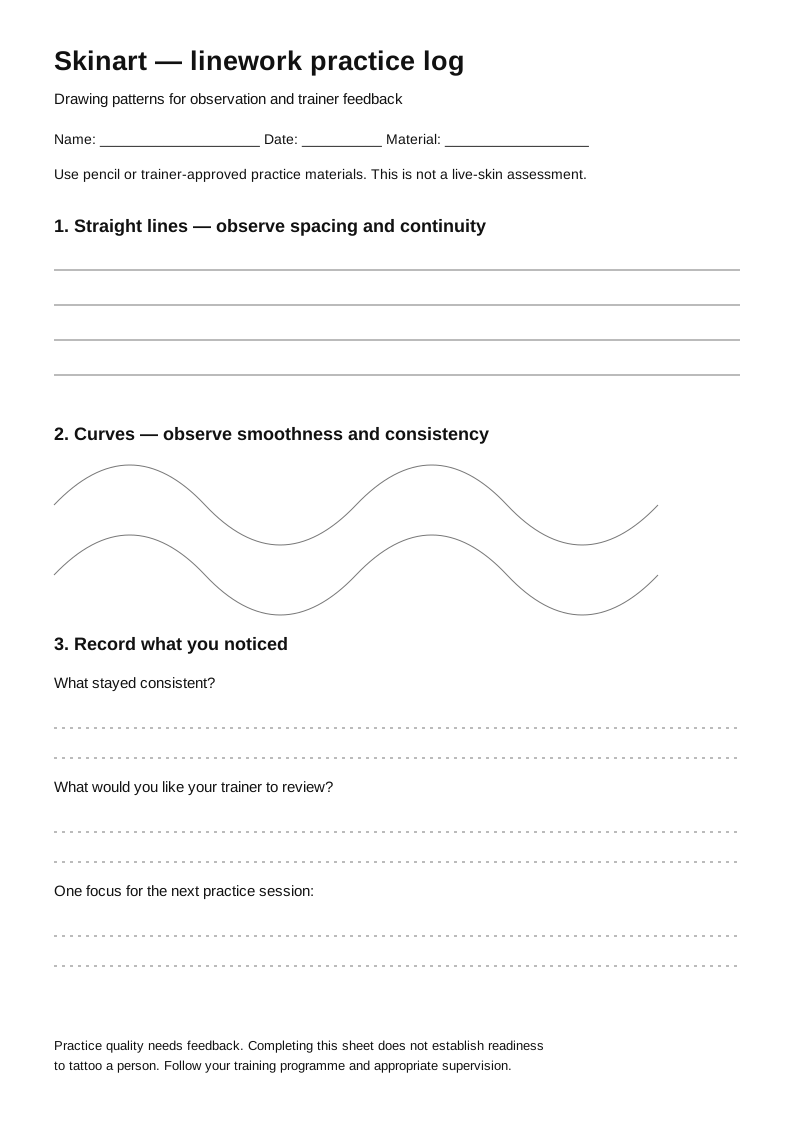
Start with Skinart’s free A4 line-control practice sheet for three pen or pencil exercises: lines between endpoints, curves and repeated circles. Choose one task and keep a note of what you want to improve. Practise curves, straight lines and endpoints on paper. Use the free linework practice sheet to compare continuity and spacing. Keep the task small enough that you can identify one feature to improve.
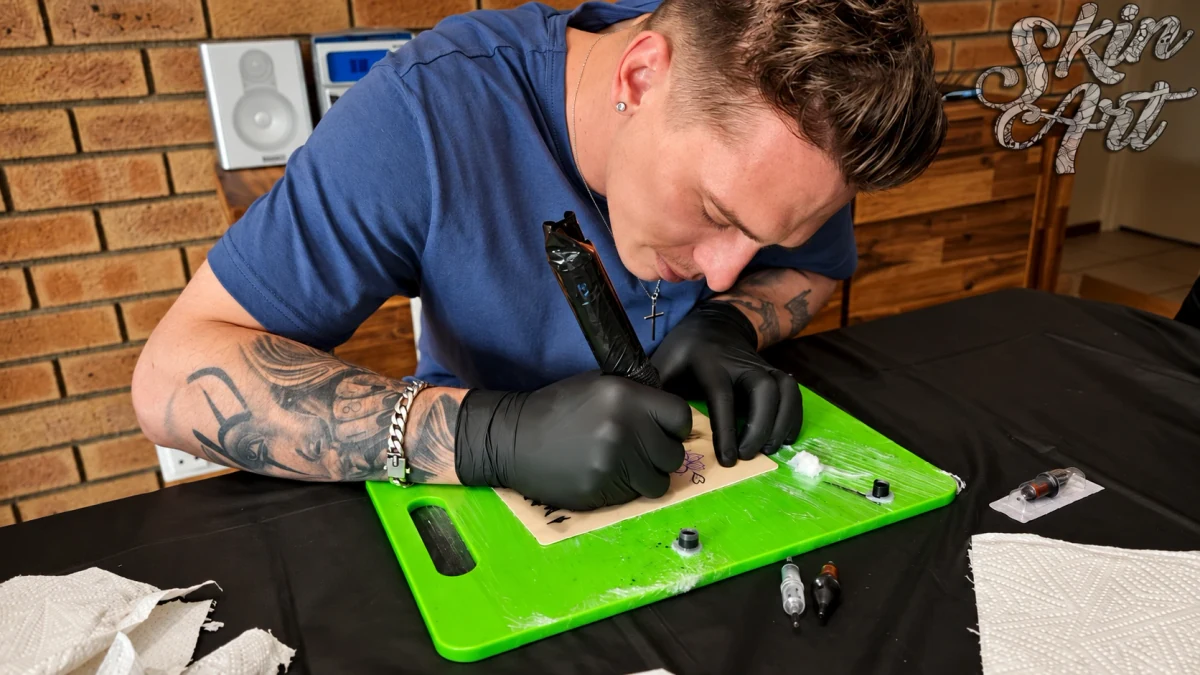
Move to equipment-based work only in the assigned course sequence, using the approved practice material and preparation procedures. Skinart does not supply equipment with the Australian regional offer, so review the equipment requirements before choosing what to buy.
Make remote feedback easy to interpret
Photograph the entire exercise and one close-up in clear light. Include the reference and note any change in material or setup. Do not sharpen, smooth or filter away the inconsistency you want your instructor to evaluate.
Use a short question: “The line changes width where I turn this curve; what should I focus on next?” Keep the reply beside your next attempt. Comparing a consistent exercise after feedback is more useful than comparing unrelated designs photographed differently.
Keep the wider tattoo styles in your learning plan
The course includes fine line, blackwork, tribal and Māori-inspired design exercises, traditional tattooing, watercolour and colour realism. Use those assignments to explore how line weight, colour and contrast change the character of a design. Do not rush into complex fine-line work simply because you have finished a different style exercise.
Label drawing and synthetic-skin examples clearly when sharing your practice. Ask about healed examples when evaluating a professional portfolio; a freshly completed photograph does not establish how a tattoo will look later.
Plan the Australian learning and practice route
See the Australian online tattoo course for current options and the fine-line inclusion. Fine line does not require buying a separate course from the Academy. The Academy is where enrolled students access lessons.
Before providing services, confirm the applicable requirements with the relevant state, territory and local authorities. Training, premises and permission to operate are separate questions. For help matching the curriculum to your experience, contact Skinart with a specific learning goal.
For an Australian state example, NSW Health’s body art and tattooing guidance covers infection control for tattoo businesses. Confirm the requirements that apply in your state or territory and local area before offering services. For general information on caring for tattooed skin, the American Academy of Dermatology explains that UV light can fade some inks. No design or style guarantees an unchanged healed result.