Tattoo Removal Healing and Aftercare: Follow-Up Questions and Warning Signs
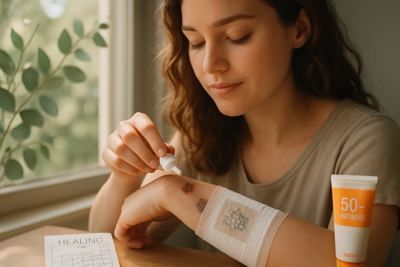
After tattoo removal, you need instructions for the actual procedure you received and a clear way to get help with concerns. A generic day-by-day chart cannot confirm that your skin is healing normally or ready for another treatment. Use this guide to prepare follow-up questions and keep useful records.
Know When to Seek Medical Help
If you notice worsening pain, spreading redness, heat, swelling, pus or fever, seek medical advice promptly. Do not wait for a scheduled review or an online reply if you are concerned about infection. Healthdirect’s wound guidance explains signs that need a doctor’s attention.
In Australia, call Healthdirect on 1800 022 222 for health advice. For an emergency such as severe bleeding, breathing difficulty or loss of consciousness, call 000. A photograph or article cannot diagnose a complication.
Get Instructions Specific to Your Procedure
Ask for written instructions before leaving the appointment. They should identify the procedure, the care you need to follow and how to contact the treating practitioner. Skinart teaches the saline syrem rejection method; advice for a different removal method should not be assumed to apply.
- How should I care for the treated area and any dressing?
- Which products, if any, should I use, and how?
- Which activities should I avoid, and how will I know when to resume them?
- What changes should prompt a call or medical assessment?
- When and how will the area be reviewed?
If instructions conflict or are unclear, ask the practitioner to explain them. Avoid assembling a routine from several unrelated websites or adding a product simply because another person recommended it.
Record Changes Without Guessing What They Mean
A brief record can help you describe a concern accurately. Note the treatment date, when a change began, whether it is getting better or worse, and any relevant advice you have received.
- Date and time of the observation.
- What you noticed, using plain descriptions.
- Whether pain or other symptoms have changed.
- Products used under the supplied instructions.
- Who you contacted and what they advised.
If photographs are requested, use consistent lighting and clear views. Avoid filters or edits that conceal redness, texture or other details. Send them through the agreed private channel. Photos can support a discussion but do not replace an examination when one is needed.
Separate Healing From the Removal Result
A change in visible pigment is not, on its own, confirmation that the skin is ready for another procedure. Ask how the practitioner will assess both skin recovery and the treatment result.
Do not treat an example labelled “week two” or “session three” as a prediction for your own tattoo. Keep questions about appearance, symptoms and future treatment separate so that each can be addressed.
At a review, ask what can be assessed now, what remains uncertain and what the next decision depends on. This guide does not prescribe a repeat-treatment interval or promise a particular degree of fading.
Prepare for Your Review
Bring the original instructions and your notes. Explain any concerns directly rather than trying to decide from a photograph whether a change is normal.
- Is the area progressing as expected for the procedure I received?
- Does anything need medical assessment or a change to the care plan?
- What should I continue doing, and for how long?
- What is the next review point?
- If further treatment is considered, what needs to be assessed first?
If you are travelling or live far from the practitioner, establish how concerns will be handled locally. A remote message should not delay appropriate medical care.
For Students Learning About Aftercare
When studying tattoo removal, ask how aftercare instructions, record keeping and referral are addressed in the course. Learn to distinguish describing an observation from diagnosing a medical condition.
Keep learning examples clearly identified as examples. Do not turn another client’s images into a guaranteed timeline or use an article as a substitute for the course’s practical requirements.
For broader decision-making questions, see the laser and non-laser consultation guide. For training scope and assessment, use the current Australian course details below.
Course Details and Next Steps
Review the current course details for Australia and contact Skinart with questions about your selected option. Existing students can return to their lessons in the academy.