Ear Piercing Equipment for Students: What to Check Before Buying
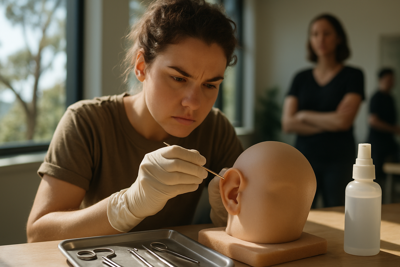
The most useful equipment list starts with the task your course actually asks you to complete. Buying a large general piercing kit first can leave you with items that do not match the lessons or the device you will use. Use this guide to organise a specific enquiry and a clear purchasing record before spending money.
Confirm the Course and the Task
Ear-piercing training and broader body-piercing training are not interchangeable shopping categories. Start with the current course description and the instructions for your assigned work. A list from a different course or a supplier bundle may cover procedures you are not studying.
- Which lesson or assigned task is this item for?
- Is it needed at the start, later in the course, or only for a separate activity?
- Does the selected course option supply it?
- Which exact device, model or specification does the tutor require?
Use the Australian ear-piercing course overview to understand the lessons and access arrangements. Confirm equipment separately rather than assuming a kit offered in another country is included in your Australian purchase.
Match the Device and Its Consumables
Record the exact model and the compatible consumable reference numbers stated by the manufacturer. Similar-looking cartridges, jewellery or accessories should not be treated as interchangeable simply because a marketplace listing groups them together.
- Manufacturer and exact device model.
- Product or part number for each required accessory or consumable.
- Written compatibility information supplied by the manufacturer.
- Instructions for use and any storage or expiry information on the product.
Send a product link or a clear photograph of the packaging to your tutor when asking whether it matches the course task. A description such as “ear-piercing kit” is usually too broad to resolve that question.
This is a purchasing check, not an instruction to carry out a procedure. Follow the course requirements for practical activities and ask about anything that does not match the demonstration or assigned task.
Get Useful Information From the Supplier
Ask for the details that let you identify exactly what will arrive. A polished product photograph does not show every component or establish that the contents suit your course.
- The itemised contents and quantity of each component.
- Manufacturer, model and product codes rather than only a kit name.
- Access to the manufacturer’s instructions before purchase.
- Delivery availability and expected charges for your Australian address.
- Returns arrangements, including any restrictions on opened items.
Keep the supplier’s written answers with the quote. If a specification is missing, resolve it before ordering instead of substituting a product on the strength of a similar photograph. General marketing labels do not replace the exact documentation needed for the item.
Compare the Total Order, Not Just the Kit Price
Create a simple purchase record with one line for each required item: task, product code, quantity, supplier, quoted price and whether it is already included in your course option. Mark unresolved items as “confirm” rather than buying them speculatively.
- Separate required items from optional accessories.
- Compare the same quantities and specifications between quotes.
- Include delivery and any other charges shown by the seller.
- Record the quoted date so you can check the price again when ordering.
- Keep the course fee separate from your equipment subtotal.
For example, your note might read: “Lesson/task: confirm with tutor; device model: awaiting reply; compatible consumables: awaiting manufacturer reference; quantity: confirm before order.” This is a planning example, not a recommended kit or a price estimate.
There is no need to buy an entire future workplace setup simply to organise your first study session. Let confirmed course tasks determine the initial order. Planning to offer services requires a separate review of your premises, operating requirements and equipment needs.
Check the Delivery Against Your Record
When the order arrives, compare the product codes, quantities and packaging information with the confirmed order. Keep the invoice and the product documentation together so you can identify the item when seeking help.
If the supplied model differs, information is missing or the packaging appears damaged, contact the supplier and tutor before treating it as suitable for the assigned task. Do not let a delivery deadline become a reason to guess about a substitution.
A useful message is: “I ordered
for [course task], but received . Here are the packaging details and the supplier’s reply. Does this match the course requirement, or should I arrange a replacement?”


For help organising the rest of your study, read the ear-piercing home study guide. Bring unresolved equipment questions to Skinart before starting the relevant activity.
Course Details and Next Steps
Review the current course details for Australia and contact Skinart with questions about your selected option. Existing students can return to their lessons in the academy.