Skip to content

Ear Piercing Certification & Insurance in Australia

Ear Piercing Certification & Insurance in Australia

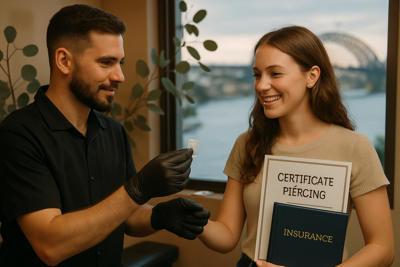
Ear Piercing Certification & Insurance in Australia is essential knowledge for anyone offering professional piercing services. Whether you’re just starting out or expanding your services, understanding the certification pathways, the types of insurance available and how regulators across states view ear piercing is vital to protect your clients and your business.

This guide is written specifically for Australian practitioners and business owners. It explains the differences between accredited training and best-practice requirements, how insurance policies apply to ear piercing, and practical steps you can take to ensure compliance. You’ll also learn how Skinart Australia’s accredited online Ear Piercing course fits into the local picture and what it does — and doesn’t — provide.

Written by Gary Erskine, lead tutor at Skinart Australia with over 25 years’ industry experience, this article draws on real-world examples from Australian councils, industry bodies and students who have built safe, successful piercer businesses after completing accredited training.

What is ear piercing certification and why it matters


Ear piercing certification refers to an accredited training program that demonstrates you understand safe piercing techniques, infection control procedures, client consent, aftercare and record-keeping. In Australia, certification helps both independent piercers and salon operators show that their practice meets current professional standards.

Certification is beneficial for client confidence and is often referenced by local councils or health inspectors when assessing whether a premises is operating safely. While regulations vary between states and territories, trained practitioners reliably reduce the risk of complications and complaints.

At Skinart Australia we offer an online Ear Piercing course that leads to CPD-aligned accreditation recognised by industry bodies such as the Body Art Qualification Association (BAQA) and the CPD Standards Office. This gives you a nationally referenced credential you can present to insurance brokers and local authorities.

Insurance for ear piercers in Australia


Insurance is not a substitute for training, but it is a practical safeguard if something goes wrong. Typical policies relevant to ear piercing include public liability, professional indemnity and product liability. The precise cover you need depends on whether you pierce in a commercial studio, a mobile setting or as part of a broader beauty business.

  • Pros: Demonstrates professional responsibility; protects against client injury claims; may be required by landlords or local councils.
  • Cons: Policies vary; some insurers impose strict training or supervision conditions; costs can rise with claims history.

When speaking with an insurer, present your accreditation (for example, the Skinart Australia Ear Piercing certificate), your infection control knowledge and your premises’ setup. Insurers often request evidence of training and written aftercare procedures before issuing a policy.

Keep records of client consent, instruments used and cleaning logs; these reduce the risk of disputes and make insurance claims or audits simpler and faster.

Common mistakes that put practitioners and clients at risk


  • Skipping a formal consent process or failing to record medical history
  • Not following infection control protocols for cleaning and instrument handling
  • Using non-clinical jewellery or unapproved materials
  • Failing to check client age and valid ID for minors
  • Not maintaining or presenting evidence of training to insurers or inspectors
  • Operating in unsuitable premises without proper waste disposal
  • Relying on verbal aftercare advice without written instructions
  • Assuming public liability covers professional mistakes without professional indemnity
  • Not having an emergency plan or first-aid knowledge
  • Poor record-keeping that weakens your legal position if a complaint arises

Many of these issues are avoidable with modest investment in accredited training and a few practical systems: client intake forms, a sterilisation checklist, a dated consent form and safe disposal arrangements. Accreditation courses teach these systems so you can implement them confidently.

Insurers review your processes when you apply. If your paperwork is incomplete or your premises lacks basic controls, you may be refused cover or offered limited policies that exclude certain claims. Good paperwork and correct training protect you and reduce premium costs over time.

How to get certified with Skinart Australia (online ear piercing course)


Skinart Australia provides an accredited online Ear Piercing course tailored for Australian regulations. The course covers infection control, equipment setup, client assessment, practical piercing techniques (theory and demonstration), aftercare and record-keeping. On successful completion you receive a CPD-recognised certificate that many insurers and councils accept as evidence of training.

The course is delivered online with detailed video demonstrations, step-by-step modules and assessments designed to ensure you understand and can apply safe practice principles. Our curriculum aligns with BAQA and the CPD Standards Office, strengthening your credibility.

Please note: Skinart Australia’s online ear piercing course does not include in-person training in Australia, nor do we supply ear piercing equipment to Australian students. The course focuses on providing accredited theory, practical demonstrations, assessment and certification designed for local compliance.

  • Accredited CPD certificate accepted by many insurers and councils
  • Comprehensive modules on infection control and safety
  • Clear written aftercare templates you can adapt for clients
  • Practical video demonstrations showing correct technique
  • Assessment to verify your competence before issuing a certificate
  • Dedicated student support and guidance on local compliance

Insurance checklist and coverage types explained


Understanding the difference between policy types helps you choose appropriate cover. Public liability protects against third-party injury or property damage at your premises. Professional indemnity covers advice or services that result in a client loss. Product liability covers manufactured jewellery or equipment failures.

When comparing insurance, ensure the policy covers ear piercing specifically — some beauty policies exclude body art or require additional endorsements. Provide your insurer with your Skinart Australia certificate and your client intake procedures to get accurate quotes and avoid unexpected exclusions.

Use this checklist when speaking with brokers or insurers to confirm coverage and limits that suit your business model.

  • Make sure ear piercing is listed as an activity on the policy
  • Check public liability limits (commonly $5m or $10m in Australia)
  • Confirm whether professional indemnity is needed (advice-based claims)
  • Ask about product liability for jewellery sold on-site
  • Clarify whether mobile or pop-up services are covered
  • Check requirements for supervised practice if you’re recently qualified
  • Ask about excesses, exclusions and incident reporting timelines
  • Request the insurer’s preferred record-keeping and client consent formats
  • Confirm any required first-aid, CPR or BBP (bloodborne pathogen) certifications

Local examples, success stories and an industry quote


In Melbourne, several of our students have used the Skinart Australia ear piercing certificate to secure favourable public liability quotes and meet local council expectations for body art practitioners. One graduate started as a mobile piercer, then opened a studio after supplying the certificate and documented processes to their insurer and landlord.

In Brisbane, a student used the accredited coursework as supporting evidence when the local council carried out a routine inspection. Having the documentation and aftercare templates made the process straightforward and the council inspector praised their cleanliness and records.

“Accredited training, clear records and solid infection control make all the difference. Skinart’s course helps practitioners meet expectations and run safer, more resilient businesses.” — Local Body Art Coordinator, City Council

FAQ — Ear Piercing Certification & Insurance in Australia


Below are some of the most commonly asked questions we receive from Australian practitioners. Each answer is concise to help you find the information quickly.

Do I need a certificate to offer ear piercing in Australia?

Requirements vary by council and state, but having an accredited certificate (such as from Skinart Australia) significantly strengthens your position with local authorities and insurers; some councils will expect evidence of training during inspections.

Will insurers accept an online ear piercing certificate?

Many Australian insurers accept accredited online certificates, especially those aligned with CPD and BAQA standards. Always check policy wording and provide full documentation — insurers may ask for course details and aftercare templates.

Does Skinart Australia provide equipment or in-person practical training?

Skinart Australia provides an accredited online ear piercing course only. We do not offer in-person training in Australia, and we do not supply ear piercing equipment to Australian students. The course focuses on accredited theory, demonstrations and assessments.

How much insurance coverage should I carry?

Public liability commonly ranges from $5m to $10m for small businesses in Australia, but the right amount depends on your operations. Discuss your circumstances with a broker and present your certificate and written procedures to get an accurate recommendation.

Where can I find national guidance on infection control?

Safe Work Australia and many state health departments publish infection control and sharps guidance that is applicable to body art settings. These resources are useful when preparing your operating procedures and when insurers request evidence of your protocols.

Final thoughts — protect your clients and your business


Ear Piercing Certification & Insurance in Australia are complementary parts of running a responsible piercing service. Accreditation demonstrates your knowledge and commitment, while the right insurance protects the business you’re building. Together they create trust with clients, landlords and regulatory bodies.

If you’re starting out, prioritise accredited training, document your processes and approach an insurance broker with those documents in hand. Small practical steps — written consent, a clean treatment area, clear aftercare and proper waste handling — make a big difference to safety and to how insurers view your risk.

We encourage you to review local council policies, talk to an insurance broker about your specific circumstances and consider completing an accredited course to strengthen both your competence and your business position.

Ready to get accredited?


Skinart Australia’s online Ear Piercing course gives the practical knowledge and accredited certificate many insurers and councils accept. If you’re serious about protecting clients and building a compliant, professional service, this course is the right place to start.

Recent Blog Posts