Tattoo Linework Practice: Drawing Exercises and a Review Sheet

Start linework practice with a task small enough to review: a row of lines, repeated curves or a simple outline on paper. Keep the first attempt, identify one feature to improve and compare it with your next attempt. The aim is to make progress visible, rather than fill pages without knowing what changed.
Choose One Feature to Practise
Use a pen or pencil and paper for these drawing exercises. Choose one feature before you begin: reaching an intended endpoint, keeping a smooth curve or maintaining even spacing. Mark the date and the aim at the top of the page.
For machine-based exercises, use only the practice materials and instructions assigned by your trainer. Paper drawing and practice-material work are different activities; neither alone demonstrates readiness to tattoo a person.
Keep this session focused on observation. This guide does not prescribe needle depth, machine settings or techniques for working on skin.
Try Three Small Drawing Tasks
- Endpoints: mark pairs of points and draw a line between each pair. Review where the line begins and ends, rather than judging only the middle.
- Parallel lines: draw a small set of lines beside one another. Compare the gaps at the beginning, middle and end to see where spacing changes.
- Repeated curves: draw several versions of a simple arc or S-shaped curve. Look for abrupt changes of direction and compare the shapes side by side.
Choose one task for the first session. Retain the whole page, including the lines you dislike. Selecting only the best example hides the pattern you are trying to understand.
When repeating the task, keep the drawing tool, page orientation and intended size the same initially. If you change something, note it so the comparison remains useful.
Use the Printable Sheet
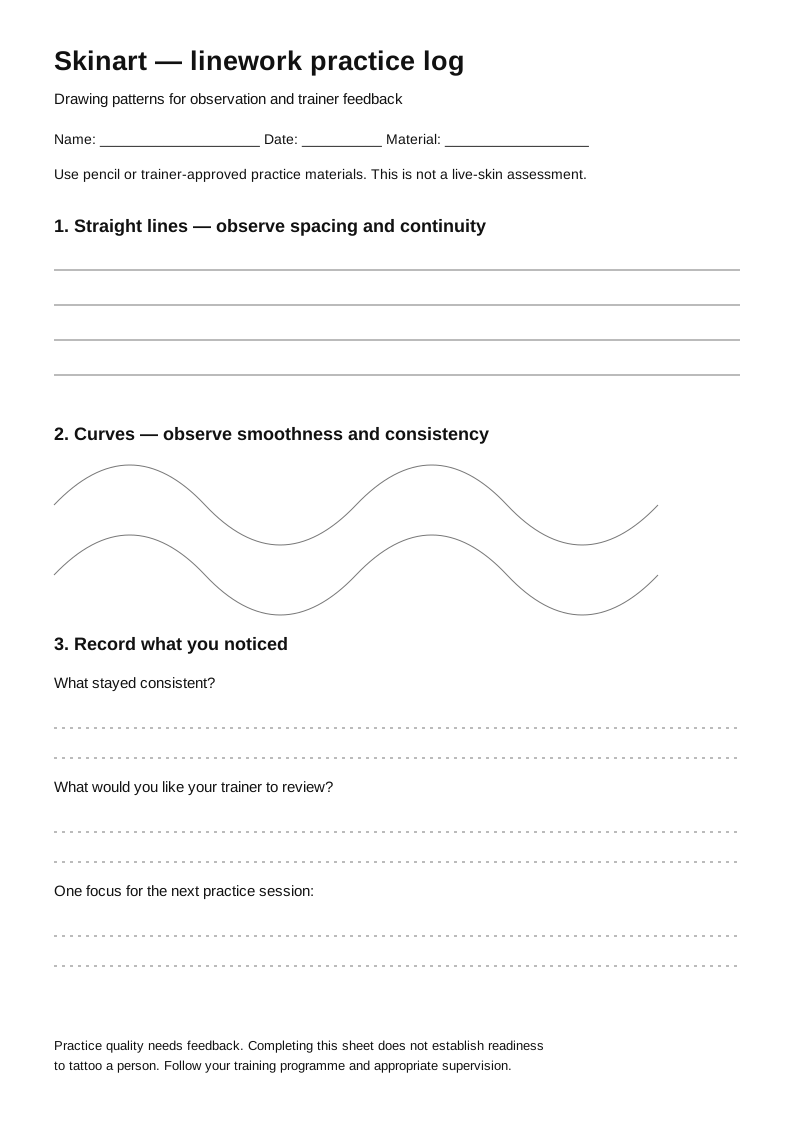
Download the printable linework practice sheet (SVG) for drawing patterns and a learning log. Open it in your browser and use its print option. Use the same print scale for attempts you plan to compare.
The sheet is a drawing and observation aid. It is not a stencil for client work or a set of machine instructions. If your course assigns a different exercise, follow that assignment and use the log only if it helps.
- Date and attempt number
- Exercise and practice material
- One feature you were trying to improve
- What you noticed
- Question or next task for review
Describe the Result Before Trying to Fix It
Use a specific observation such as “the gaps widen towards the right” or “the curve becomes angular near the end”. This is more useful than “my lines are bad”, because you can look for the same feature in the next attempt.
Do not assume that a drawing fault identifies a machine adjustment. When using assigned practice equipment, ask the trainer to review the task and setup rather than guessing changes from an online tip.
Photograph the whole sheet in clear, even light, with close-ups only where needed. Keep the image unfiltered and label the material accurately. A heavily edited image can hide what your tutor needs to assess.
Prepare a Focused Review Question
Send the exercise name, your aim and the observation you want checked. For example: “These are two dated paper attempts at parallel lines. The spacing opens up near the right edge. Which feature should I focus on in the next drawing exercise?”
Keep the reply with both attempts. Repeat the agreed task and note the change you made. Ask whether to continue or move on rather than treating a fixed number of sheets as proof of competence.
For organising lesson time, practice and feedback, see the tattoo learning milestones guide. Small, reviewable tasks make it easier to plan what comes next without promising a universal completion date.
Course Details and Next Steps
Review the current course details for Australia and contact Skinart with questions about your selected option. Existing students can return to their lessons in the academy.