Microblading Training: How to Assess Student Case Studies
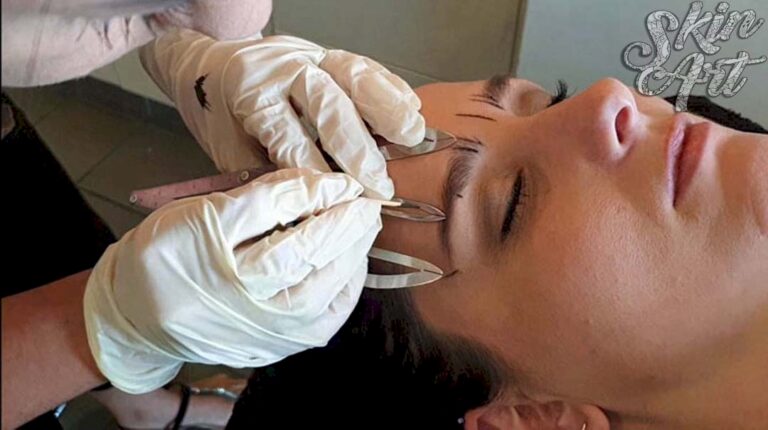
A microblading case study should explain a learning process, not simply present a beautiful brow and a claim of success. For students comparing training in South Africa, the useful questions are what was practised, how feedback was used and what the example can actually demonstrate. This guide gives you a framework for reading that evidence and documenting your own approved study exercises.
A case study needs a starting point
Check the learner’s previous experience and the purpose of the exercise. A trained PMU practitioner developing a brow-design study is not starting from the same position as someone new to body art. The example should also name the training format rather than imply that all students received the same supervision.
Look for a specific learning question. “Improve a paper brow design after feedback” is a useful description of a task. “Become a successful artist” is a broad ambition and tells you little about how the lesson was taught.
Distinguish design studies, practice and client work
The caption should identify what you are looking at: a paper design, an approved practice-material exercise, a trainer demonstration or work involving a person. These categories should stay distinct in a portfolio. A neat practice example is not automatically evidence of readiness for client procedures.
Where images are compared, ask whether the view, scale and lighting are consistent. A changed crop can hide parts of the work, and a beauty filter can make comparison less useful. Keep unedited training records alongside any presentation version.
- What was the task and on what material?
- Which stage of training does the example represent?
- What guidance or supervision was involved?
- Was permission obtained for any identifiable photograph?
Follow the change made after feedback
The strongest educational part of a case study is often the link between an observation and a revision. It should explain what the trainer identified and how the next study addressed it. “The student became confident” may describe a feeling, but it does not identify a change in the work.
Here is a fictional paper-design example: “The first drawing had several competing focal points. The feedback asked me to simplify the composition. I drew a second version, retained both and asked whether the revised shape was clearer.” This illustrates documentation only. It is not a Skinart student testimonial or a brow-treatment plan.
An honest record can include an unresolved question. A series that shows only an immaculate final example gives less insight into learning than one that explains a correction and its limits.
Use evidence to compare the course
Open the South African online microblading course outline and compare its listed topics with the case study. Check what the purchase option includes, how training questions are handled and which practical requirements are part of completion. Do not assume that a case study from a supervised format describes an online student’s full experience.
If a certificate or accreditation is mentioned, verify the actual course and awarding or accrediting organisation. A learning example does not establish recognition by every insurer or authority. Confirm requirements for your intended work separately.
A case study about someone’s new business also needs context. Their existing client base, other qualifications and marketing work may matter. It is not reliable evidence of the income another student will earn.
Make a small, useful case-study record
For an approved learning exercise, use a date, a task description, labelled versions, the feedback received and a next question. Link the note to the actual exercise rather than writing a promotional account after the event.
- Starting point: what I could already do or explain
- Exercise: what the course asked me to study
- Evidence: the labelled examples I submitted
- Feedback: the specific observation I received
- Next step: what remains to practise or clarify
You can use this structure when asking Skinart South Africa how a current option supports your learning goal. It also helps you recognise a useful case study without needing a dramatic career story.
Recent Blog Posts
 Diwali training offer: 15% off eligible purchasesA seasonal offer can be a useful moment to revisit a learning goal that has been waiting for attention. Choose the…
 Make a realistic workload plan for a busy seasonA busy calendar can hide the work between appointments: messages, preparation, records and learning. Planning those tasks makes your available time…
 Review an imperfect result before planning correctionsIt is tempting to respond to a disappointing practice result by immediately trying again. A short review can reveal whether you…