
Build a Clear Microblading Portfolio and Enquiry Route
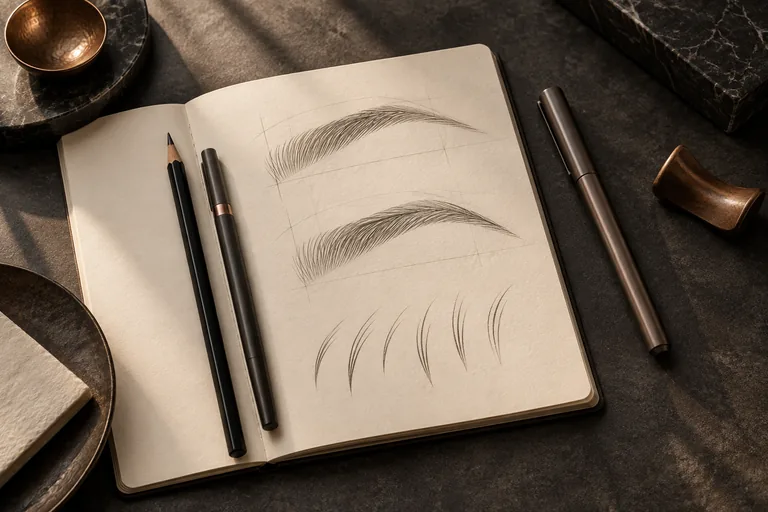
A useful microblading portfolio helps a visitor understand your work and ask a relevant question. It does not need dozens of similar photographs or a promise that a gallery will produce bookings. Start with a clear selection, accurate captions and a contact route that works on a phone.
Choose examples that explain different things
Select work by the question it answers: design planning, an assigned practice task or an accurately identified client result. Keep a practice sheet separate from a procedure photograph. A brow sketch can demonstrate a design exercise, but cannot establish a healed treatment outcome.
The online microblading course includes face mapping and stroke assignments. Use assigned work to document your learning clearly. Do not borrow another artist’s photograph or describe enrolment itself as a completed client case.
Add context to each example
| Caption item | What to explain |
|---|---|
| Technique | The named method or design exercise. |
| Stage | Practice, fresh work or an accurately identified healed stage. |
| Your involvement | The work you performed. |
| Learning or design focus | The point the example illustrates, without private details. |
Avoid a generic “before and after” label when the views or stages are unclear. Keep any feedback quoted accurately and obtain permission before publishing it.
Keep the pictures honest and readable
- Use comparable views where a comparison is intended.
- Keep lighting clear and avoid beauty filters.
- Retain the original photograph alongside a crop.
- Do not change the apparent colour, shape or result.
- Confirm permission for the proposed publication.
Store private client records separately from the public gallery. If permission is unclear, leave the image out until it is resolved. A portfolio does not need a person’s contact information or medical history to explain the work.
Make the next step easy to find
View the gallery on a phone. Check that the technique and stage can be read without opening an enormous image, and that the enquiry link or contact button is easy to use. Ask a visitor to state the service of interest and a useful question.
Keep the service description and location accurate. Do not make the person search through unrelated course photographs or old promotions to find the contact route. Respond through the agreed channel and keep the enquiry record private.
Review enquiries instead of assuming success
Record which examples were shared and which enquiries actually arrived. Look for repeated questions that the captions should answer, and remove duplicate views that add nothing. Use missing examples to plan the next learning task rather than inventing a result.
For course questions, contact Skinart South Africa or read the microblading Instagram portfolio guide. For your own client-facing gallery, measure the actual response; no portfolio format can promise bookings.
Recent Blog Posts
 How to pause a consultation without losing claritySometimes the most useful outcome of a consultation is a clear next step rather than an immediate booking. A calm pause…
 Read product instructions before making a practice planA familiar product name does not tell you everything about its intended use. Product-specific questions belong at the start of planning,…
 Build a practice journal you will actually useA useful practice journal makes the next session easier to plan. It does not need to become a second project or…
