
Tattooing on Fake Skin: How to Practice as a Beginner
Updated
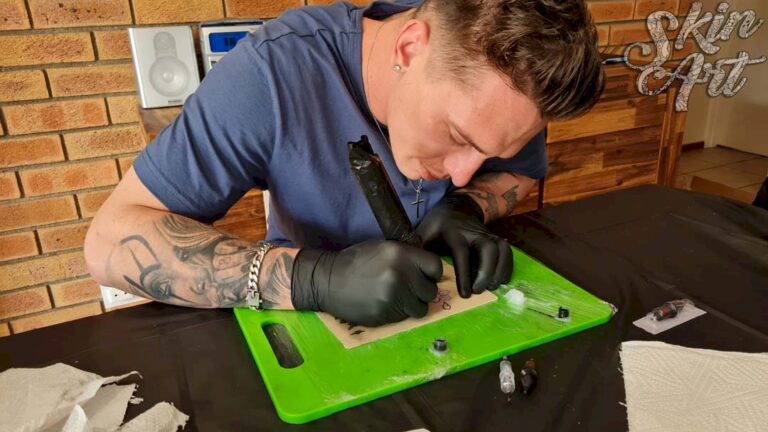
A useful synthetic-skin practice session starts with a clear task. Choose the exercise from your lesson, gather the required materials and leave time to review the finished sheet. Keep each session focused enough that you can describe what you tried and what to work on next.
This guide covers materials, session planning and reviewing your practice. Use it alongside the course exercises to build a dated collection of work and specific questions for feedback.
Understanding Fake Skin for Tattoo Practice
Synthetic practice skin gives you a surface for assigned tattoo exercises without working on a person. Its behaviour varies between materials, so note which sheet you used when comparing sessions.
Use synthetic skin to work through the assigned exercise and record what you observe. A sheet cannot reproduce a person’s skin response or healing, so judge the exercise against the lesson rather than treating it as a test of readiness for client work.
Begin with a manageable design and a clear review task. Keep the complete sheet, an original photograph and your notes together so a tutor can see the context of the attempt.
Essential Tools and Materials
Gather the materials required for the exercise before starting. Keep the relevant equipment instructions nearby and organise the workspace so you can follow the task without repeatedly stopping to find supplies.
- Tattoo Machine: Use equipment compatible with the assigned exercise and follow its manufacturer instructions.
- Needles: Identify the specified configuration and its compatibility with the machine before the exercise.
- Inks: Use the materials specified for the exercise and retain their labels and instructions.
- Fake Skin: Choose a practice surface suitable for the assigned task and record the material used.
- Stencil Paper: For transferring your designs onto the fake skin.
- Cleaning Supplies: Identify the products and handling procedures specified in your training and equipment instructions.
- Power Supply: A stable power supply to ensure consistent performance of your tattoo machine.
- Practice Designs: Start with simple designs and gradually move to more complex artwork.
Keep a short materials note with each sheet: the practice surface, equipment used and exercise name. This helps you explain differences between sessions without relying on memory.
Store finished sheets with their notes and original photographs. A simple folder organised by exercise makes it easier to find earlier work when you revisit a technique.
Pros and Cons of Practicing on Fake Skin
Practicing on fake skin offers numerous advantages, but it also comes with some limitations. Understanding these can help you make the most of your practice sessions.
- Pros:
- A practice surface that does not require working on a person.
- Ability to practice anytime without needing a live model.
- Helps build confidence and muscle memory.
- Allows experimentation with new techniques and styles.
- A reusable record of completed exercises for review.
- Cons:
- Does not perfectly replicate the feel of human skin.
- Lacks the feedback from a live model regarding pain levels.
- Some synthetic skins may not hold ink as well as real skin.
- Limited availability of high-quality fake skin in some areas.
Synthetic skin provides a place to complete practical assignments and review them with a trainer. Its limitations remain important when interpreting the results.
Include the limitations of the practice surface in your review. Note which observations concern your work and which may relate to the material, then turn any uncertainty into a question for feedback.
Techniques to Improve Your Skills
Improving your tattoo skills on fake skin requires patience, practice, and the right techniques. Here are some tips to help you get started:
Start the design on paper. Compare straight lines, curves and spacing, and mark one feature to carry into the assigned synthetic-skin exercise.
Follow the equipment setup and exercise demonstrated in the lesson. If the result differs from the example, record the difference and ask for feedback before changing settings or technique at random.
- Start with basic line work to build a solid foundation.
- Gradually introduce shading and color to your practice.
- Use reference images to guide your practice sessions.
- Keep the specified materials consistent while reviewing one exercise.
- Take breaks to assess your progress and make adjustments.
- Join online forums or local groups to share tips and feedback.
- Watch tutorials and attend workshops to learn new techniques.
- Seek feedback from experienced tattoo artists.
Review one feature at a time against the lesson. Mark the example you want to discuss, write a specific question and keep the rest of the sheet available for context.
Skinart online tattoo training combines recorded lessons, practical assignments and tutor feedback. The separate in-person course lists four days plus online material and supervised model practice.
Common Mistakes to Avoid
As you practice tattooing on fake skin, it’s important to be aware of common mistakes that beginners often make. Avoiding these pitfalls will help you improve more quickly and effectively.
- Changing practice materials without noting the change.
- Practicing without proper lighting, leading to inaccurate work.
- Neglecting to clean and maintain your tattoo machine regularly.
- Changing settings or technique without understanding the assigned exercise.
- Skipping the use of stencil paper for complex designs.
- Forgetting to document your progress and learn from mistakes.
- Ignoring feedback from more experienced tattoo artists.
- Practicing without a clear goal or focus for each session.
A consistent exercise and a clear record make feedback easier to apply. Compare the next attempt with the same task before moving to a different design.
The tattoo curriculum includes fine-line work alongside blackwork, traditional styles, watercolour and colour realism. Use the relevant lesson to choose an exercise rather than trying several styles in one session.
Tips for Successful Practice Sessions
To make the most out of your tattoo practice sessions, consider these tips that can lead to greater success and skill development.
- Set clear goals for each practice session to maintain focus.
- Allocate dedicated time for practice in a distraction-free environment.
- Document your progress with photos to track improvement over time.
- Seek constructive feedback from peers and mentors regularly.
- Stay updated on the latest tattoo trends and techniques through online resources.
- Join tattoo communities to share experiences and learn from others.
- Attend workshops and seminars to gain new insights and skills.
- Keep experimenting with different styles to find your unique artistic voice.
Keep one concrete goal for the next session, such as more consistent spacing in the assigned design. Record the feedback you used and whether the next attempt addressed it.
Use the next session to revisit the assigned task that needs attention. A short, repeatable exercise with clear notes is easier to review than a large collection of unrelated designs.
Reviewing Your Practice Progress
A practice record should make your progress easy to review. Keep the exercise, date, observation and next question together so that each sheet has a clear purpose.
Photograph the complete sheet before selecting a close-up. Use similar lighting and framing between sessions, and retain the original image with the dated exercise.
Choose one feature to discuss, such as consistency across the assigned design. Refer to the relevant lesson and point to a specific example in the photograph when asking for feedback.
Add the feedback to your record and note the next assigned task. On your next review, compare the work with that task rather than trying to judge everything at once.
For a portfolio, select a small number of clear examples and label them as synthetic-skin practice. A short caption explaining the exercise gives the viewer more useful context than an unsupported claim about your skill level.
FAQs
What is the best fake skin for tattoo practice?
Start with the surface recommended for the exercise. Record its material and thickness where supplied, and compare sheets under similar conditions rather than assuming one product reproduces human skin.
How often should I practice tattooing on fake skin?
Plan a routine that leaves time for the exercise, photographs and reviewing feedback. Repeat the task that needs attention before adding more complex work.
Can I use any tattoo ink on fake skin?
Use the ink or practice material specified for your exercise and follow its labelling and instructions. Do not assume that an unlabelled product or a product intended for another use is interchangeable.
What should I do if my tattoo machine isn’t working properly?
Regular maintenance and cleaning are essential. If issues persist, consult the manufacturer’s guidelines or seek help from experienced technicians.
How do I know when I’m ready to tattoo real skin?
Practice sheets and confidence alone do not establish readiness to tattoo a person. Confirm the course requirements, appropriate supervision and applicable local authority and insurer requirements before offering services.
Final Thoughts
Finish each practice session with a record you can review: the complete sheet, exercise name, date and one specific question. That record is more useful than judging progress from memory.
Compare a paper drawing and its assigned synthetic-skin version to identify differences in line quality or spacing. Keep both with the tutor feedback before repeating the task.
Explore the current tattoo course below for the lesson sequence, practical assignments and purchase options. Choose a starting point that leaves time for both study and practice.
Recent Blog Posts
 How to pause a consultation without losing claritySometimes the most useful outcome of a consultation is a clear next step rather than an immediate booking. A calm pause…
 Read product instructions before making a practice planA familiar product name does not tell you everything about its intended use. Product-specific questions belong at the start of planning,…
 Build a practice journal you will actually useA useful practice journal makes the next session easier to plan. It does not need to become a second project or…
