Microblading Practice Without a Client: Plan One Exercise
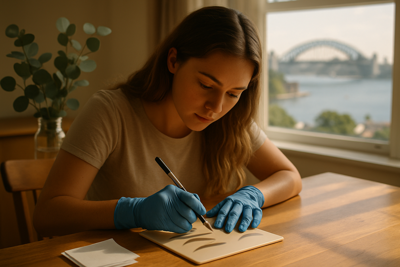
Practising without a client lets you focus on an assigned learning task and keep a record for review. Start with the exercise your tutor has set, not a list of techniques to attempt in one sitting. This guide covers organising drawings and course-directed practice-material work; it is not a guide to treating yourself or another person.
Choose One Aim From Your Lesson
Write the lesson name and the specific feature you are working on. For a paper exercise, that might be consistent spacing or a clearly drawn outline. Use the criteria supplied with the task rather than deciding that a picture is good enough because it looks attractive.
If the instruction is unclear, ask before repeating it. Keep a note of the exact point you need explained. The mapping review guide gives an example of turning a design concern into a focused tutor question.
Prepare Only the Assigned Materials
Check the required practice surface and tools with your course. Paper drawing and tool-based practice are different tasks; do not assume supplies are interchangeable or buy a large kit before confirming the requirements.
For any exercise involving sharps or other specialist equipment, obtain the handling, storage and disposal instructions before starting. Keep the setup inaccessible to children and pets. If the required arrangements are not in place, use an assigned paper task instead and ask your tutor what to arrange.
The training equipment checklist helps you collect product and compatibility questions before purchasing.
Record the Attempt Before Starting Another
Label the exercise with a date, attempt number and practice material. Photograph the complete work and any detail views requested by your tutor. Keep the camera position and lighting consistent between attempts.
- What was the aim?
- What do I notice in the result?
- What did I change from the previous attempt?
- What question needs feedback?
A short record is enough. Avoid editing the photograph to hide uneven work or changing the colour and texture of the practice surface. The reviewer needs to see what happened.
Use Feedback to Choose the Next Task
Read the reply beside your submission. Write down the specific change requested and ask about anything you cannot explain. When repeating an exercise, retain the earlier attempt so the reviewer can follow the sequence.
Do not turn an unclear result into an experiment with deeper cutting, different settings or unassigned materials. Return to the course instructions and ask for help. A positive comment on one feature does not approve every aspect of your technique.
Follow the required assessment process rather than treating a number of hours or repetitions as proof of competence.
Keep the Limits of Practice Clear
Paper and synthetic materials do not show how an individual person will respond to a treatment or how pigment will look after healing. Label practice photographs accurately, including when sharing them publicly.
Progression to work involving another person needs the appropriate training, assessment and operating arrangements. Do not recruit someone simply to fill a gap in a practice portfolio. The public portfolio guide explains how to present the evidence you actually have.
For organising your wider study schedule and course access, use learning microblading from home.
Course Details and Next Steps
Review the current course details for Australia and contact Skinart with questions about your selected option. Existing students can return to their lessons in the academy.