
Practising Microblading at Home Without a Client
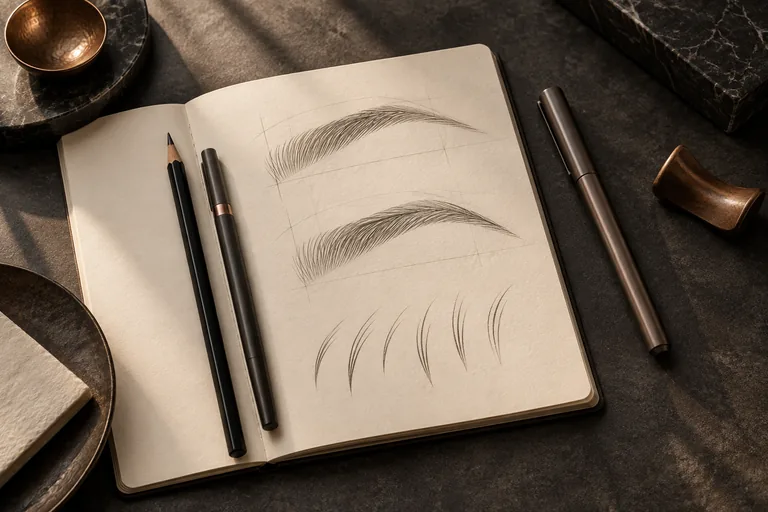
Non-client practice gives you time to work through an assignment and identify a question before moving on. Use paper for design exercises and the material specified by the course for practical tasks. Do not treat a practice sheet as evidence that you are ready to perform a procedure on someone.
Choose one task for the session
Start with a lesson and a defined assignment. For design, that might mean a brow outline or face-mapping exercise. For stroke work, follow the task and practice material taught in the relevant lesson instead of inventing a technique from social-media clips.
Skinart’s online microblading course includes design and stroke assignments. Keep the instructions beside your work and choose a specific feature to review, such as consistency in the design or whether your attempt matches the example.
Use the assigned materials
Check the practice sheet, tool and supplies required for the exercise. If something is unavailable, ask the trainer about an appropriate alternative. Do not assume household objects or a different tool reproduce the purpose of the assignment.
Separate these learning materials from any supplies intended for client work. Follow the relevant handling and disposal instruction; this article is a practice-planning guide, not a demonstration of tool use on skin.
Repeat with a reason
- Keep the first attempt rather than immediately discarding it.
- Mark the part of the exercise that was difficult.
- Review the relevant explanation or feedback.
- Change one aspect of the next attempt.
- Compare both versions against the assignment brief.
Short, focused sessions can make progress easier to discuss. Repeating a task without checking the instructions can also repeat the same misunderstanding, so use the comparison to decide what help you need.
Keep a compact practice log
| Entry | Useful detail |
|---|---|
| Lesson | The topic and assignment you followed. |
| Materials | The practice setup you used. |
| Attempts | Dated images or sheets kept together. |
| Question | The one point you want clarified. |
| Feedback | The response and the next task. |
Use clear photographs when submitting work and explain the specific issue. A practice log supports feedback; it does not replace the course’s assessment or any further practical learning you need.
Know what a practice session can show
Paper and practice materials can help you learn a task and notice inconsistency. They do not reproduce every aspect of consultation, individual skin or a procedure on a person. Keep your current experience clear when asking about the next practical step.
Follow the course completion requirements and contact Skinart South Africa about assignment feedback or further training. For design exercises, read the brow-mapping practice guide.
Recent Blog Posts
 How to pause a consultation without losing claritySometimes the most useful outcome of a consultation is a clear next step rather than an immediate booking. A calm pause…
 Read product instructions before making a practice planA familiar product name does not tell you everything about its intended use. Product-specific questions belong at the start of planning,…
 Build a practice journal you will actually useA useful practice journal makes the next session easier to plan. It does not need to become a second project or…
